Obtułowicz Aleksander, Migacz-Gruszka Kamila, Pirowska Magdalena, Basta-Klonowska Karolina, Wojas-Pelc Anna
Department of Dermatology, Jagiellonian University Medical College, Krakow, Poland.
Postepy Dermatol Alergol. 2020 Aug;37(4):608-612. doi: 10.5114/ada.2020.98270. Epub 2020 Sep 2.
Chronic urticaria is a complex disease process in which chronic spontaneous urticaria (CSU) and chronic inducible urticaria are distinguished. Its etiopathogenesis still remains unknown. Some recent studies indicated a significant participation of vitamin D in the etiopathogenesis of urticaria. In 40-50% of patients with CSU on the basis of the positive result of the autologous serum skin test (ASST), autoimmunological background of the disease is diagnosed. Moreover, numerous test results confirm involvement of the coagulation system/fibrinolysis and non-infectious inflammatory factors in the pathophysiology of CSU.
To determine whether some factors may play a role in pathogenesis and contribute to the severity of chronic spontaneous urticaria.
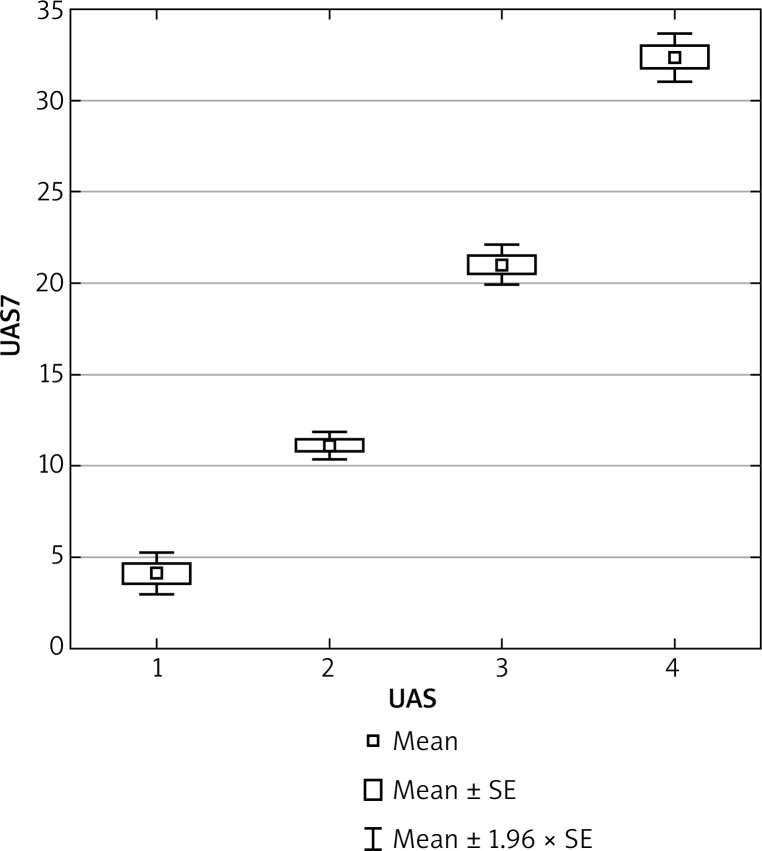
One hundred and forty-two patients with diagnosed CSU were enrolled in the study. The activity of urticaria was assessed using the UAS-7 (Urticaria Activity Score). The study participants were divided into 4 groups depending on the UAS-7. ASST was performed and blood was collected to determine the biomarkers (CRP, vitamin D, D-dimers, fibrinogen, MPV, PLT).
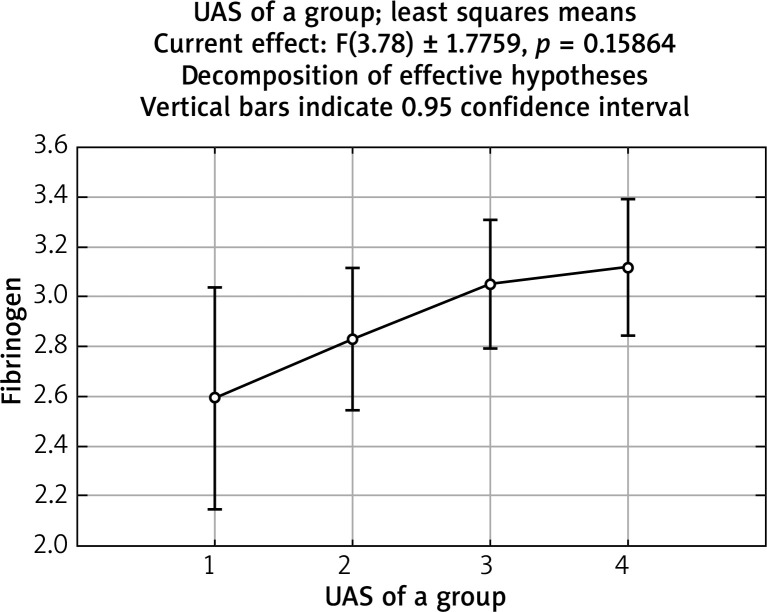
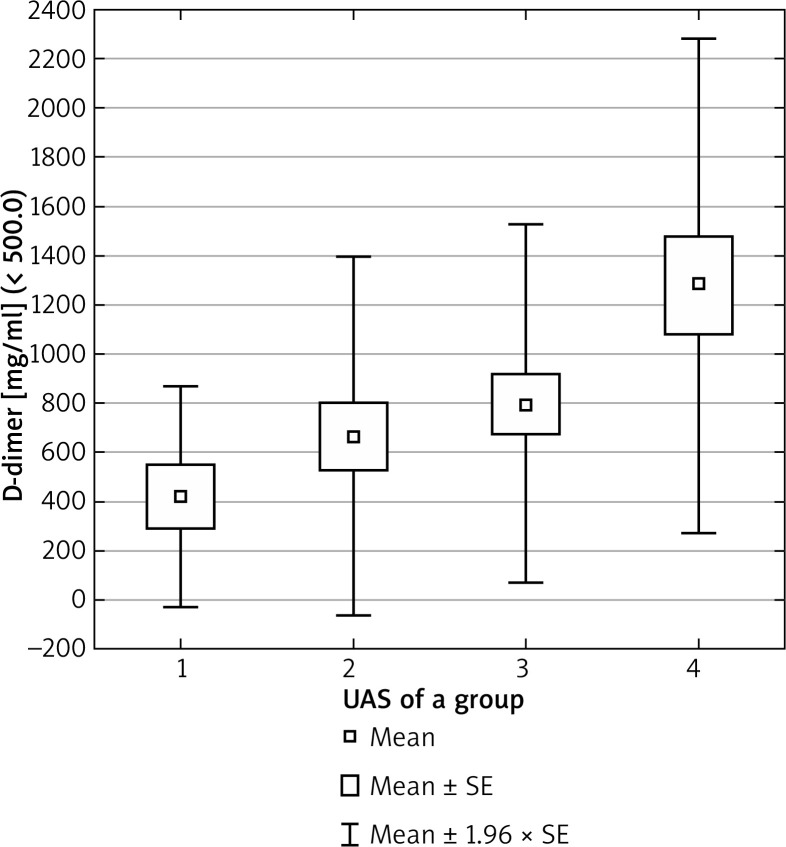
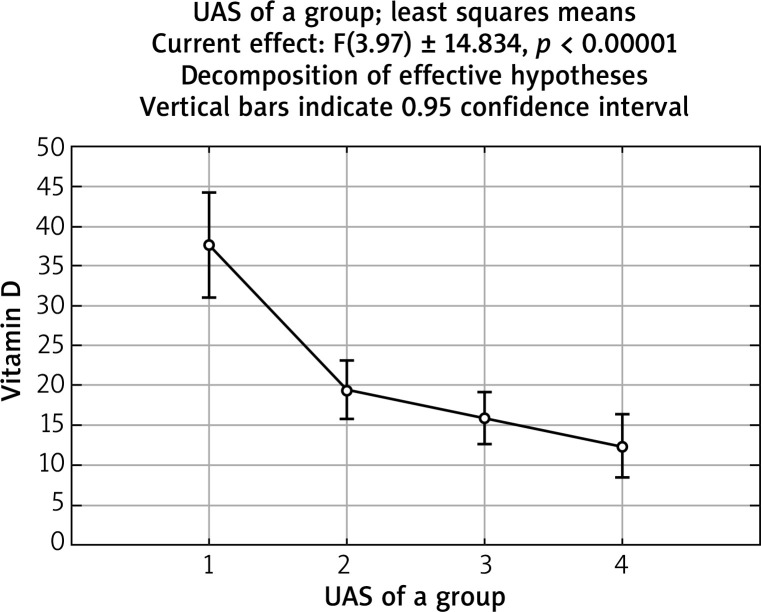
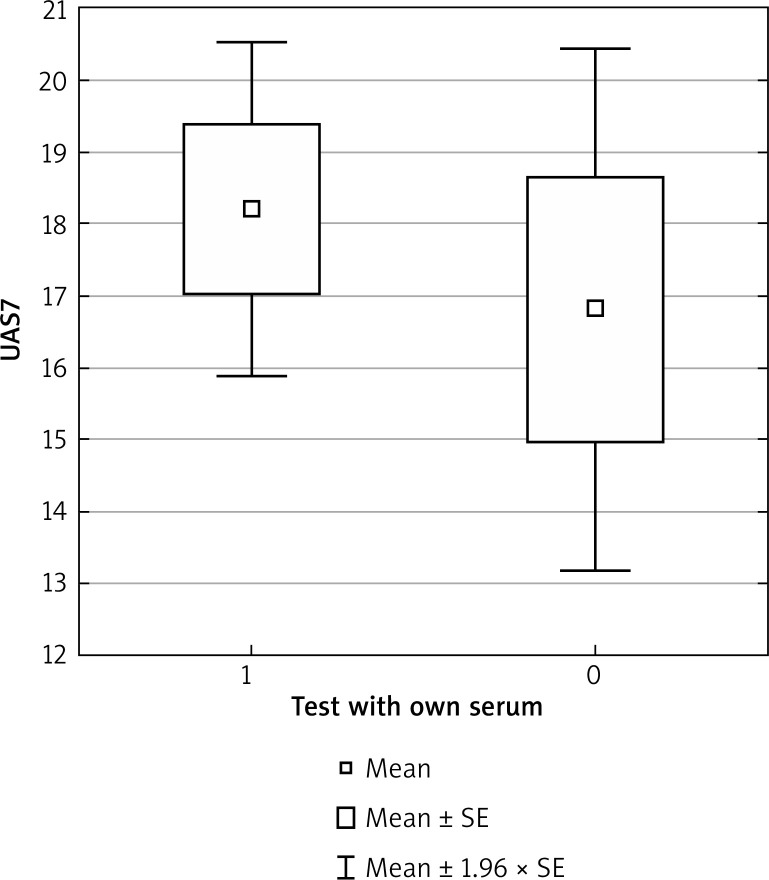
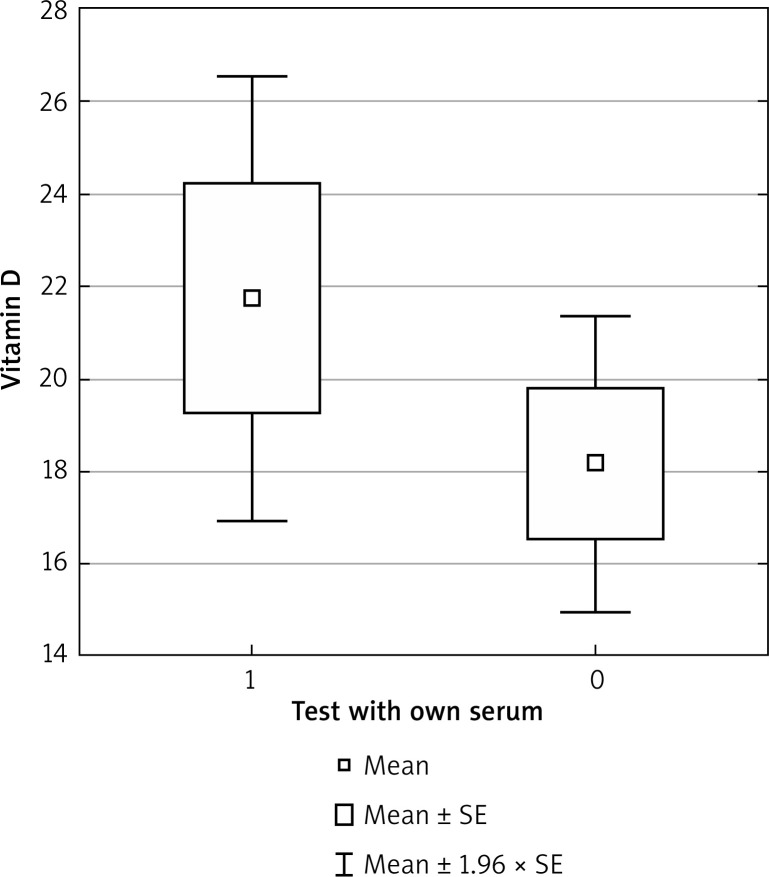
Statistical analysis was performed using Statistica 13. A statistically significant difference between groups with various activity of urticaria in D-dimer concentration average values ( < 0.05) was observed. Moreover, a statistically significant negative correlation between activity of urticaria and vitamin D concentration ( < 0.001) was noted.
Our results might support the possible involvement of both coagulation and fibrinolysis pathway and vitamin D in the urticaria pathomechanism. Further prospective studies in larger populations conducted at multiple centres are required to expand further our findings.
慢性荨麻疹是一种复杂的疾病过程,可分为慢性自发性荨麻疹(CSU)和慢性诱导性荨麻疹。其病因病机仍不清楚。最近的一些研究表明维生素D在荨麻疹的病因病机中起重要作用。在40%-50%基于自体血清皮肤试验(ASST)呈阳性结果的CSU患者中,可诊断出该疾病的自身免疫背景。此外,大量检测结果证实凝血系统/纤维蛋白溶解和非感染性炎症因子参与了CSU的病理生理学过程。
确定某些因素是否可能在慢性自发性荨麻疹的发病机制中起作用并导致其严重程度。
142例确诊为CSU的患者纳入本研究。使用荨麻疹活动度评分(UAS-7)评估荨麻疹的活动度。根据UAS-7将研究参与者分为4组。进行ASST并采集血液以测定生物标志物(CRP、维生素D、D-二聚体、纤维蛋白原、平均血小板体积、血小板计数)。
使用Statistica 13进行统计分析。观察到不同荨麻疹活动度组之间D-二聚体浓度平均值存在统计学显著差异(<0.05)。此外,注意到荨麻疹活动度与维生素D浓度之间存在统计学显著的负相关(<0.001)。
我们的结果可能支持凝血和纤维蛋白溶解途径以及维生素D参与荨麻疹发病机制。需要在多个中心对更大人群进行进一步的前瞻性研究,以进一步扩展我们的发现。