Department of Biology, Brigham Young University, Provo, UT, United States of America.
Department of Laboratory Medicine, University of Washington, Seattle, Washington, United States of America.
PLoS One. 2020 Sep 30;15(9):e0239197. doi: 10.1371/journal.pone.0239197. eCollection 2020.
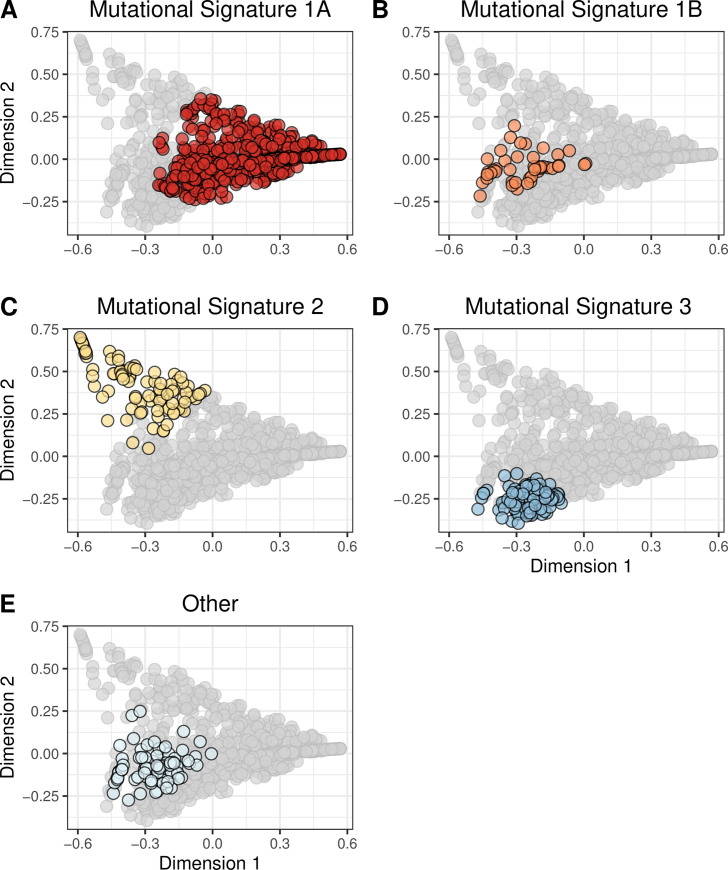
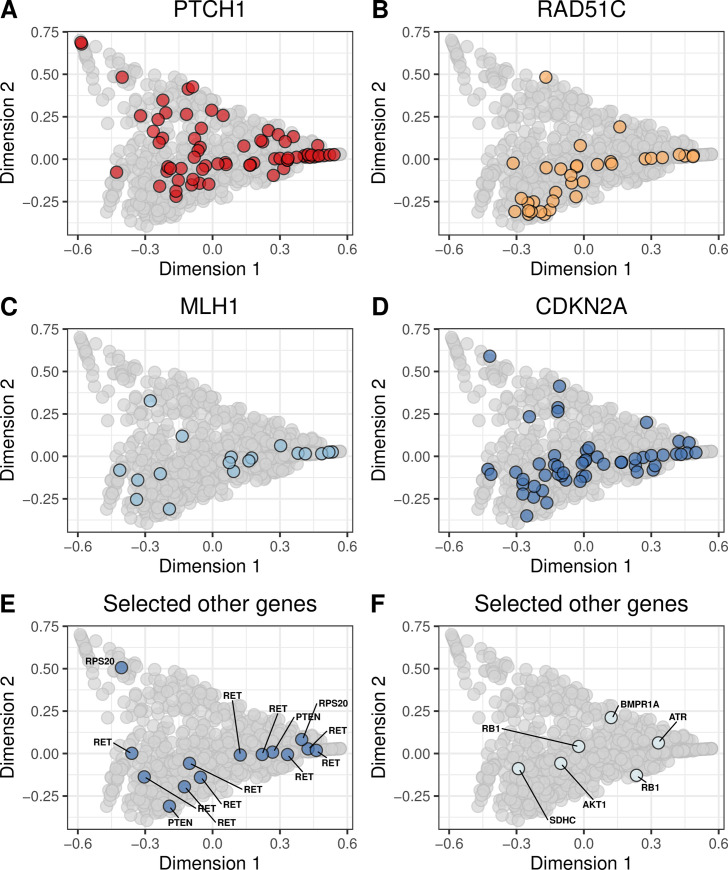
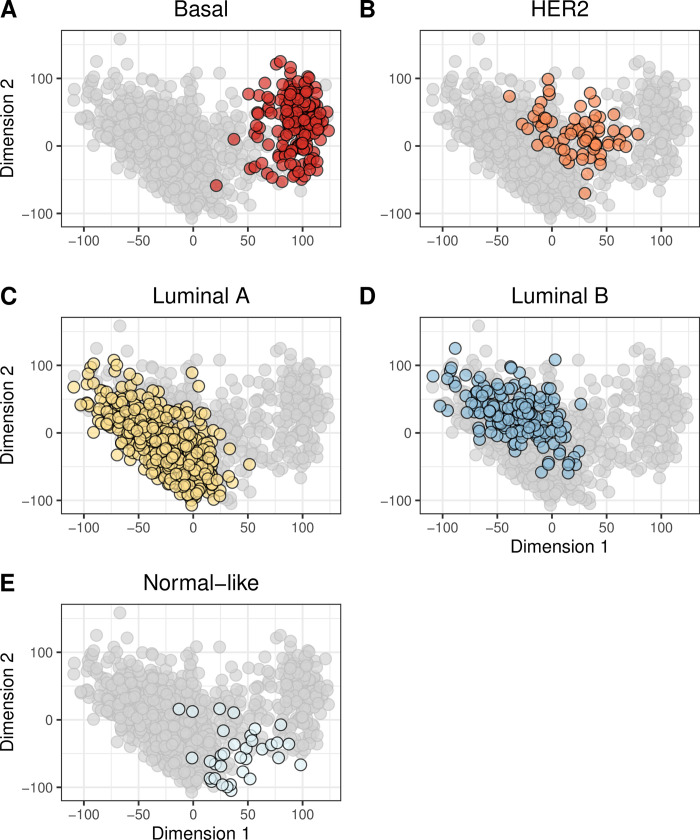
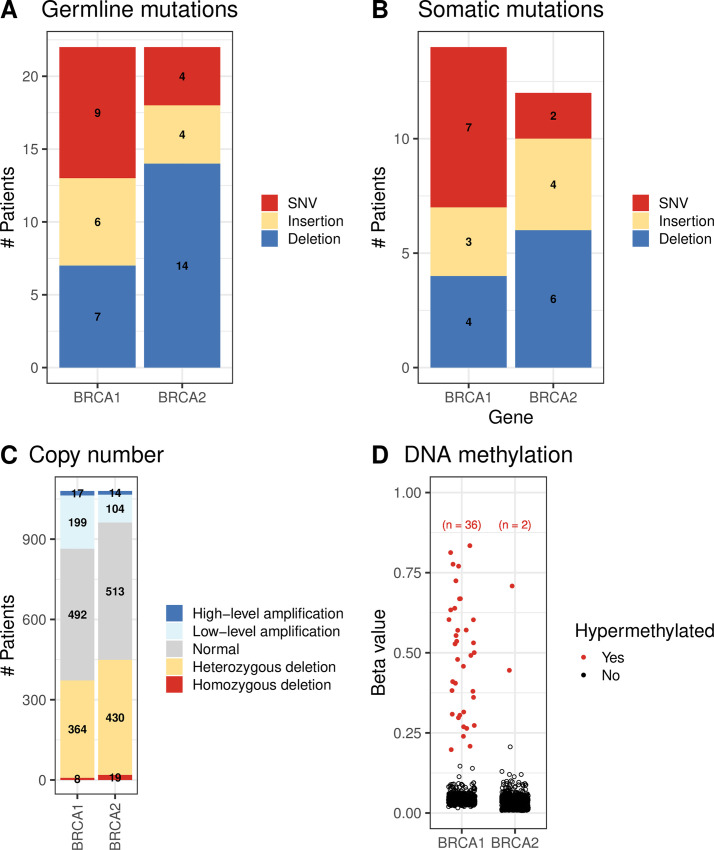
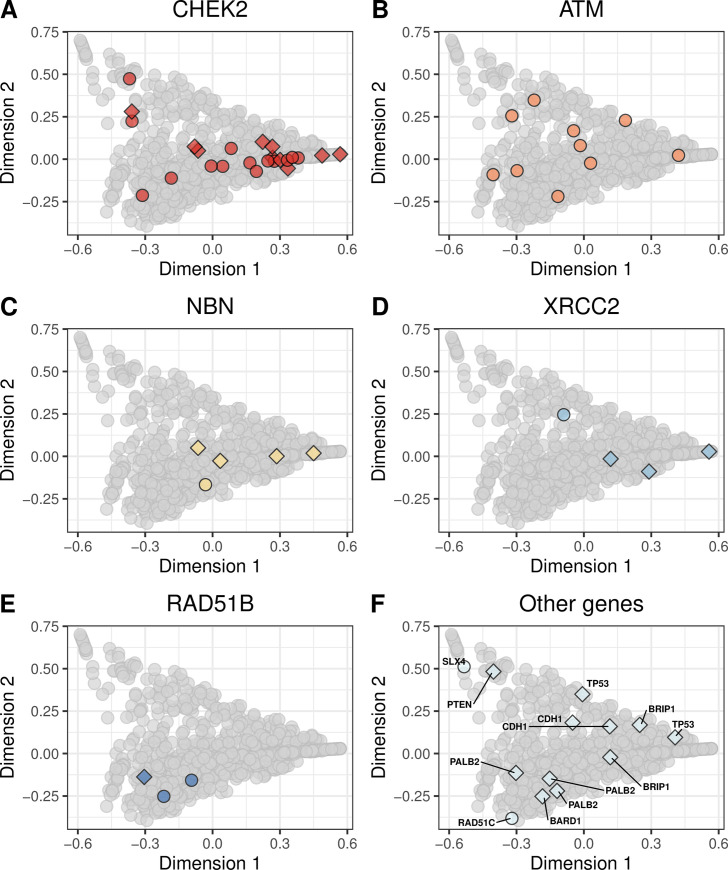
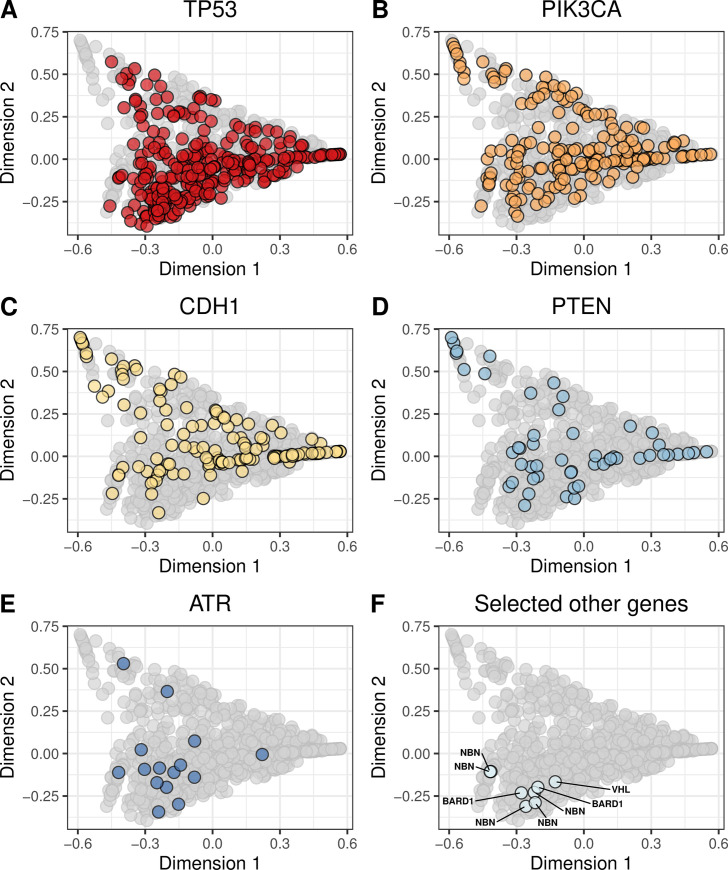
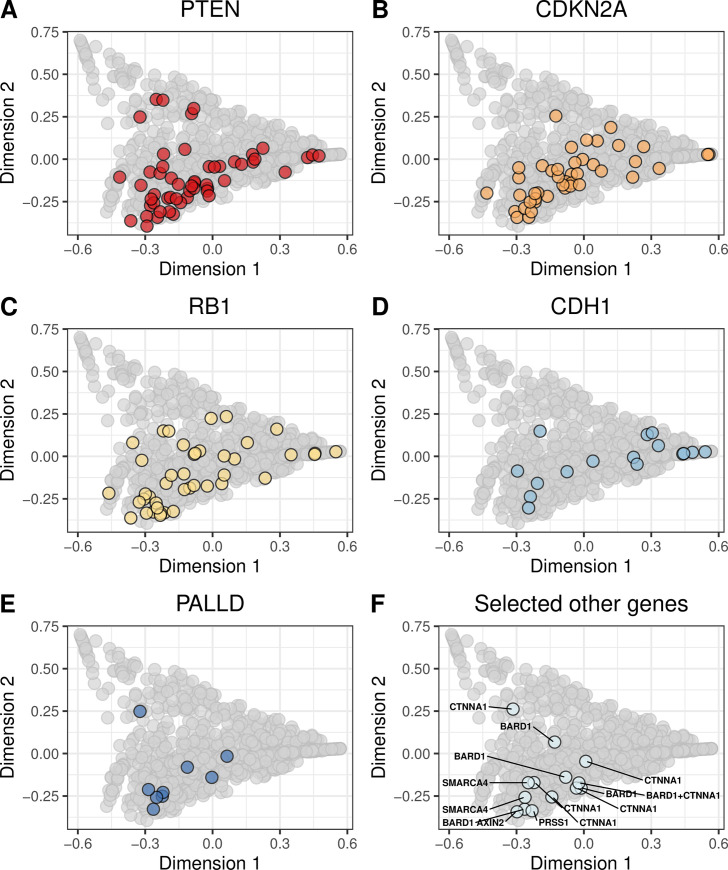
Mutations in BRCA1 and BRCA2 cause deficiencies in homologous recombination repair (HR), resulting in repair of DNA double-strand breaks by the alternative non-homologous end-joining pathway, which is more error prone. HR deficiency of breast tumors is important because it is associated with better responses to platinum salt therapies and PARP inhibitors. Among other consequences of HR deficiency are characteristic somatic-mutation signatures and gene-expression patterns. The term "BRCA-like" (or "BRCAness") describes tumors that harbor an HR defect but have no detectable germline mutation in BRCA1 or BRCA2. A better understanding of the genes and molecular events associated with tumors being BRCA-like could provide mechanistic insights and guide development of targeted treatments. Using data from The Cancer Genome Atlas (TCGA) for 1101 breast-cancer patients, we identified individuals with a germline mutation, somatic mutation, homozygous deletion, and/or hypermethylation event in BRCA1, BRCA2, and 59 other cancer-predisposition genes. Based on the assumption that BRCA-like events would have similar downstream effects on tumor biology as BRCA1/BRCA2 germline mutations, we quantified these effects based on somatic-mutation signatures and gene-expression profiles. We reduced the dimensionality of the somatic-mutation signatures and expression data and used a statistical resampling approach to quantify similarities among patients who had a BRCA1/BRCA2 germline mutation, another type of aberration in BRCA1 or BRCA2, or any type of aberration in one of the other genes. Somatic-mutation signatures of tumors having a non-germline aberration in BRCA1/BRCA2 (n = 80) were generally similar to each other and to tumors from BRCA1/BRCA2 germline carriers (n = 44). Additionally, somatic-mutation signatures of tumors with germline or somatic events in ATR (n = 16) and BARD1 (n = 8) showed high similarity to tumors from BRCA1/BRCA2 carriers. Other genes (CDKN2A, CTNNA1, PALB2, PALLD, PRSS1, SDHC) also showed high similarity but only for a small number of events or for a single event type. Tumors with germline mutations or hypermethylation of BRCA1 had relatively similar gene-expression profiles and overlapped considerably with the Basal-like subtype; but the transcriptional effects of the other events lacked consistency. Our findings confirm previously known relationships between molecular signatures and germline or somatic events in BRCA1/BRCA2. Our methodology represents an objective way to identify genes that have similar downstream effects on molecular signatures when mutated, deleted, or hypermethylated.
BRCA1 和 BRCA2 基因突变导致同源重组修复 (HR) 缺陷,导致 DNA 双链断裂通过替代性非同源末端连接途径修复,该途径更容易出错。乳腺癌肿瘤的 HR 缺陷很重要,因为它与对铂盐治疗和 PARP 抑制剂更好的反应相关。HR 缺陷的其他后果包括特征性的体细胞突变特征和基因表达模式。术语“BRCA 样”(或“BRCAness”)描述的是具有 HR 缺陷但在 BRCA1 或 BRCA2 中没有检测到种系突变的肿瘤。更好地了解与 BRCA 样肿瘤相关的基因和分子事件可以提供机制见解,并指导靶向治疗的开发。使用来自癌症基因组图谱 (TCGA) 的 1101 名乳腺癌患者的数据,我们鉴定了在 BRCA1、BRCA2 和其他 59 个癌症易感性基因中具有种系突变、体细胞突变、纯合缺失和/或高甲基化事件的个体。基于 BRCA 样事件对肿瘤生物学的下游影响与 BRCA1/BRCA2 种系突变相似的假设,我们基于体细胞突变特征和基因表达谱来量化这些影响。我们降低了体细胞突变特征和表达数据的维数,并使用统计重采样方法来量化具有 BRCA1/BRCA2 种系突变、BRCA1 或 BRCA2 中的另一种异常或其他基因中任何类型异常的患者之间的相似性。具有 BRCA1/BRCA2 非种系异常的肿瘤的体细胞突变特征通常彼此相似,并且与 BRCA1/BRCA2 种系携带者的肿瘤相似(n=44)。此外,ATR(n=16)和 BARD1(n=8)中具有种系或体细胞事件的肿瘤的体细胞突变特征与 BRCA1/BRCA2 携带者的肿瘤具有高度相似性。其他基因(CDKN2A、CTNNA1、PALB2、PALLD、PRSS1、SDHC)也表现出高度相似性,但仅适用于少数事件或单一事件类型。具有 BRCA1 种系突变或高甲基化的肿瘤具有相对相似的基因表达谱,并且与基底样亚型重叠很大;但其他事件的转录效应缺乏一致性。我们的发现证实了先前已知的分子特征与 BRCA1/BRCA2 中的种系或体细胞事件之间的关系。我们的方法代表了一种识别在发生突变、缺失或高甲基化时对分子特征具有相似下游影响的基因的客观方法。