Centre for Human Psychopharmacology, Swinburne University, Melbourne, VIC 3122, Australia.
Department of Nursing and Allied Health, Faculty of Health, Arts and Design, Swinburne University, Melbourne, VIC 3122, Australia.
Nutrients. 2020 Sep 28;12(10):2964. doi: 10.3390/nu12102964.
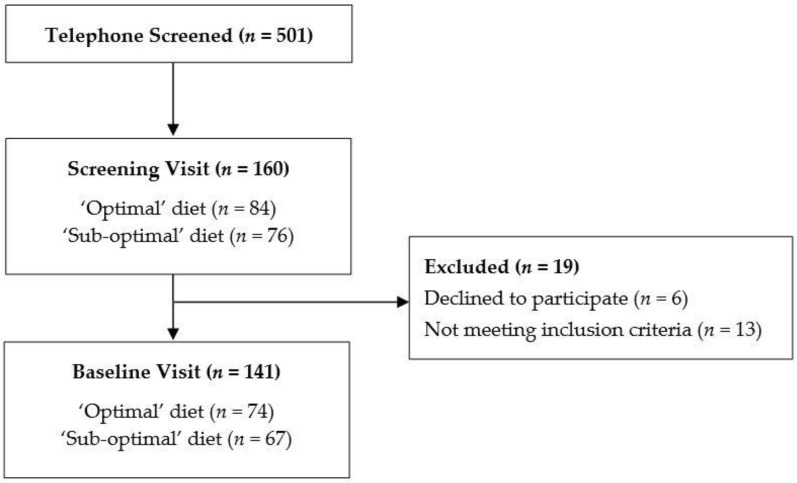
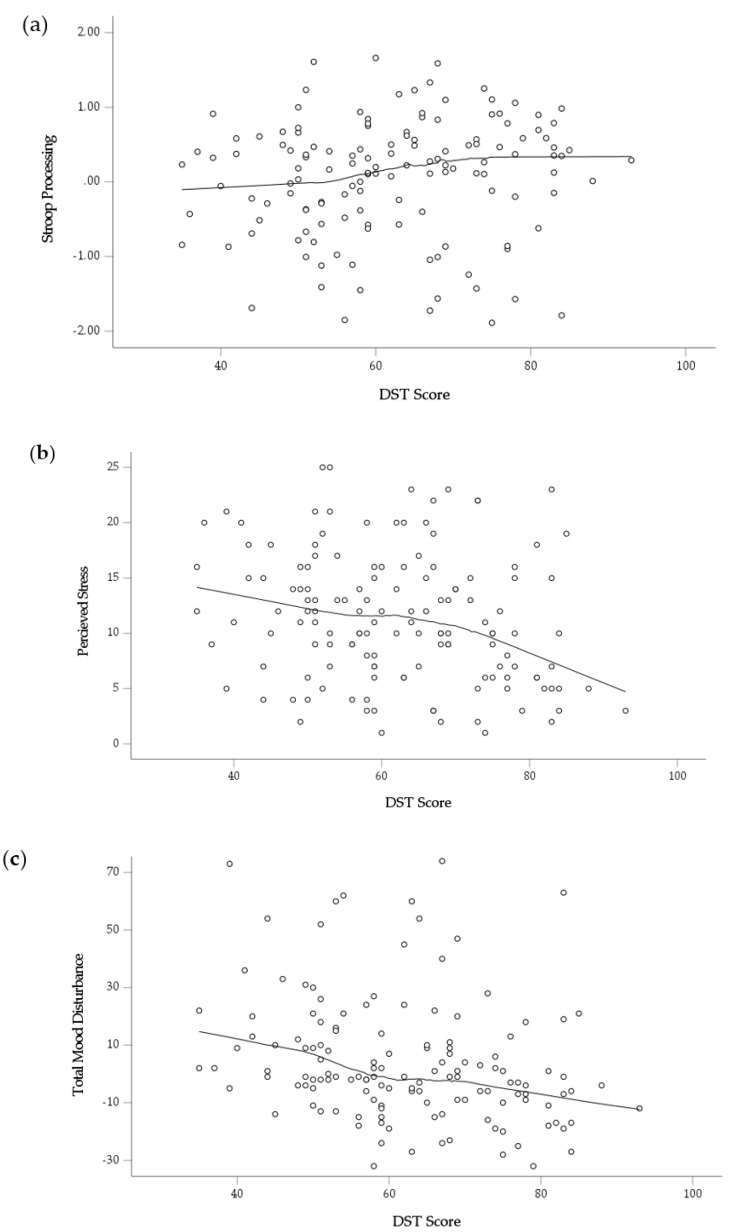
Evidence for diet quality representing a modifiable risk factor for age-related cognitive decline and mood disturbances has typically come from retrospective, cross-sectional analyses. Here a diet screening tool (DST) was used to categorize healthy middle-aged volunteers ( = 141, 40-65 years) into "optimal" or "sub-optimal" diet groups to investigate cross-sectional associations between diet quality, cognitive function, and mood. The DST distinguished levels of nutrient intake as assessed by Automated Self-Administered 24-h dietary recall and nutrient status, as assessed by blood biomarker measures. Compared with the "sub-optimal" group, the "optimal" diet group showed significantly higher intake of vitamin E ( = 0.007), magnesium ( = 0.001), zinc ( = 0.043) and fiber ( = 0.015), higher circulating levels of vitamin B6 ( = 0.030) and red blood cell folate ( = 0.026) and lower saturated fatty acids ( = 0.012). Regarding psychological outcomes, the "optimal" diet group had significantly better Stroop processing than those with a "sub-optimal" diet ( = 0.013). Regression analysis revealed that higher DST scores were associated with fewer mood disturbances ( = 0.002) and lower perceived stress ( = 0.031), although these differences were not significant when comparing "optimal" versus "sub-optimal" as discrete groups. This study demonstrates the potential of a 20-item diet screen to identify both nutritional and psychological status in an Australian setting.
有证据表明,饮食质量是与年龄相关的认知能力下降和情绪障碍的可改变风险因素,这些证据通常来自回顾性、横断面分析。在这里,使用饮食筛查工具(DST)将健康的中年志愿者(n = 141,40-65 岁)分为“最佳”或“次优”饮食组,以调查饮食质量、认知功能和情绪之间的横断面关联。DST 区分了通过自动自我管理 24 小时膳食回忆评估的营养素摄入量水平和通过血液生物标志物测量评估的营养状况。与“次优”组相比,“最佳”饮食组的维生素 E( = 0.007)、镁( = 0.001)、锌( = 0.043)和纤维( = 0.015)摄入量显著更高,维生素 B6( = 0.030)和红细胞叶酸( = 0.026)的循环水平更高,饱和脂肪酸( = 0.012)更低。关于心理结果,“最佳”饮食组的 Stroop 处理能力明显优于“次优”饮食组( = 0.013)。回归分析显示,DST 得分越高,情绪障碍( = 0.002)和感知压力( = 0.031)越少,尽管当将“最佳”与“次优”作为离散组进行比较时,这些差异并不显著。这项研究表明,20 项饮食筛查有可能在澳大利亚环境中识别营养和心理状况。