Clinical and Experimental Endocrinology, Department of Chronic Diseases, Metabolism and Ageing (CHROMETA), KU Leuven, B-3000 Leuven, Belgium.
Institut Pasteur de Lille, The University of Lille, Inserm, CHU Lille, U1011-EGID, F-59000 Lille, France.
Cells. 2020 Sep 28;9(10):2185. doi: 10.3390/cells9102185.
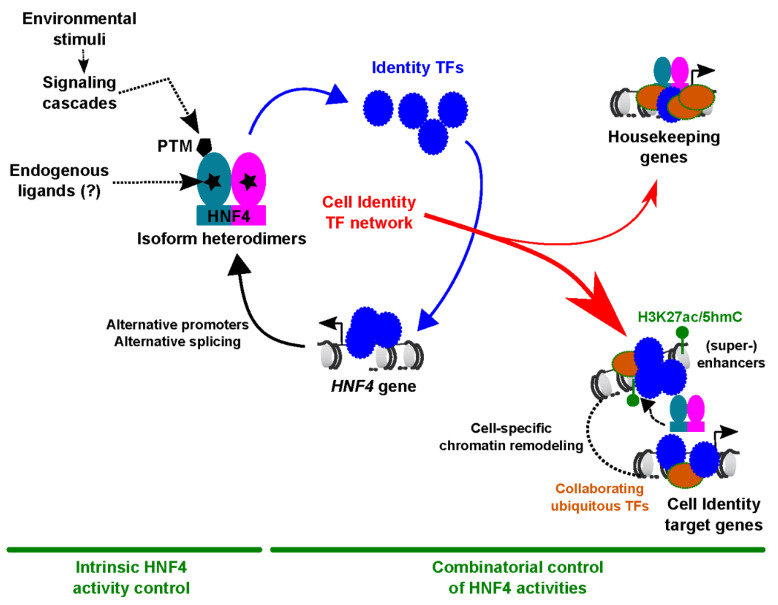
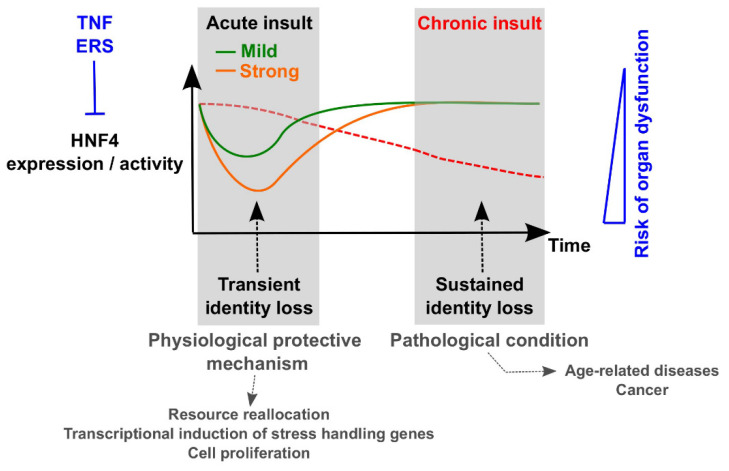
Hepatocyte Nuclear Factor 4 (HNF4) is a transcription factor (TF) belonging to the nuclear receptor family whose expression and activities are restricted to a limited number of organs including the liver and gastrointestinal tract. In this review, we present robust evidence pointing to HNF4 as a master regulator of cellular differentiation during development and a safekeeper of acquired cell identity in adult organs. Importantly, we discuss that transient loss of HNF4 may represent a protective mechanism upon acute organ injury, while prolonged impairment of HNF4 activities could contribute to organ dysfunction. In this context, we describe in detail mechanisms involved in the pathophysiological control of cell identity by HNF4, including how HNF4 works as part of cell-specific TF networks and how its expression/activities are disrupted in injured organs.
肝细胞核因子 4(HNF4)是一种转录因子(TF),属于核受体家族,其表达和活性仅限于少数器官,包括肝脏和胃肠道。在这篇综述中,我们提出了有力的证据,表明 HNF4 是发育过程中细胞分化的主要调节因子,也是成年器官中获得性细胞身份的守护者。重要的是,我们讨论了 HNF4 的短暂缺失可能代表急性器官损伤时的一种保护机制,而 HNF4 活性的长期损害可能导致器官功能障碍。在这种情况下,我们详细描述了 HNF4 参与细胞身份的病理生理控制的机制,包括 HNF4 如何作为细胞特异性 TF 网络的一部分发挥作用,以及其表达/活性在受损器官中是如何被破坏的。