Sudnitsyna Julia, Skverchinskaya Elisaveta, Dobrylko Irina, Nikitina Elena, Gambaryan Stepan, Mindukshev Igor
Center for Theoretical Problems of Physico-Chemical Pharmacology, Russian Academy of Sciences, Kosygina st., 4, 119991 Moscow, Russia.
Sechenov Institute of Evolutionary Physiology and Biochemistry, Russian Academy of Sciences, Thorez pr., 44, 194223 Saint-Petersburg, Russia.
Antioxidants (Basel). 2020 Sep 28;9(10):929. doi: 10.3390/antiox9100929.
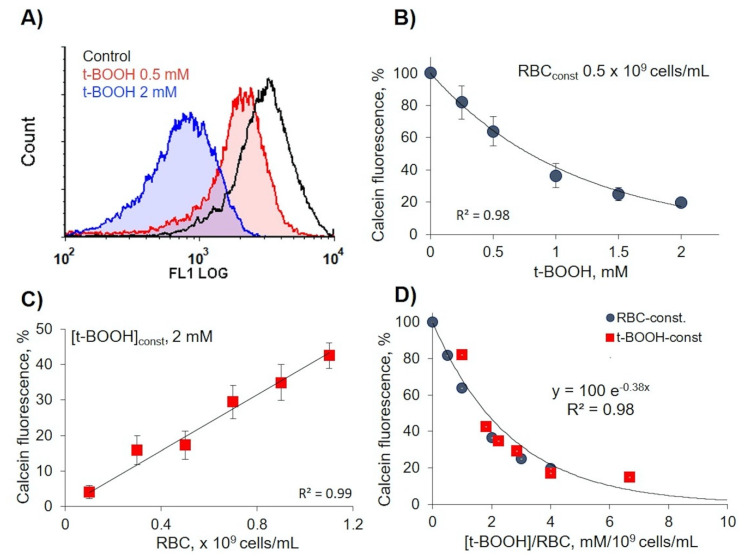
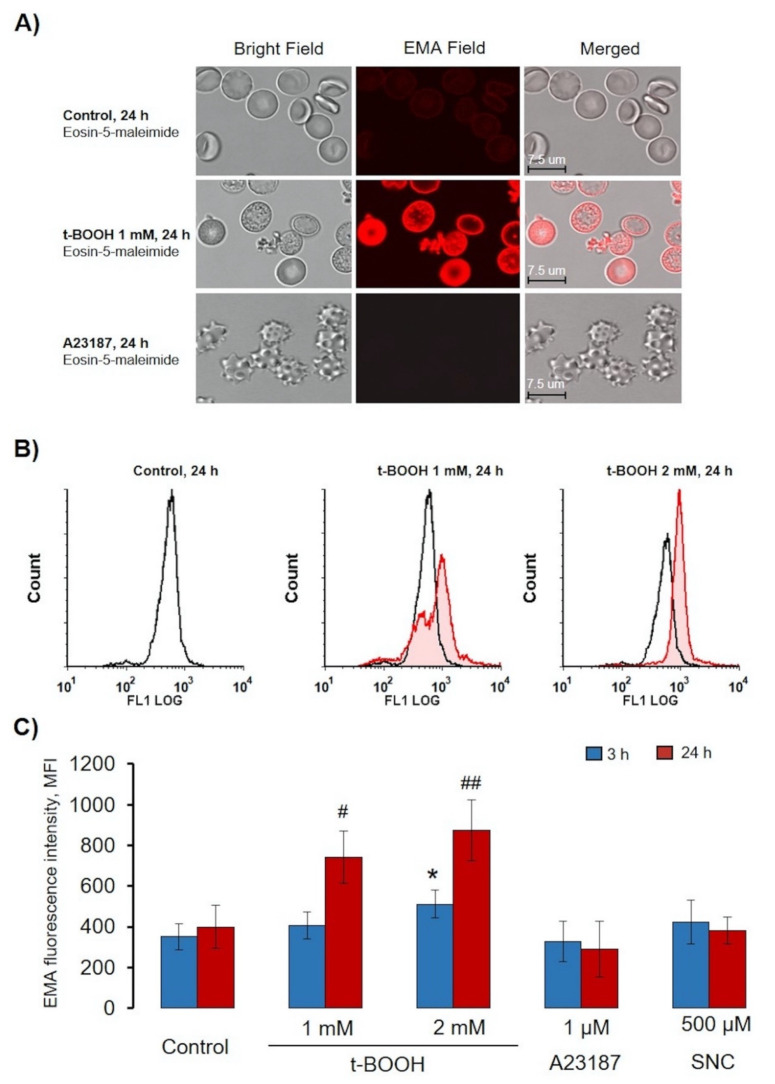
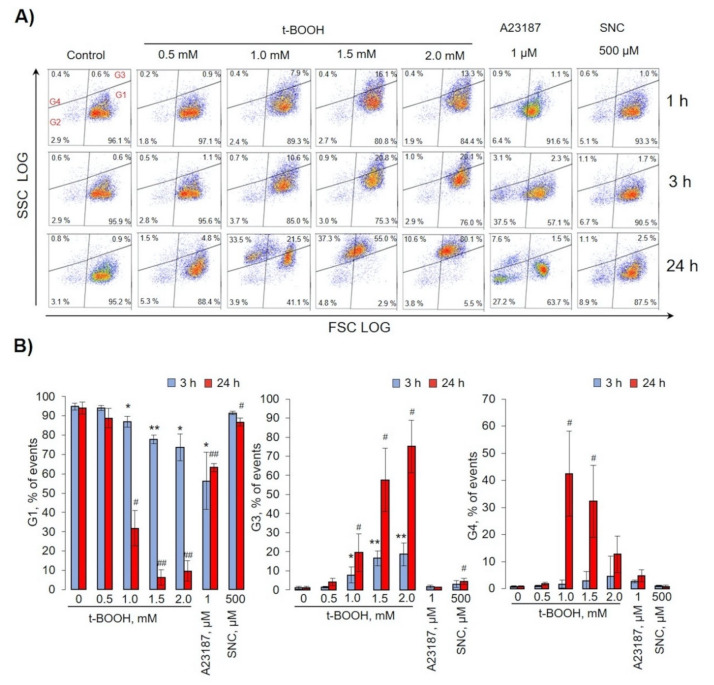
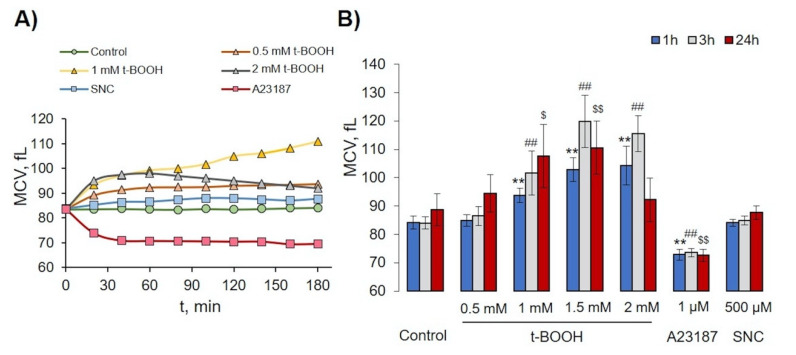
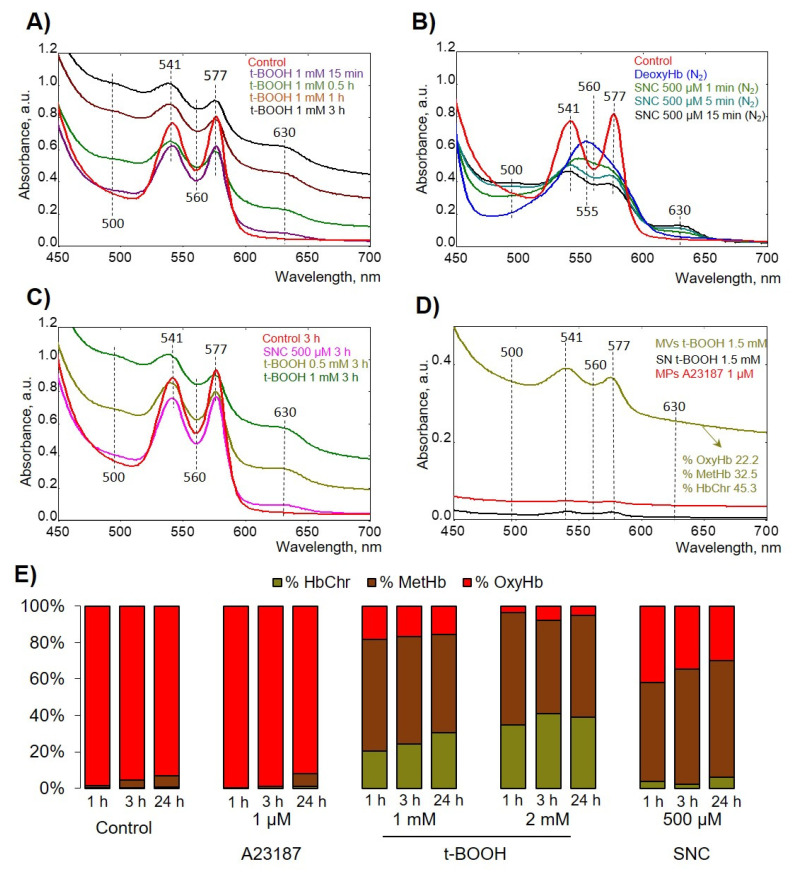
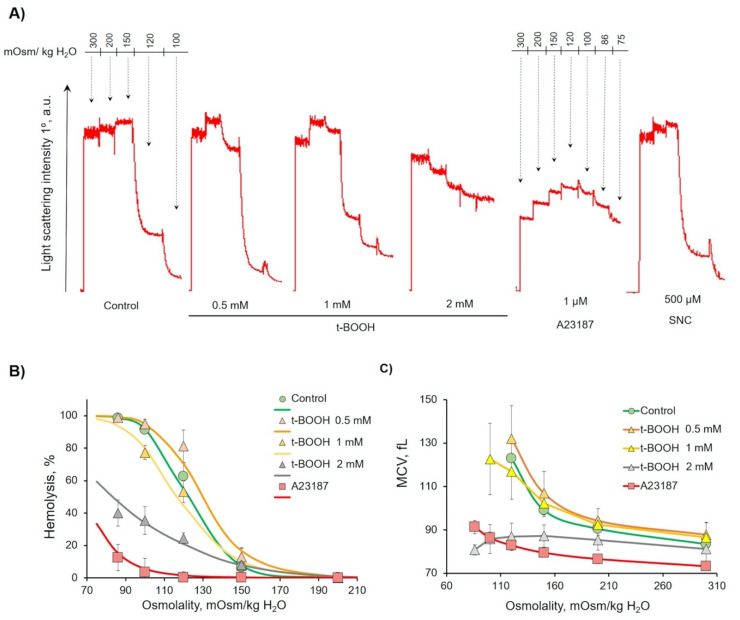
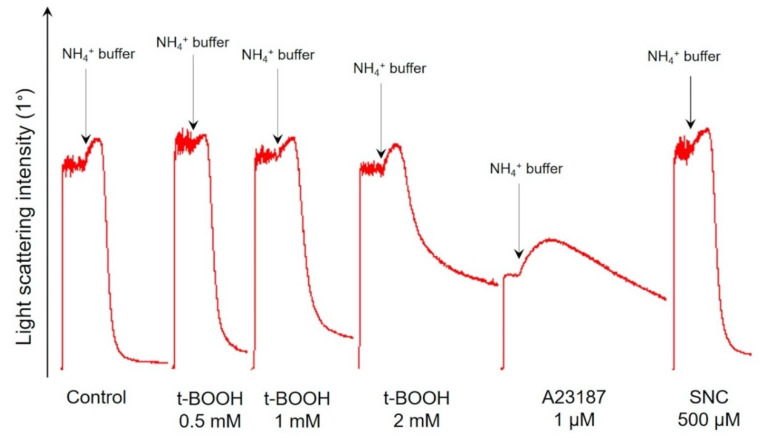
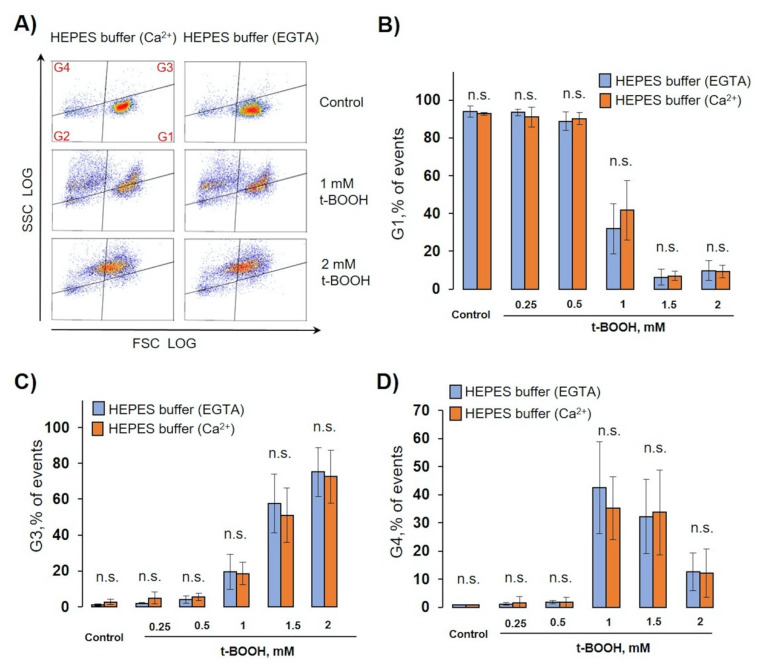
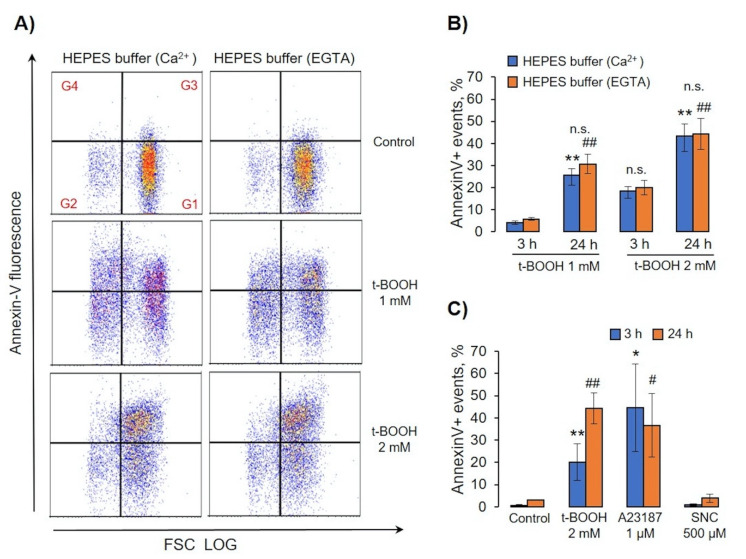
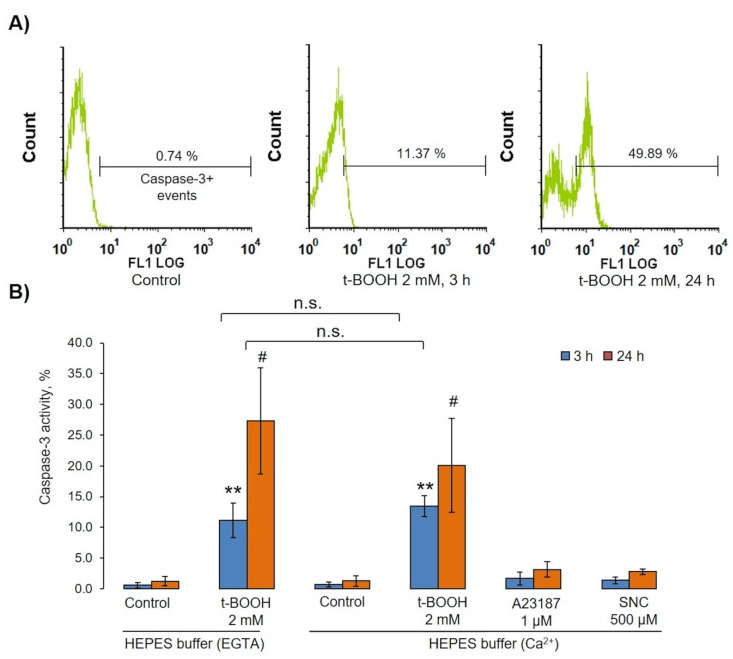
Extracellular vesicles (EVs) released by different cell types play an important role in many physiological and pathophysiological processes. In physiological conditions, red blood cell (RBC)-derived EVs compose 4-8% of all circulating EVs, and oxidative stress (OS) as a consequence of different pathophysiological conditions significantly increases the amount of circulated RBC-derived EVs. However, the mechanisms of EV formation are not yet fully defined. To analyze OS-induced EV formation and RBC transformations, we used flow cytometry to evaluate cell esterase activity, caspase-3 activity, and band 3 clustering. Band 3 clustering was additionally analyzed by confocal microscopy. Two original laser diffraction-based approaches were used for the analysis of cell deformability and band 3 activity. Hemoglobin species were characterized spectrophotometrically. We showed that cell viability in -Butyl hydroperoxide-induced OS directly correlated with oxidant concentration to cell count ratio, and that RBC-derived EVs contained hemoglobin oxidized to hemichrome (HbChr). OS induced caspase-3 activation and band 3 clustering in cells and EVs. Importantly, we showed that OS-induced EV formation is independent of calcium. The presented data indicated that during OS, RBCs eliminated HbChr by vesiculation in order to sacrifice the cell itself, thereby prolonging lifespan and delaying the untimely clearance of in all other respects healthy RBCs.
不同细胞类型释放的细胞外囊泡(EVs)在许多生理和病理生理过程中发挥着重要作用。在生理条件下,红细胞(RBC)衍生的EVs占所有循环EVs的4-8%,而不同病理生理条件导致的氧化应激(OS)会显著增加循环中RBC衍生的EVs数量。然而,EV形成的机制尚未完全明确。为了分析OS诱导的EV形成和RBC转化,我们使用流式细胞术评估细胞酯酶活性、半胱天冬酶-3活性和带3聚集。通过共聚焦显微镜对带3聚集进行了额外分析。使用两种基于激光衍射的原始方法分析细胞变形性和带3活性。通过分光光度法对血红蛋白种类进行了表征。我们发现叔丁基过氧化氢诱导的OS中的细胞活力与氧化剂浓度与细胞计数的比率直接相关,并且RBC衍生的EVs含有氧化为高铁血红素(HbChr)的血红蛋白。OS诱导细胞和EVs中的半胱天冬酶-3激活和带3聚集。重要的是,我们表明OS诱导的EV形成与钙无关。所呈现的数据表明,在OS期间,RBC通过囊泡化消除HbChr以牺牲细胞自身,从而延长寿命并延迟在所有其他方面健康的RBC的过早清除。