Faculty of Health, School of Exercise and Nutrition Sciences, Deakin University, Burwood, Australia.
Nutr J. 2020 Sep 30;19(1):109. doi: 10.1186/s12937-020-00606-z.
BACKGROUND/AIMS: EAT-Lancet Commission's Planetary Health Diet proposed a diet that integrates nutrition and sustainability considerations, however its affordability is unknown in many country-specific contexts, including Australia. The aim of this study is to develop a healthy and sustainable food basket modelled on the Planetary Health Diet to determine the affordability of the Planetary Health Diet basket across various socio-economic groups, and compare this affordability with a food basket modelled on the typical current diet, in an Australian setting.
An Australian-specific Planetary Health Diet basket was developed for a reference household (2 adults and 2 children) modelled on the Planetary Health Diet reference diet, and compared to a previously-developed Typical Australian Diet basket. The cost of each food basket was determined by online supermarket shopping surveys in low, medium and high socio-economic areas in each Australian state. Basket affordability was determined for the reference household by comparing the basket cost to disposable income in each socio-economic group in each state. Mann-Whitney U tests then determined if there were significant differences between the median costs and the median affordability of both baskets.
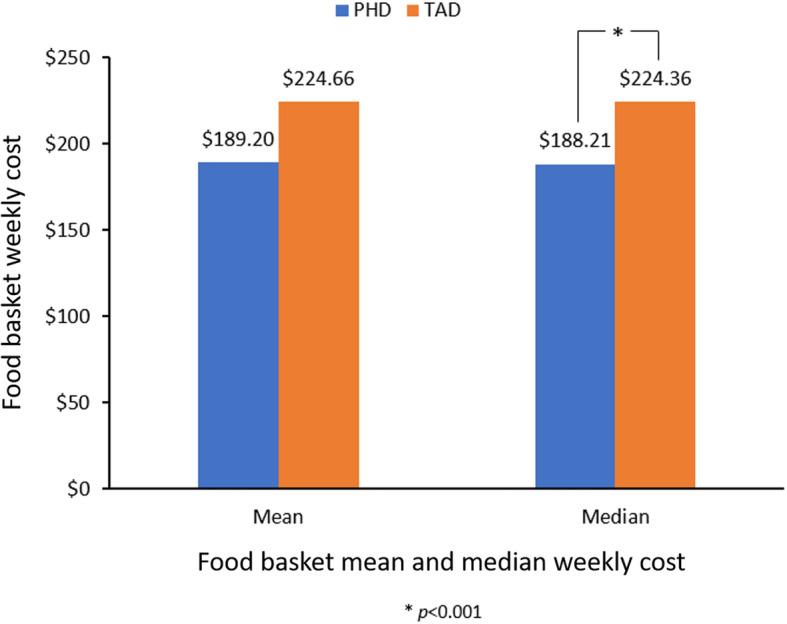
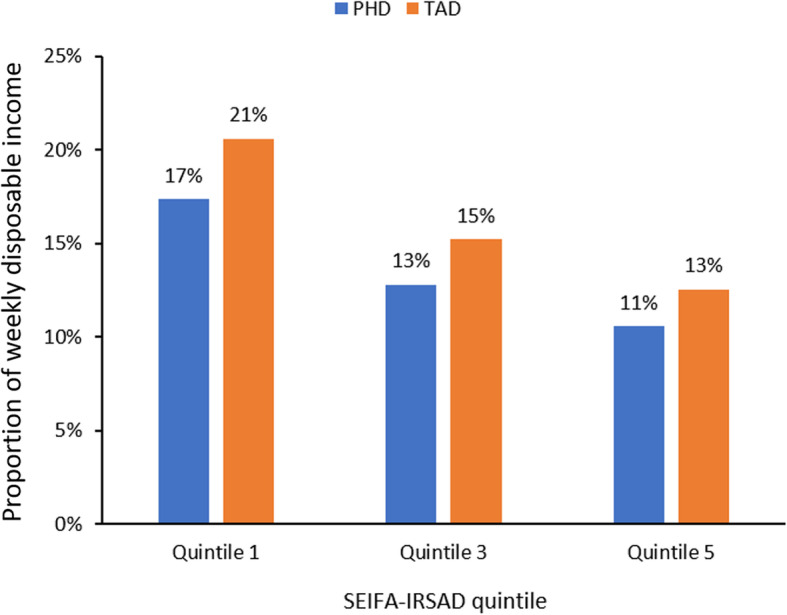
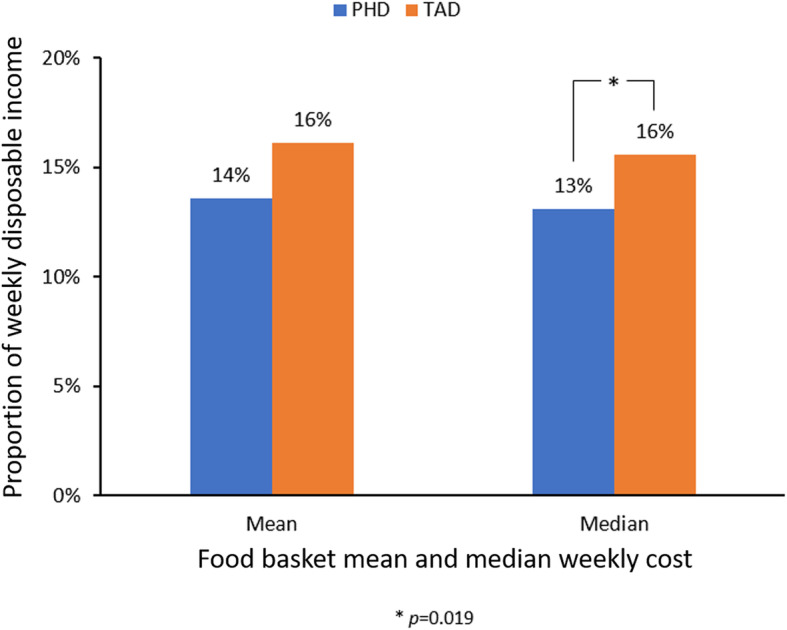
The Planetary Health Diet basket was shown to be less expensive and more affordable than the Typical Australian Diet basket nationally, in all metropolitan areas, in all socio-economic groups across Australia (median cost: Planetary Health Diet = AUD$188.21, Typical Australian Diet = AUD$224.36; median affordability: Planetary Health Diet = 13%, Typical Australian Diet = 16%; p = < 0.05).
This study showed the Planetary Health Diet to be more affordable than the Typical Australian Diet for metropolitan-dwelling Australians.
These results can help to inform public health and food policy aimed at achieving a healthy and sustainable future for all Australians, including reductions in overweight/obesity rates and increased food security.
背景/目的:EAT-柳叶刀委员会的行星健康饮食计划提出了一种综合营养和可持续性考虑的饮食,但在包括澳大利亚在内的许多特定国家背景下,其可负担性尚不清楚。本研究旨在制定一个基于行星健康饮食的健康可持续食品篮,以确定在各种社会经济群体中行星健康饮食篮的可负担性,并将其与基于典型当前饮食的食品篮进行比较,在澳大利亚环境中。
根据行星健康饮食参考饮食,为参考家庭(2 名成人和 2 名儿童)制定了澳大利亚特有的行星健康饮食篮,并与之前开发的典型澳大利亚饮食篮进行了比较。通过在每个澳大利亚州的低、中、高社会经济区域进行在线超市购物调查,确定每个食品篮的成本。通过将篮子成本与每个州每个社会经济群体的可支配收入进行比较,确定参考家庭的篮子可负担性。然后,曼-惠特尼 U 检验确定两个篮子的中位数成本和中位数可负担性之间是否存在显著差异。
全国范围内、所有大都市地区、澳大利亚所有社会经济群体中,行星健康饮食篮的价格均低于典型澳大利亚饮食篮,且更具可负担性(中位数成本:行星健康饮食篮=188.21 澳元,典型澳大利亚饮食篮=224.36 澳元;中位数可负担性:行星健康饮食篮=13%,典型澳大利亚饮食篮=16%;p<0.05)。
本研究表明,对于居住在大都市的澳大利亚人来说,行星健康饮食比典型的澳大利亚饮食更具可负担性。
这些结果可以为旨在为所有澳大利亚人实现健康和可持续未来的公共卫生和食品政策提供信息,包括降低超重/肥胖率和提高粮食安全。