Wang Wenyu, Ouaras Karim, Rutz Alexandra L, Li Xia, Gerigk Magda, Naegele Tobias E, Malliaras George G, Huang Yan Yan Shery
Department of Engineering, University of Cambridge, Cambridge CB2 1PZ, UK.
The Nanoscience Centre, University of Cambridge, Cambridge CB3 0FF, UK.
Sci Adv. 2020 Sep 30;6(40). doi: 10.1126/sciadv.aba0931. Print 2020 Sep.
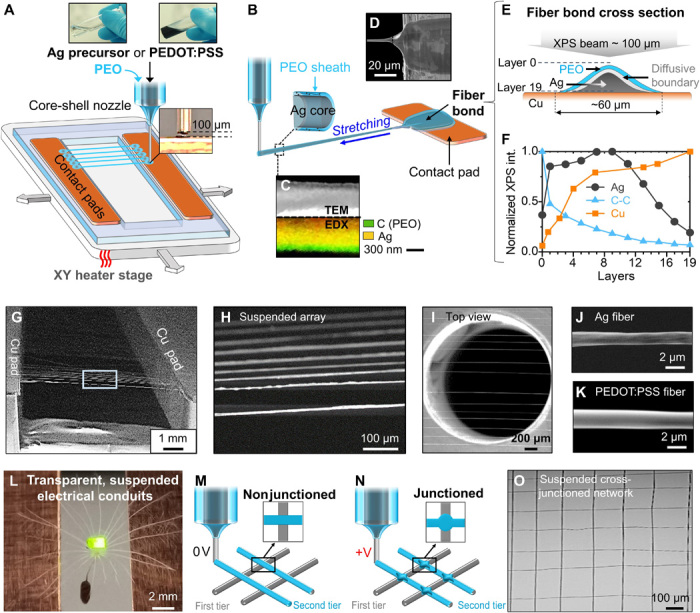
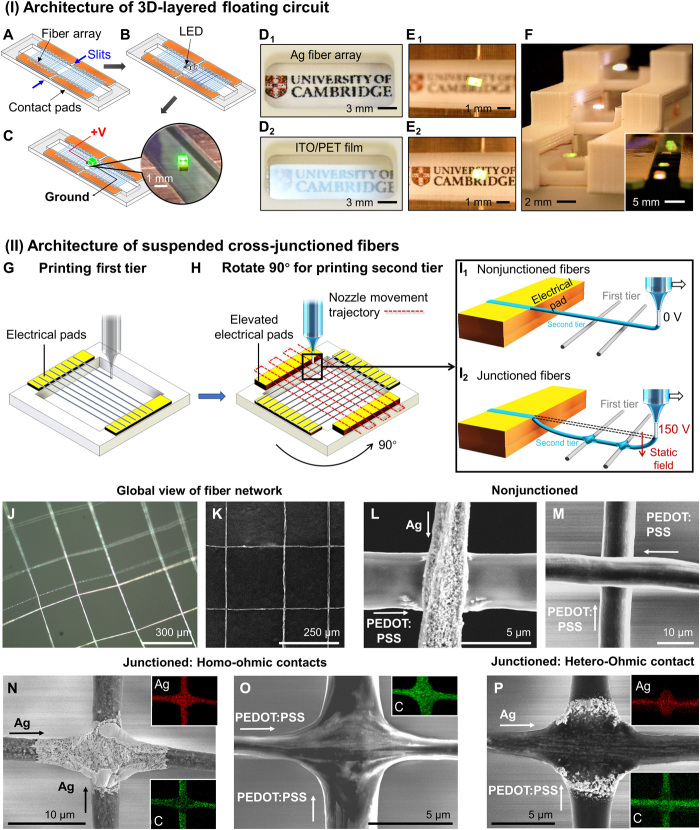
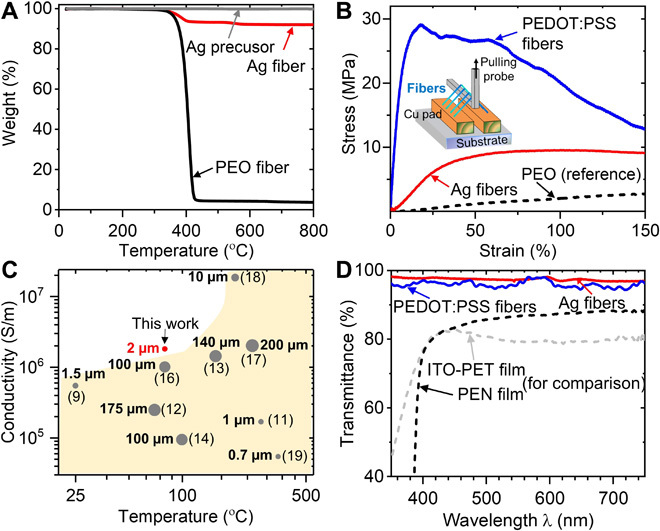
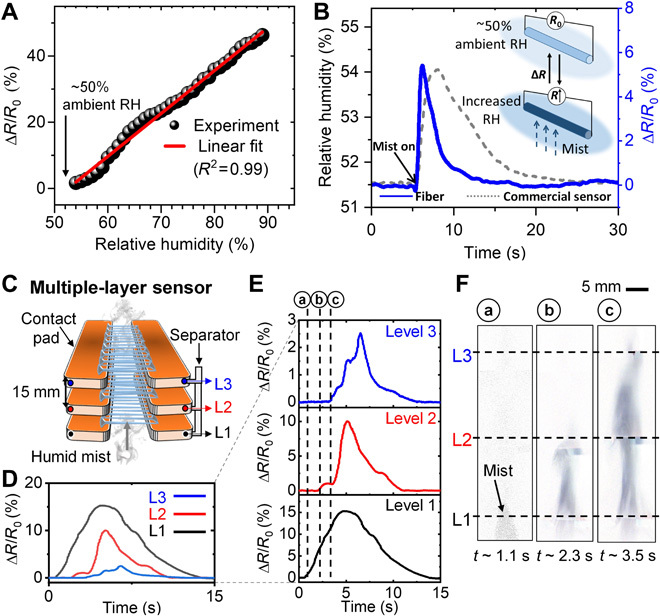
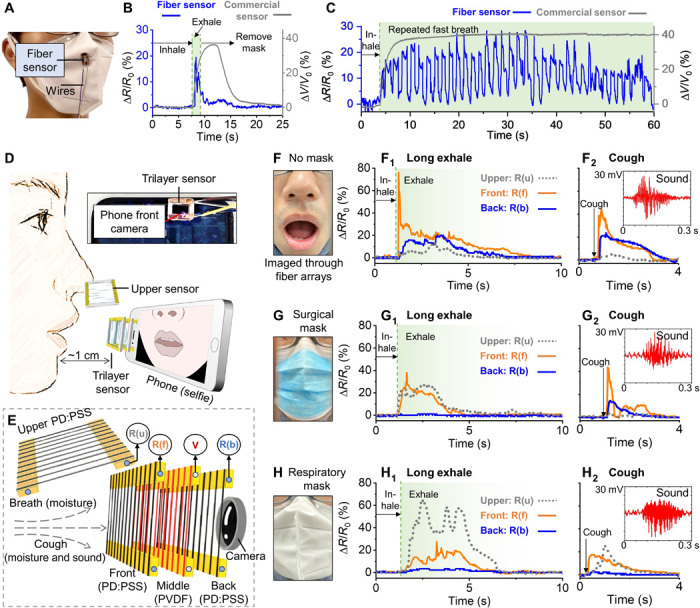
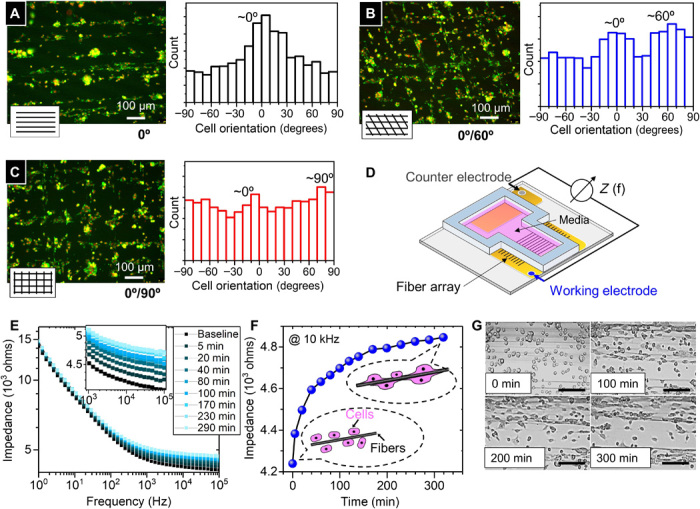
Scalability and device integration have been prevailing issues limiting our ability in harnessing the potential of small-diameter conducting fibers. We report inflight fiber printing (iFP), a one-step process that integrates conducting fiber production and fiber-to-circuit connection. Inorganic (silver) or organic {PEDOT:PSS [poly(3,4-ethylenedioxythiophene) polystyrene sulfonate]} fibers with 1- to 3-μm diameters are fabricated, with the fiber arrays exhibiting more than 95% transmittance (350 to 750 nm). The high surface area-to-volume ratio, permissiveness, and transparency of the fiber arrays were exploited to construct sensing and optoelectronic architectures. We show the PEDOT:PSS fibers as a cell-interfaced impedimetric sensor, a three-dimensional (3D) moisture flow sensor, and noncontact, wearable/portable respiratory sensors. The capability to design suspended fibers, networks of homo cross-junctions and hetero cross-junctions, and coupling iFP fibers with 3D-printed parts paves the way to additive manufacturing of fiber-based 3D devices with multilatitude functions and superior spatiotemporal resolution, beyond conventional film-based device architectures.
可扩展性和设备集成一直是限制我们利用小直径导电纤维潜力的主要问题。我们报道了飞行中纤维打印(iFP),这是一种将导电纤维生产和纤维到电路连接集成在一起的一步法工艺。制备出了直径为1至3μm的无机(银)或有机{聚(3,4 - 乙撑二氧噻吩)聚苯乙烯磺酸盐(PEDOT:PSS)}纤维,其纤维阵列在350至750nm范围内的透光率超过95%。利用纤维阵列的高比表面积、宽容度和透明度构建传感和光电架构。我们展示了PEDOT:PSS纤维可作为细胞界面阻抗传感器、三维(3D)水分流动传感器以及非接触式、可穿戴/便携式呼吸传感器。设计悬浮纤维、同型交叉结和异型交叉结网络以及将iFP纤维与3D打印部件耦合的能力,为具有多维度功能和卓越时空分辨率的基于纤维的3D设备的增材制造铺平了道路,超越了传统的基于薄膜的设备架构。