Pan Yifei, Wang Wenyu, Shui Yuan, Murphy Jack F, Huang Yan Yan Shery
Department of Engineering, University of Cambridge, CB2 1PZ Cambridge, UK.
The Nanoscience Centre, University of Cambridge, CB3 0FF Cambridge, UK.
Cell Rep Phys Sci. 2024 Aug 21;5(8):101930. doi: 10.1016/j.xcrp.2024.101930.
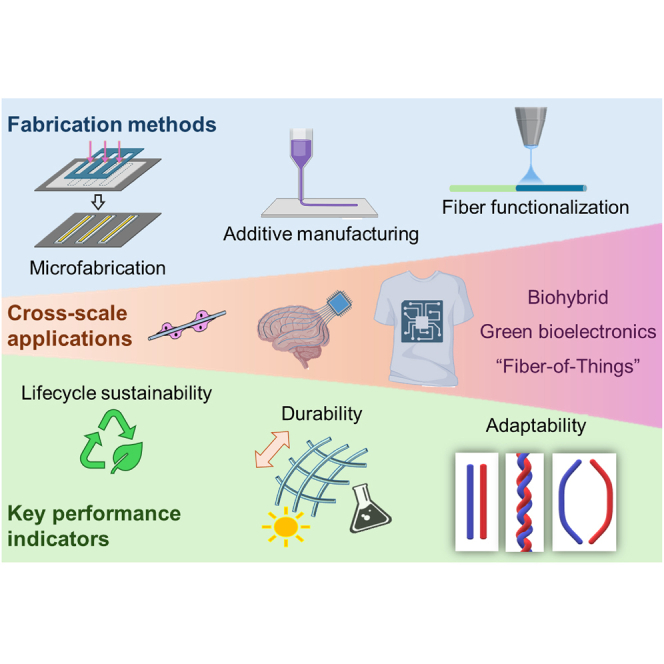
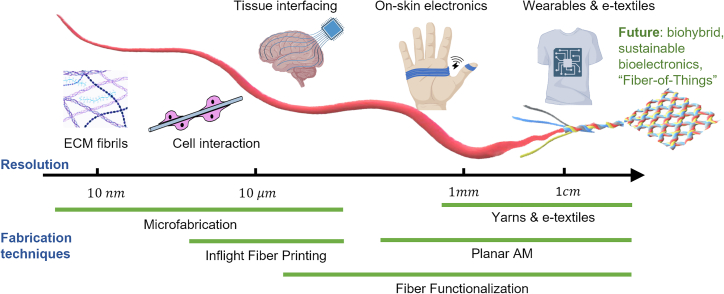
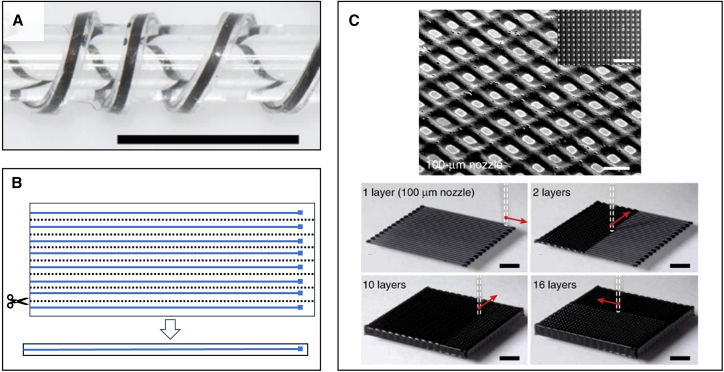
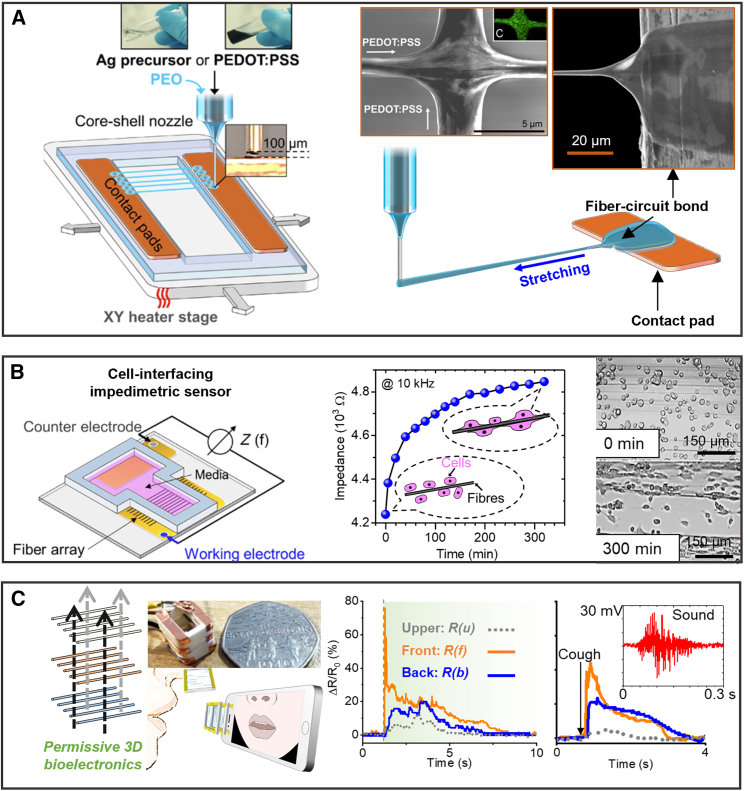
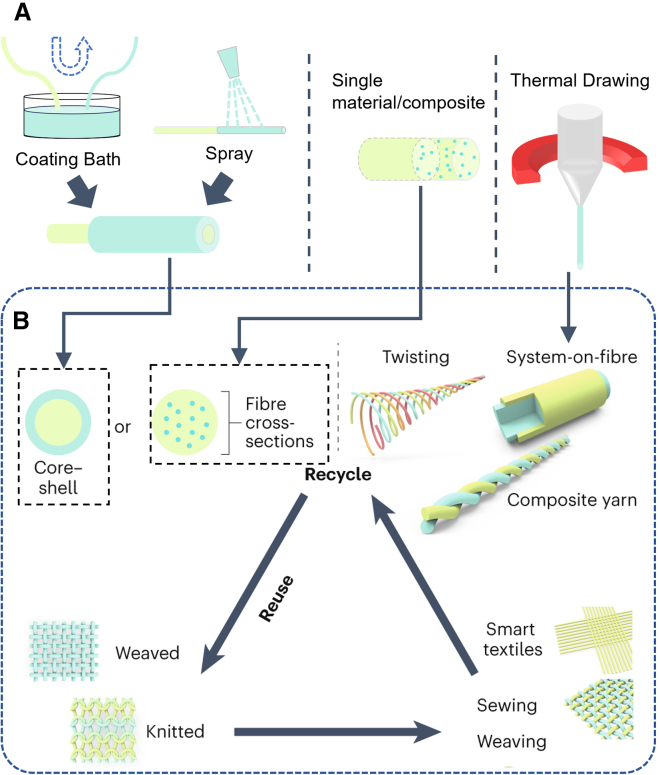
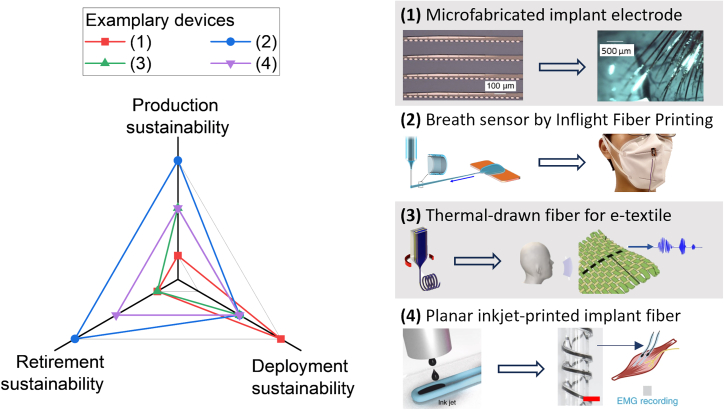
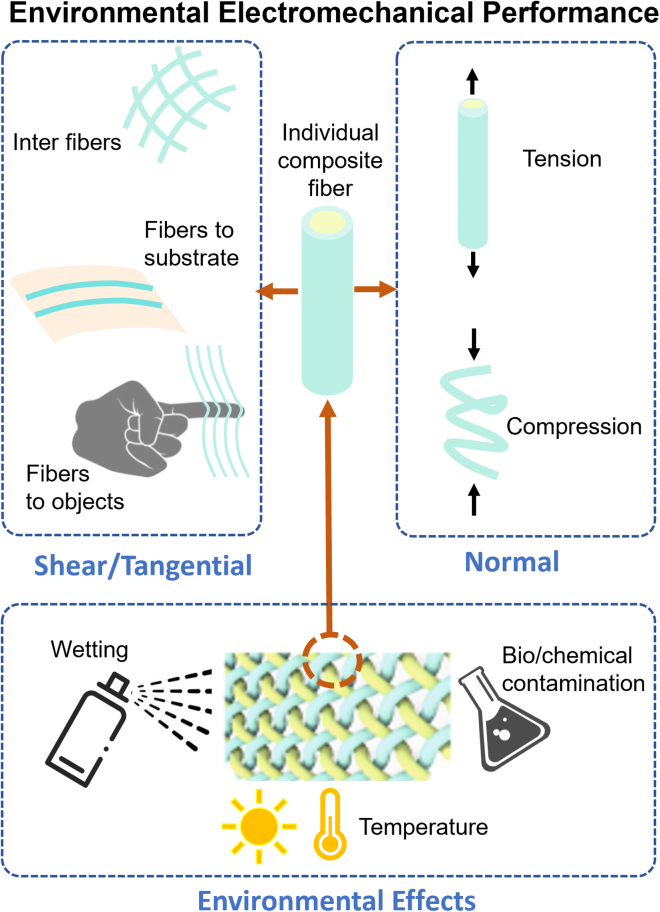
Bioelectronics provide efficient information exchange between living systems and man-made devices, acting as a vital bridge in merging the domains of biology and technology. Using functional fibers as building blocks, bioelectronics could be hierarchically assembled with vast design possibilities across different scales, enhancing their application-specific biointegration, ergonomics, and sustainability. In this work, the authors review recent developments in bioelectronic fiber elements by reflecting on their fabrication approaches and key performance indicators, including the life cycle sustainability, environmental electromechanical performance, and functional adaptabilities. By delving into the challenges associated with physical deployment and exploring innovative design strategies for adaptability, we propose avenues for future development of bioelectronics via fiber building blocks, boosting the potential of "Fiber of Things" for market-ready bioelectronic products with minimized environmental impact.
生物电子学实现了生命系统与人工设备之间的高效信息交换,在融合生物学和技术领域方面发挥着至关重要的桥梁作用。以功能纤维为构建单元,生物电子学能够在不同尺度上进行层次化组装,具有广阔的设计可能性,可增强其特定应用的生物集成性、人体工程学特性和可持续性。在这项工作中,作者通过回顾生物电子纤维元件的制造方法和关键性能指标,包括生命周期可持续性、环境机电性能和功能适应性,来审视其近期的发展情况。通过深入研究与物理部署相关的挑战,并探索适应性的创新设计策略,我们提出了通过纤维构建单元实现生物电子学未来发展的途径,以提升“物联网纤维”在环境影响最小化的市场就绪生物电子产品方面的潜力。