Department of Microbiology, Immunology and Pathology, Metabolism of Infectious Diseases Laboratory, Mycobacteria Research Laboratories, College of Veterinary Medicine and Biomedical Sciences, Colorado State University, Fort Collins, CO, USA.
Department of Global Health and Social Medicine, Harvard Medical School, Boston, MA, USA.
Sci Rep. 2020 Oct 1;10(1):16257. doi: 10.1038/s41598-020-73212-y.
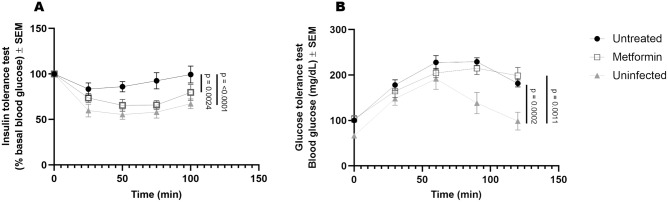
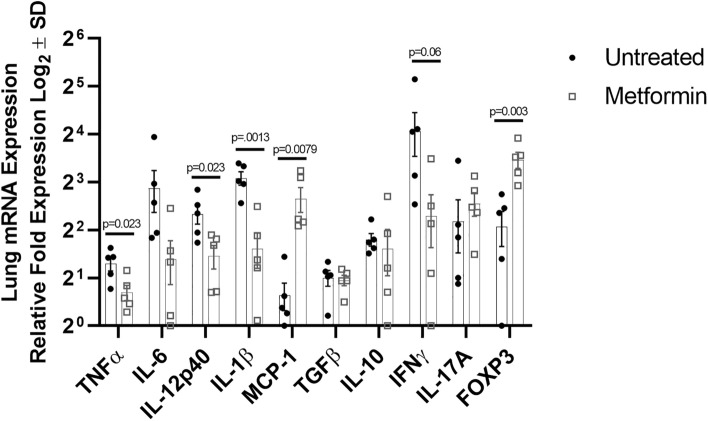
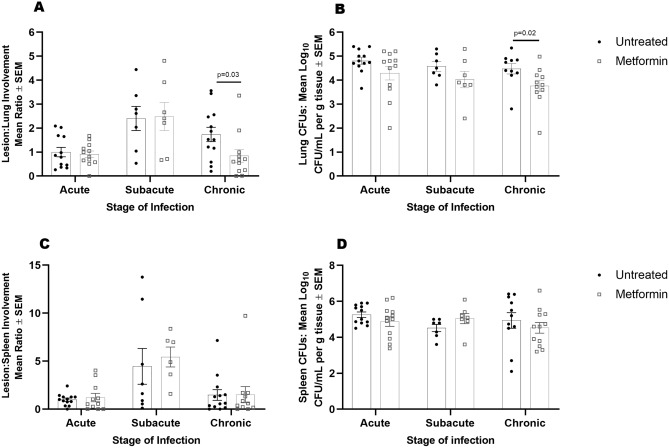
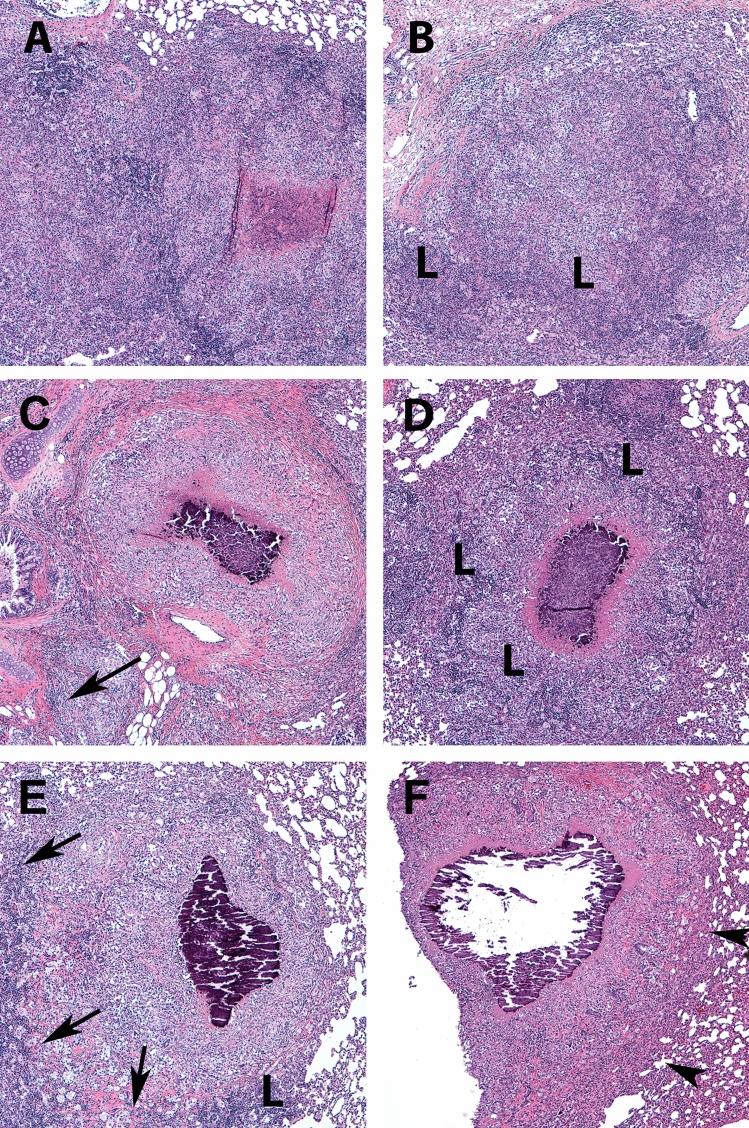
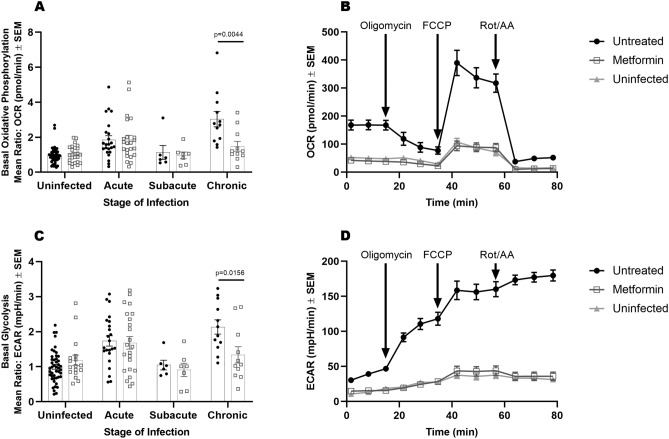
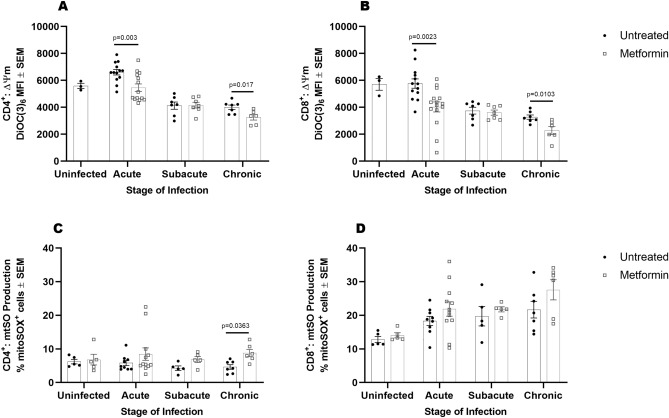
Tuberculosis (TB) is a chronic inflammatory disease that is often associated with alterations in systemic and cellular metabolism that resolves following successful antimicrobial drug treatment. We hypothesized that altered systemic glucose metabolism as a consequence of Mycobacterium tuberculosis (Mtb) infection, contributes to TB pathogenesis, and when normalized with anti-glycemic drugs would improve clinical outcomes. To test this hypothesis, guinea pigs were treated daily with the anti-diabetic drug metformin starting 4 weeks prior or concurrent with aerosol exposure to the H37Rv strain of Mtb. In the chronic stages of infection, Mtb infected metformin-treated animals had restored systemic insulin sensitivity but remained glucose intolerant as determined by oral glucose tolerance testing. Despite persistent glucose intolerance, metformin-treated guinea pigs had a 2.8-fold reduction in lung lesion burden and a 0.7 log decrease in CFUs. An alternative hypothesis that metformin treatment improved clinical disease by having a direct effect on immune cell energy metabolism was tested using extracellular flux analysis and flow cytometry. The proinflammatory immune response to Mtb infection in untreated guinea pigs was associated with a marked increase in energy metabolism (glycolysis and mitochondrial respiration) of peripheral blood mononuclear cells (PBMCs), which was normalized in metformin-treated guinea pigs. Moreover, both CD4 and CD8 T lymphocytes from Mtb infected, metformin treated animals maintained a more normal mitochondrial membrane potential while those isolated from untreated animals had persistent mitochondrial hyperpolarization. These data suggest that metformin promotes natural host resistance to Mtb infection by maintaining immune cell metabolic homeostasis and function during the chronic stages of active TB disease.
结核病(TB)是一种慢性炎症性疾病,常伴有全身和细胞代谢的改变,这些改变在成功的抗微生物药物治疗后得到解决。我们假设,结核分枝杆菌(Mtb)感染导致的系统性葡萄糖代谢改变是导致结核病发病的原因,而用抗血糖药物使其正常化将改善临床结果。为了验证这一假设,我们从感染前 4 周或同时开始每天给豚鼠用抗糖尿病药物二甲双胍治疗,然后用 H37Rv 株 MTB 气溶胶暴露。在感染的慢性阶段,感染 Mtb 的二甲双胍治疗动物恢复了全身胰岛素敏感性,但口服葡萄糖耐量试验仍表现为葡萄糖不耐受。尽管持续存在葡萄糖不耐受,二甲双胍治疗的豚鼠的肺病变负担降低了 2.8 倍,CFU 减少了 0.7 对数级。二甲双胍治疗通过直接影响免疫细胞能量代谢来改善临床疾病的另一种假设,通过细胞外通量分析和流式细胞术进行了测试。未经治疗的豚鼠感染 Mtb 后的促炎免疫反应与外周血单核细胞(PBMC)的能量代谢(糖酵解和线粒体呼吸)明显增加有关,而在二甲双胍治疗的豚鼠中则得到了正常化。此外,来自 Mtb 感染、二甲双胍治疗的动物的 CD4 和 CD8 T 淋巴细胞保持了更正常的线粒体膜电位,而来自未经治疗的动物的 T 淋巴细胞则持续存在线粒体超极化。这些数据表明,二甲双胍通过在活动性结核病的慢性阶段维持免疫细胞代谢稳态和功能,促进天然宿主对 Mtb 感染的抵抗力。