Institute of Crop Sciences, Chinese Academy of Agricultural Sciences, Beijing, China.
International Maize and Wheat Improvement Center (CIMMYT), Apdo. Postal 6‑641, 06600, Mexico, DF, Mexico.
Sci Rep. 2020 Oct 1;10(1):16308. doi: 10.1038/s41598-020-73321-8.
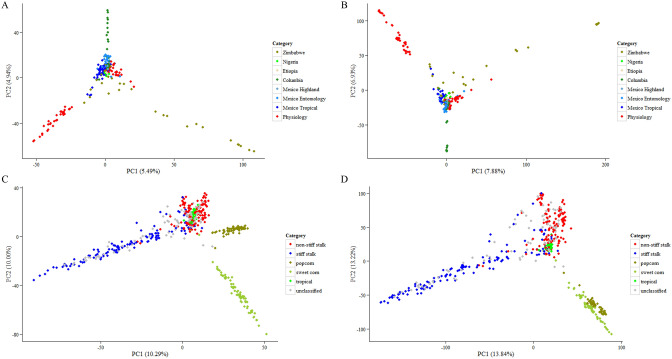
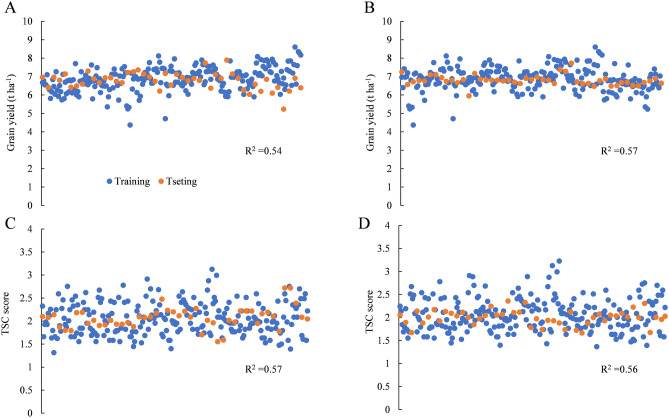
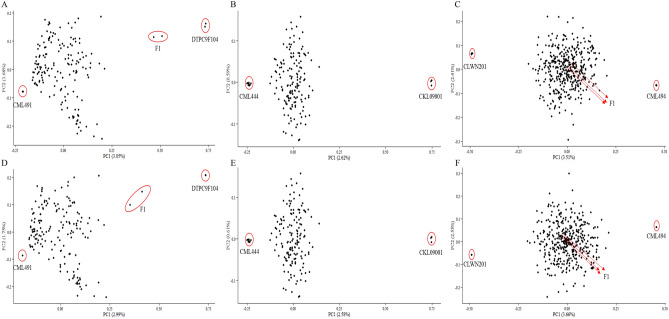
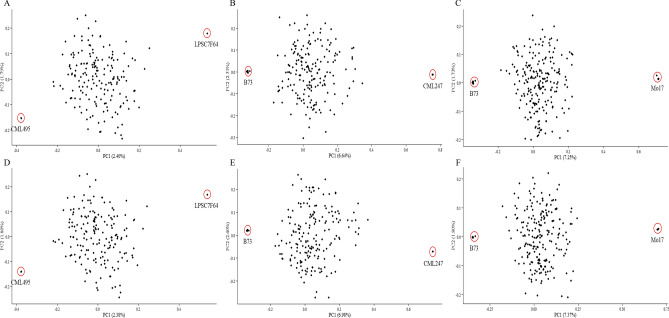
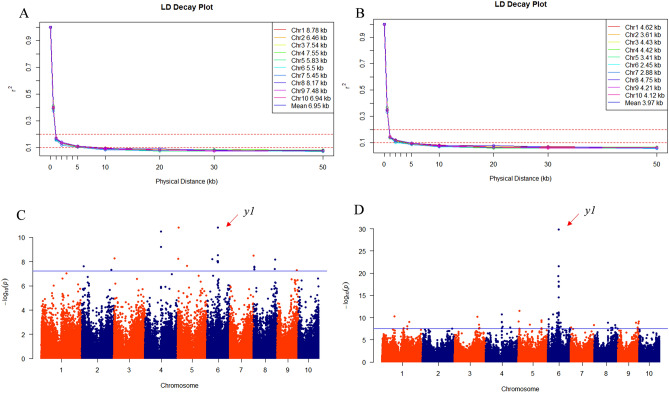
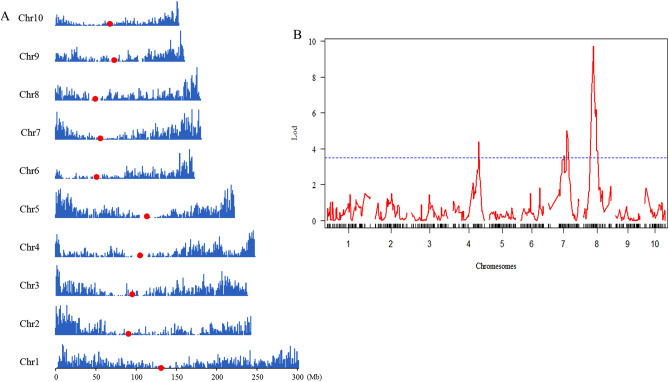
Genotyping-by-Sequencing (GBS) is a low-cost, high-throughput genotyping method that relies on restriction enzymes to reduce genome complexity. GBS is being widely used for various genetic and breeding applications. In the present study, 2240 individuals from eight maize populations, including two association populations (AM), backcross first generation (BC1), BC1F2, F2, double haploid (DH), intermated B73 × Mo17 (IBM), and a recombinant inbred line (RIL) population, were genotyped using GBS. A total of 955,120 of raw data for SNPs was obtained for each individual, with an average genotyping error of 0.70%. The rate of missing genotypic data for these SNPs was related to the level of multiplex sequencing: ~ 25% missing data for 96-plex and ~ 55% for 384-plex. Imputation can greatly reduce the rate of missing genotypes to 12.65% and 3.72% for AM populations and bi-parental populations, respectively, although it increases total genotyping error. For analysis of genetic diversity and linkage mapping, unimputed data with a low rate of genotyping error is beneficial, whereas, for association mapping, imputed data would result in higher marker density and would improve map resolution. Because imputation does not influence the prediction accuracy, both unimputed and imputed data can be used for genomic prediction. In summary, GBS is a versatile and efficient SNP discovery approach for homozygous materials and can be effectively applied for various purposes in maize genetics and breeding.
基因分型测序(GBS)是一种低成本、高通量的基因分型方法,它依赖于限制酶来降低基因组的复杂性。GBS 正被广泛用于各种遗传和育种应用。在本研究中,对来自 8 个玉米群体的 2240 个个体进行了 GBS 基因分型,包括 2 个关联群体(AM)、回交第一代(BC1)、BC1F2、F2、双单倍体(DH)、互交 B73×Mo17(IBM)和重组自交系(RIL)群体。每个个体的原始 SNP 数据获得了 955120 个,平均基因分型错误率为 0.70%。这些 SNP 的缺失基因型数据率与多重测序水平有关:96 plex 的缺失数据约为 25%,384-plex 的缺失数据约为 55%。尽管增加了总基因分型错误率,但imputation 可将缺失基因型的比率分别降低到 AM 群体和双亲群体的 12.65%和 3.72%。对于遗传多样性和连锁作图分析,具有低基因分型错误率的未 imputed 数据是有益的,而对于关联作图,imputed 数据会导致更高的标记密度并提高图谱分辨率。由于 imputation 不会影响预测准确性,因此未 imputed 和 imputed 数据均可用于基因组预测。总之,GBS 是一种用于纯合材料的多功能且高效的 SNP 发现方法,可有效地应用于玉米遗传学和育种的各种目的。