European Centre for Disease Prevention and Control (ECDC), Stockholm, Sweden.
The ECDC National Focal Points laboratory e-reporting survey group members are listed at the end of the article.
Euro Surveill. 2020 Oct;25(39). doi: 10.2807/1560-7917.ES.2020.25.39.1900591.
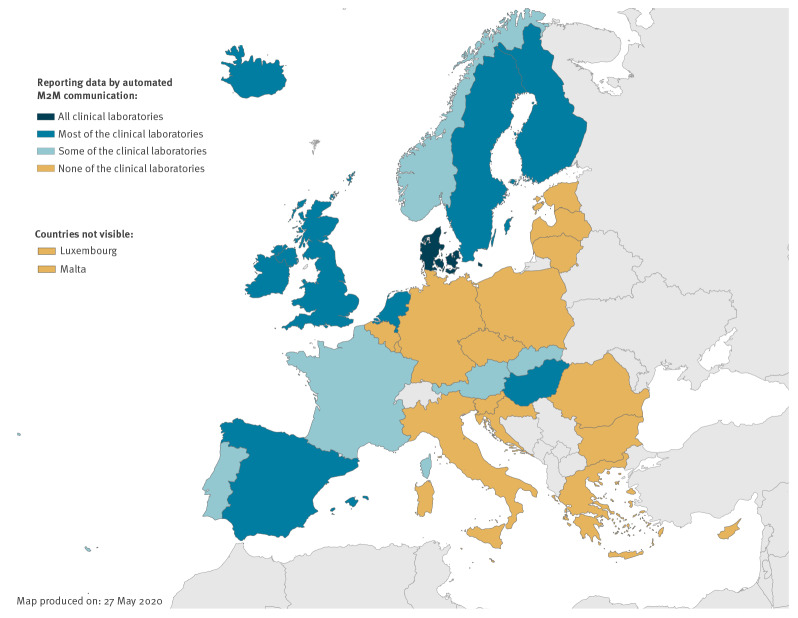
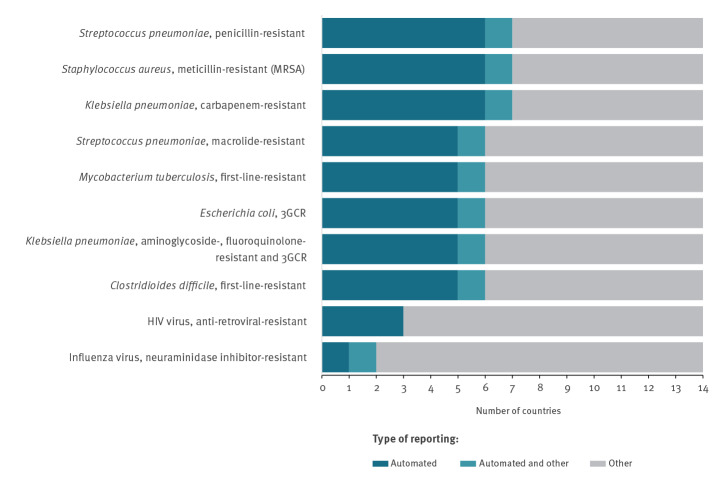
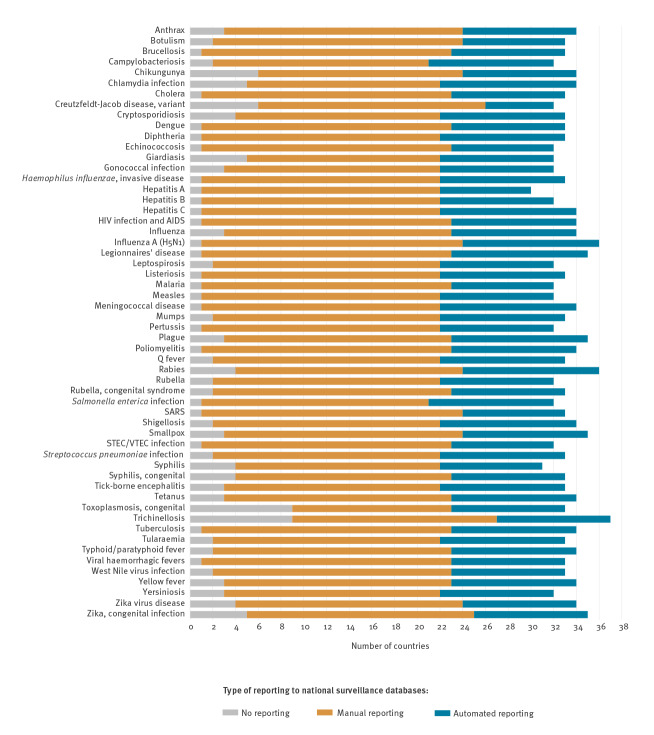
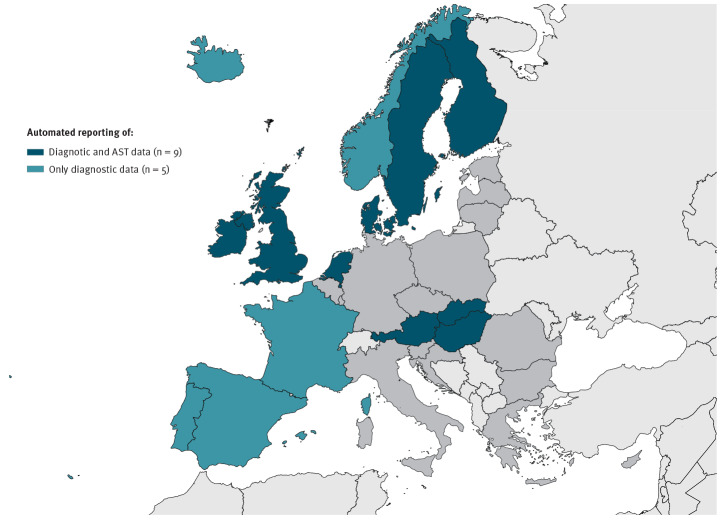
BackgroundTimely reporting of microbiology test results is essential for infection management. Automated, machine-to-machine (M2M) reporting of diagnostic and antimicrobial resistance (AMR) data from laboratory information management systems (LIMS) to public health agencies improves timeliness and completeness of communicable disease surveillance.AimWe surveyed microbiology data reporting practices for national surveillance of EU-notifiable diseases in European Union/European Economic Area (EU/EEA) countries in 2018.MethodsEuropean Centre for Disease Prevention and Control (ECDC) National Microbiology and Surveillance Focal Points completed a questionnaire on the modalities and scope of clinical microbiology laboratory data reporting.ResultsComplete data were provided for all 30 EU/EEA countries. Clinical laboratories used a LIMS in 28 countries. LIMS data on EU-notifiable diseases and AMR were M2M-reported to the national level in 14 and nine countries, respectively. In the 14 countries, associated demographic data reported allowed the de-duplication of patient reports. In 13 countries, M2M-reported data were used for cluster detection at the national level. M2M laboratory data reporting had been validated against conventional surveillance methods in six countries, and replaced those in five. Barriers to M2M reporting included lack of information technology support and financial incentives.ConclusionM2M-reported laboratory data were used for national public health surveillance and alert purposes in nearly half of the EU/EEA countries in 2018. Reported data on infectious diseases and AMR varied in extent and disease coverage across countries and laboratories. Improving automated laboratory-based surveillance will depend on financial and regulatory incentives, and harmonisation of health information and communication systems.
及时报告微生物学检测结果对于感染管理至关重要。通过实验室信息管理系统(LIMS)将诊断和抗微生物药物耐药性(AMR)数据自动、机器对机器(M2M)报告给公共卫生机构,可提高传染病监测的及时性和完整性。
我们于 2018 年调查了欧盟/欧洲经济区(EU/EEA)国家用于欧盟通报疾病国家监测的微生物学数据报告实践。
欧洲疾病预防控制中心(ECDC)国家微生物学和监测联络点完成了一份关于临床微生物学实验室数据报告方式和范围的问卷。
所有 30 个欧盟/EEA 国家都提供了完整的数据。28 个国家的临床实验室使用了 LIMS。14 个国家以 M2M 方式向国家一级报告了关于欧盟通报疾病和 AMR 的 LIMS 数据,9 个国家分别报告了 AMR 数据。在这 14 个国家,报告的相关人口统计学数据允许对患者报告进行去重。在 13 个国家,M2M 报告的数据用于国家一级的集群检测。6 个国家已经使用 M2M 实验室数据报告对传统监测方法进行了验证,5 个国家已用其替代。M2M 报告的障碍包括缺乏信息技术支持和财政激励。
2018 年,近一半的欧盟/EEA 国家使用 M2M 报告的实验室数据进行国家公共卫生监测和警报目的。各国和各实验室报告的传染病和 AMR 数据在范围和疾病覆盖面上存在差异。改善基于实验室的自动监测将取决于财政和监管激励措施,以及卫生信息和通信系统的协调。