Department of Respiratory Medicine, Tokyo Medical University Ibaraki Medical Center, 3-20-1 Chuou, Ami-machi, Inashiki-gun, Ibaraki, 300-0395, Japan.
Department of Respiratory Medicine, Tokyo Medical University Ibaraki Medical Center, 3-20-1 Chuou, Ami-machi, Inashiki-gun, Ibaraki, 300-0395, Japan; Department of Respiratory Medicine, Tokyo Medical University, 6-7-1 Nishishinjuku, Shinjuku-ku, Tokyo, 160-0023, Japan.
Mol Metab. 2020 Dec;42:101093. doi: 10.1016/j.molmet.2020.101093. Epub 2020 Sep 30.
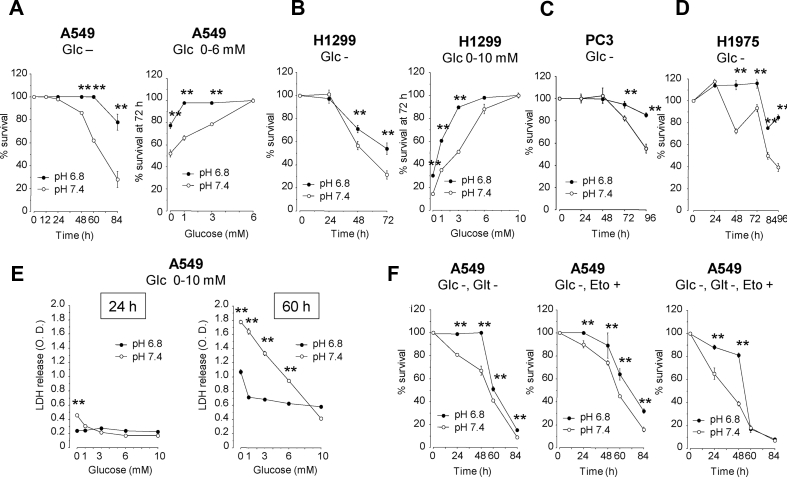
Tumor cells experience hypoxia, acidosis, and hypoglycemia. Metabolic adaptation to glucose shortage is essential to maintain tumor cells' survival because of their high glucose requirement. This study evaluated the hypothesis that acidosis might promote tumor survival during glucose shortage and if so, explored a novel drug targeting metabolic vulnerability to glucose shortage.
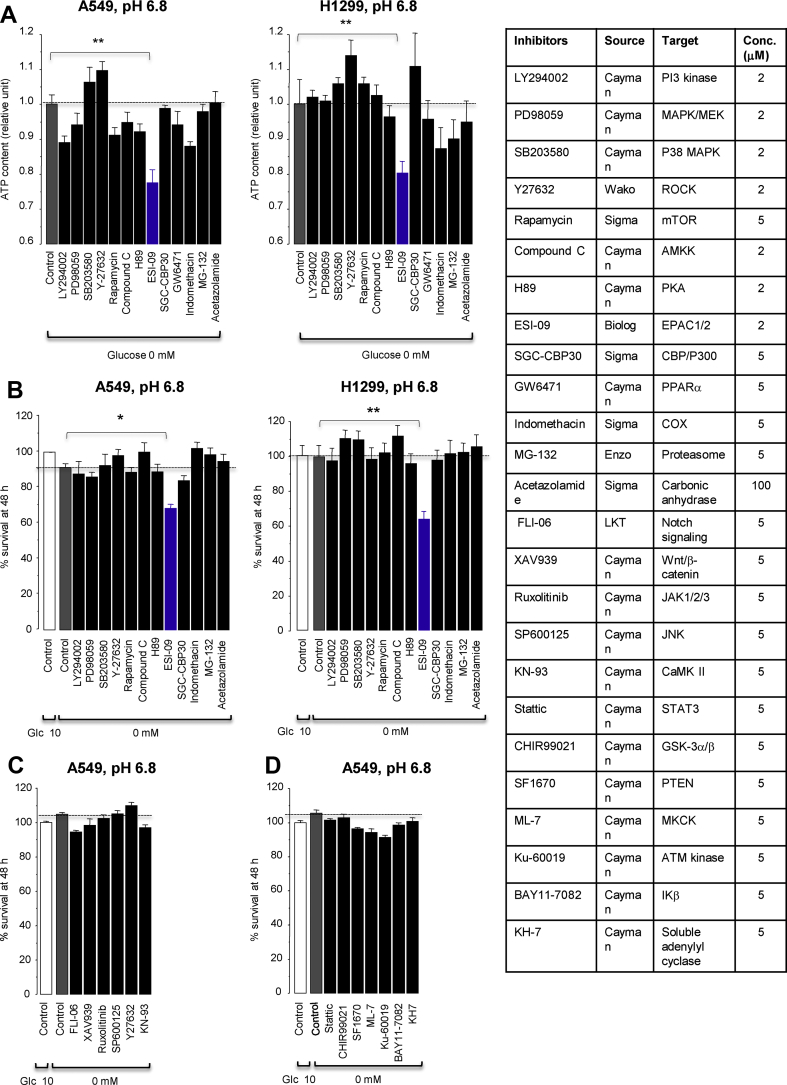
Cell survival and bioenergetics metabolism were assessed in lung cancer cell lines. Our in-house small-molecule compounds were screened to identify those that kill cancer cells under low-glucose conditions. Cytotoxicity against non-cancerous cells was also assessed. Tumor growth was evaluated in vivo using a mouse engraft model.
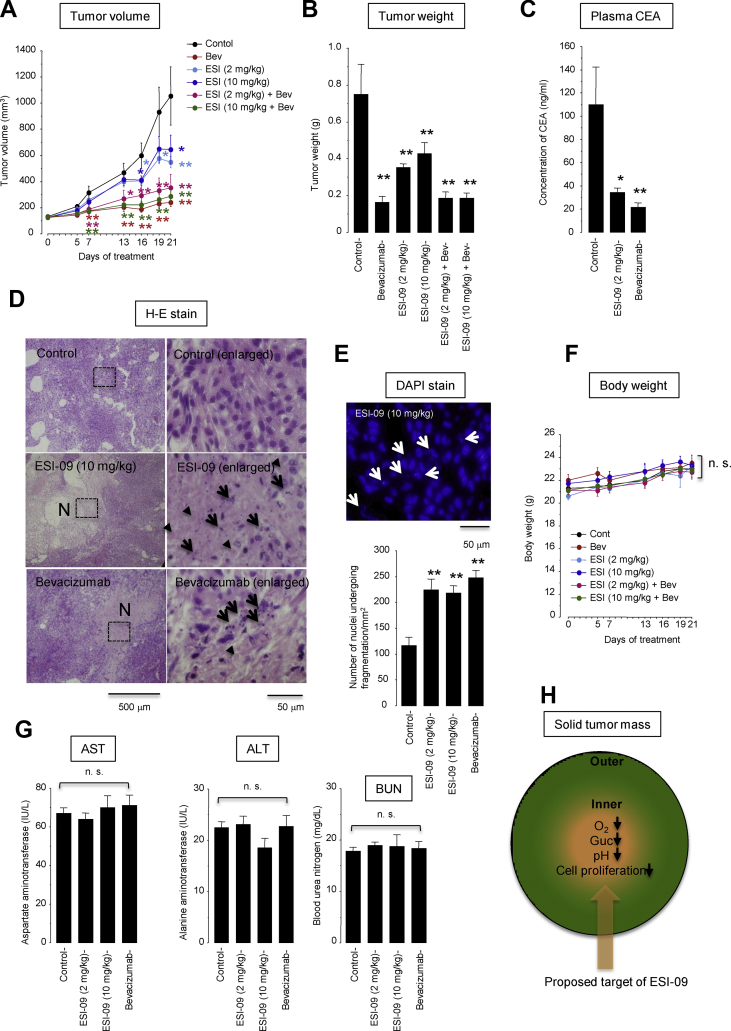
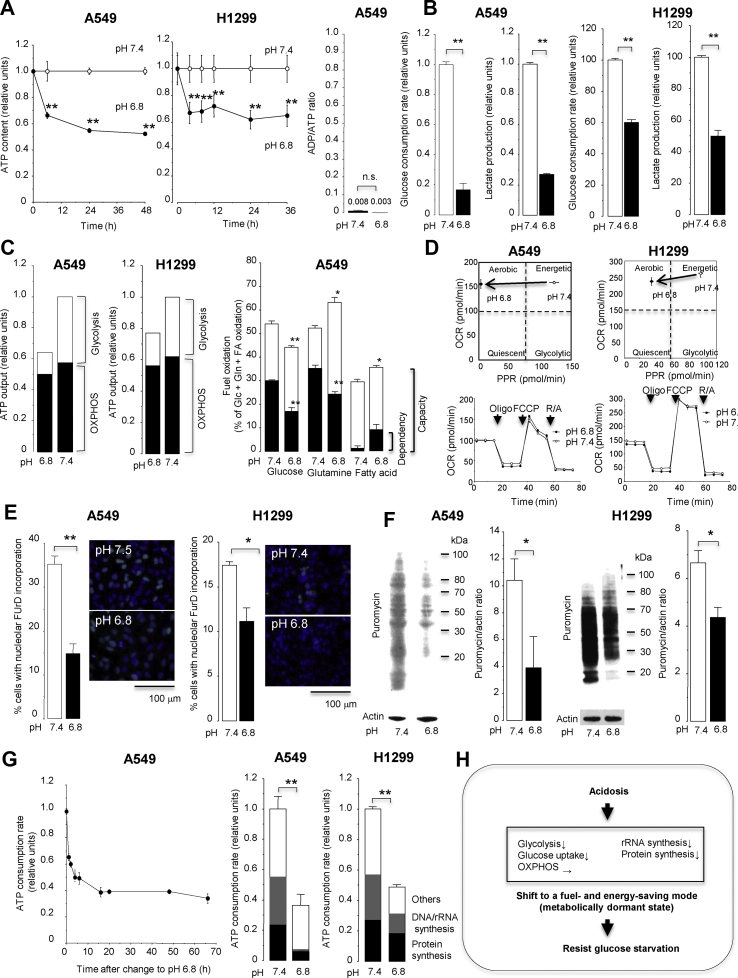
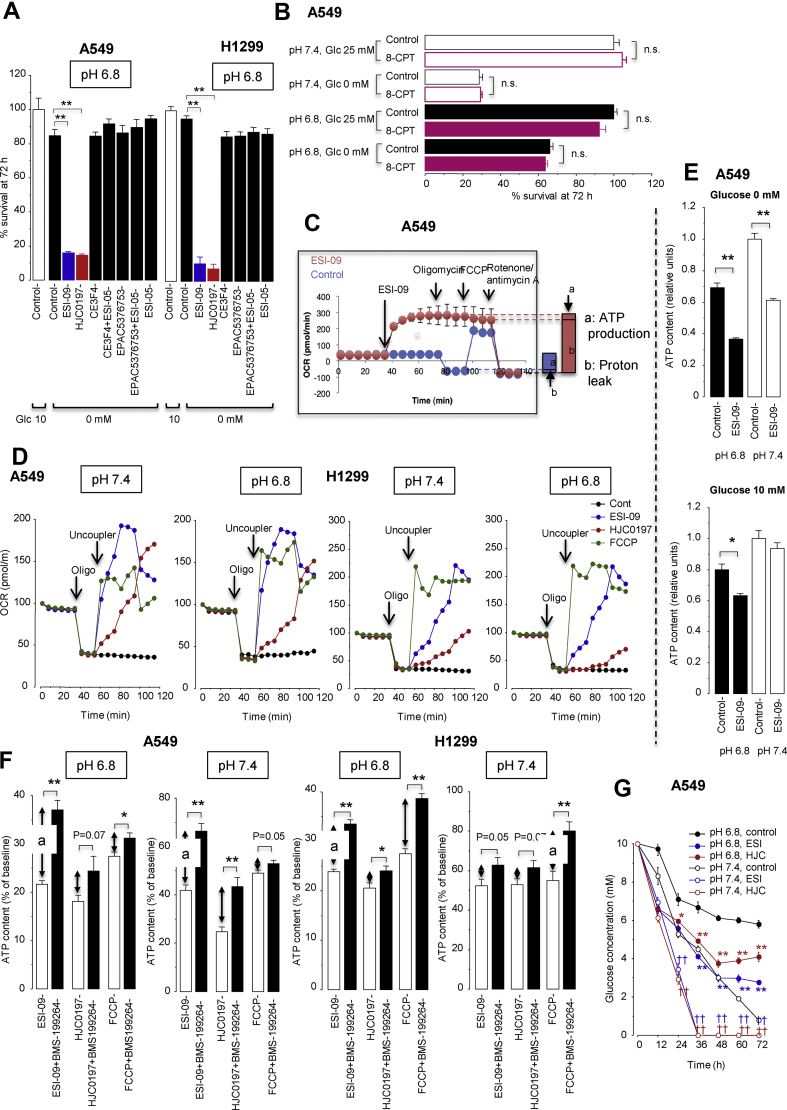
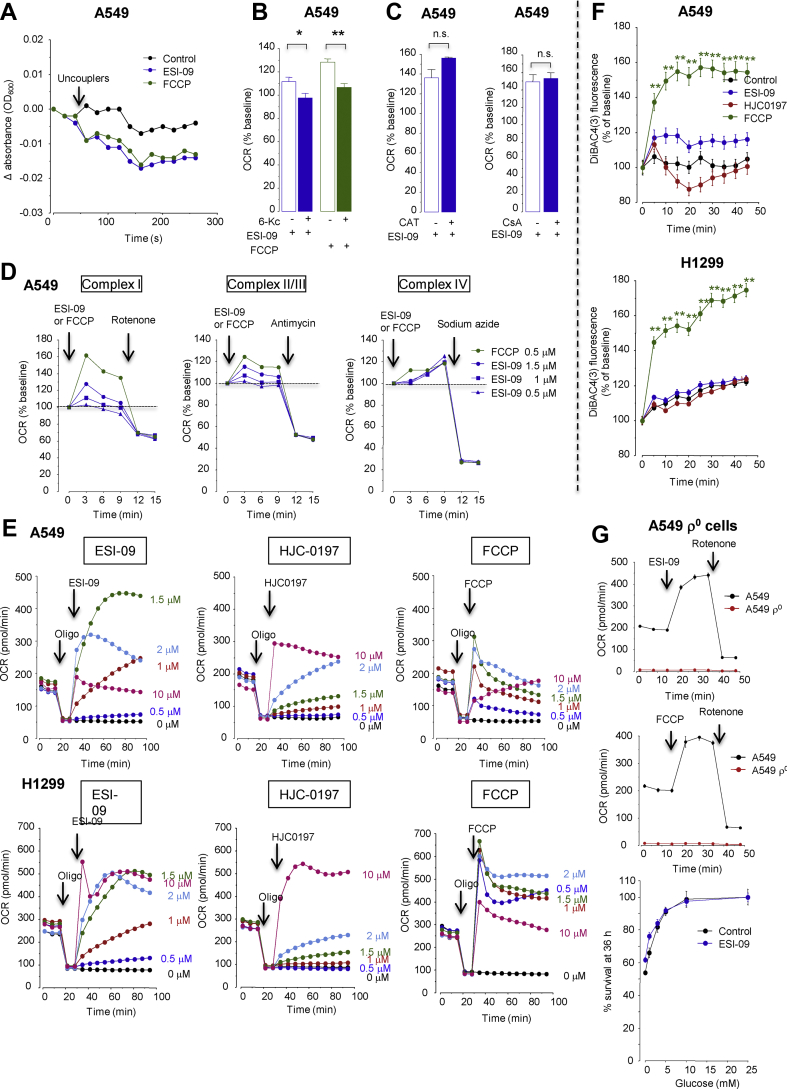
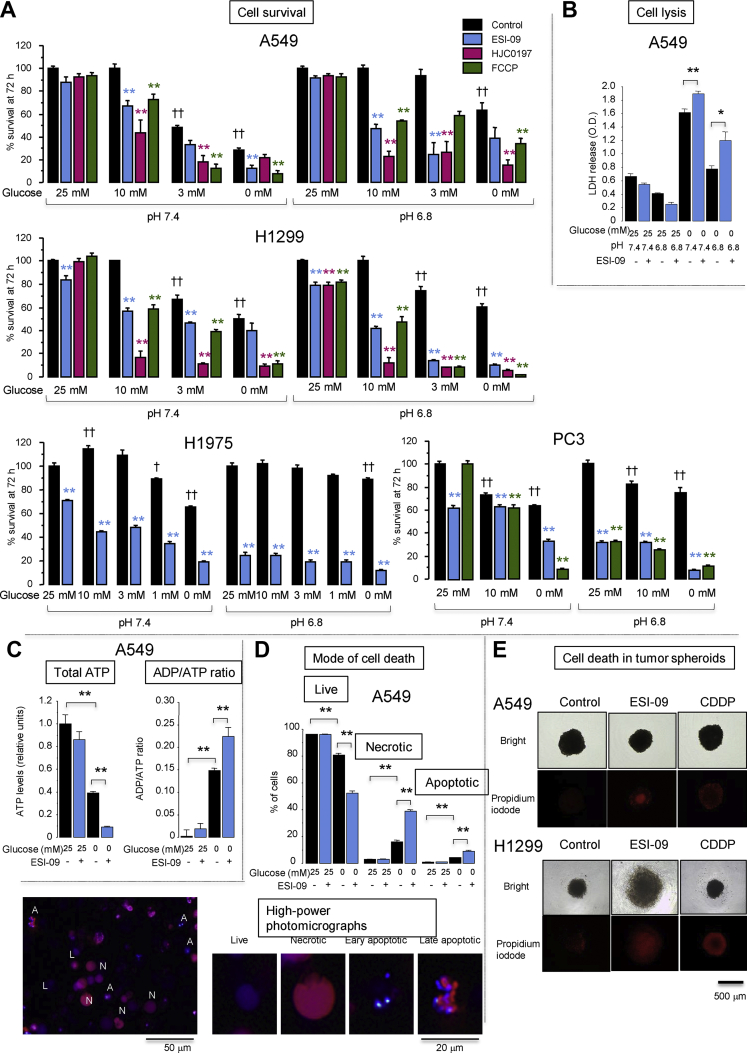
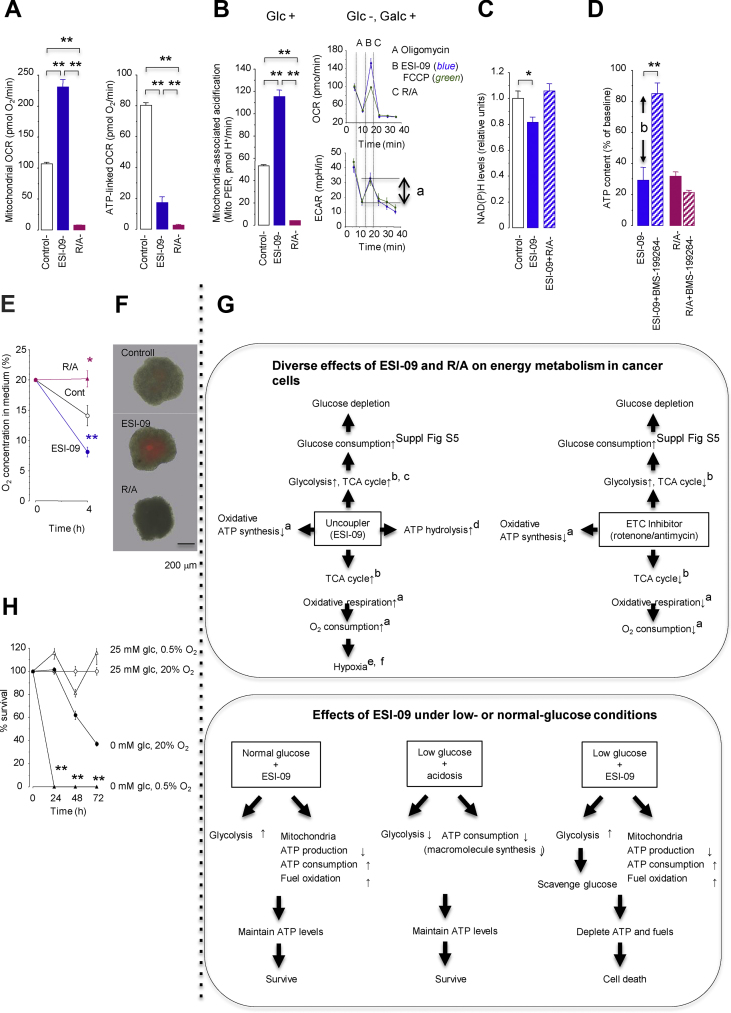
Acidosis limited the cellular consumption of glucose and ATP, causing tumor cells to enter a metabolically dormant but energetically economic state, which promoted tumor cell survival during glucose deficiency. We identified ESI-09, a previously known exchange protein directly activated by cAMP (EAPC) inhibitor, as an anti-cancer compound that inhibited cancer cells under low-glucose conditions even when associated with acidosis. Bioenergetic studies showed that independent of EPAC inhibition, ESI-09 was a safer mitochondrial uncoupler than a classical uncoupler and created a futile cycle of mitochondrial respiration, leading to decreased ATP production, increased ATP dissipation, and fuel scavenging. Accordingly, ESI-09 exhibited more cytotoxic effects under low-glucose conditions than under normal glucose conditions. ESI-09 was also more effective than actively proliferating cells on quiescent glucose-restricted cells. Cisplatin showed opposite effects. ESI-09 inhibited tumor growth in lung cancer engraft mice.
This study highlights the acidosis-induced promotion of tumor survival during glucose shortage and demonstrates that ESI-09 is a novel potent anti-cancer mitochondrial uncoupler that targets a metabolic vulnerability to glucose shortage even when associated with acidosis. The higher cytotoxicity under lower-than-normal glucose conditions suggests that ESI-09 is safer than conventional chemotherapy, can target the metabolic vulnerability of tumor cells to low-glucose stress, and is applicable to many cancer cell types.
肿瘤细胞经历缺氧、酸中毒和低血糖。代谢适应葡萄糖缺乏对于维持肿瘤细胞的存活至关重要,因为它们对葡萄糖的需求很高。本研究评估了这样一种假设,即酸中毒可能会促进肿瘤细胞在葡萄糖缺乏时的存活,如果是这样,那么探索一种针对葡萄糖缺乏代谢脆弱性的新型药物。
评估了肺癌细胞系中的细胞存活和生物能量代谢。筛选了我们内部的小分子化合物,以确定在低糖条件下杀死癌细胞的化合物。还评估了对非癌细胞的细胞毒性。使用小鼠植入模型在体内评估肿瘤生长。
酸中毒限制了细胞对葡萄糖和 ATP 的消耗,使肿瘤细胞进入代谢休眠但能量经济的状态,从而促进了葡萄糖缺乏时肿瘤细胞的存活。我们确定了 ESI-09,一种先前已知的 cAMP(EAPC)直接激活交换蛋白抑制剂,作为一种抗癌化合物,即使在酸中毒时,也能在低糖条件下抑制癌细胞。生物能量学研究表明,ESI-09 是一种比经典解偶联剂更安全的线粒体解偶联剂,它会产生线粒体呼吸的无效循环,导致 ATP 产生减少、ATP 耗散增加和燃料摄取。因此,与正常葡萄糖条件相比,ESI-09 在低糖条件下表现出更强的细胞毒性。与活跃增殖的细胞相比,ESI-09 对静止的葡萄糖限制细胞更有效。顺铂则表现出相反的效果。ESI-09 抑制肺癌植入小鼠的肿瘤生长。
本研究强调了酸中毒诱导的葡萄糖缺乏时肿瘤存活的促进作用,并证明了 ESI-09 是一种新型有效的抗癌线粒体解偶联剂,即使在酸中毒时,也能针对葡萄糖缺乏的代谢脆弱性。低于正常葡萄糖条件下的更高细胞毒性表明,ESI-09 比传统化疗更安全,可以靶向肿瘤细胞对低葡萄糖应激的代谢脆弱性,并且适用于许多癌细胞类型。