Zumstein Pascal, Bartetzko Anissa, Kaethner Marc, Vetter Laura, Hemphill Andrew, Zumkehr Trix, Laleu Benoît, Preza Matías, Lundström-Stadelmann Britta
Institute of Parasitology, Vetsuisse Faculty, University of Bern, Bern, Switzerland; Graduate School for Cellular and Biomedical Sciences, University of Bern, Bern, Switzerland.
Institute of Parasitology, Vetsuisse Faculty, University of Bern, Bern, Switzerland.
Int J Parasitol Drugs Drug Resist. 2025 Aug 23;29:100609. doi: 10.1016/j.ijpddr.2025.100609.
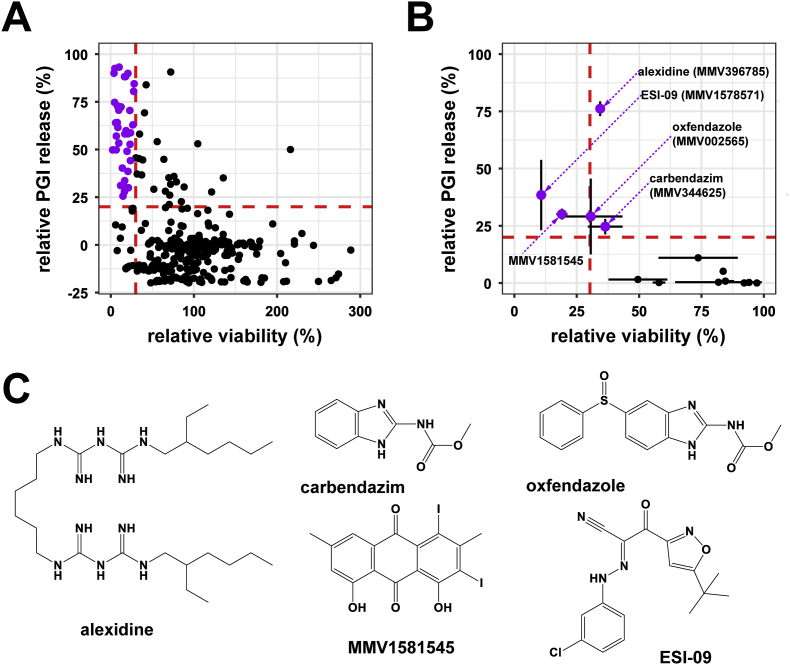
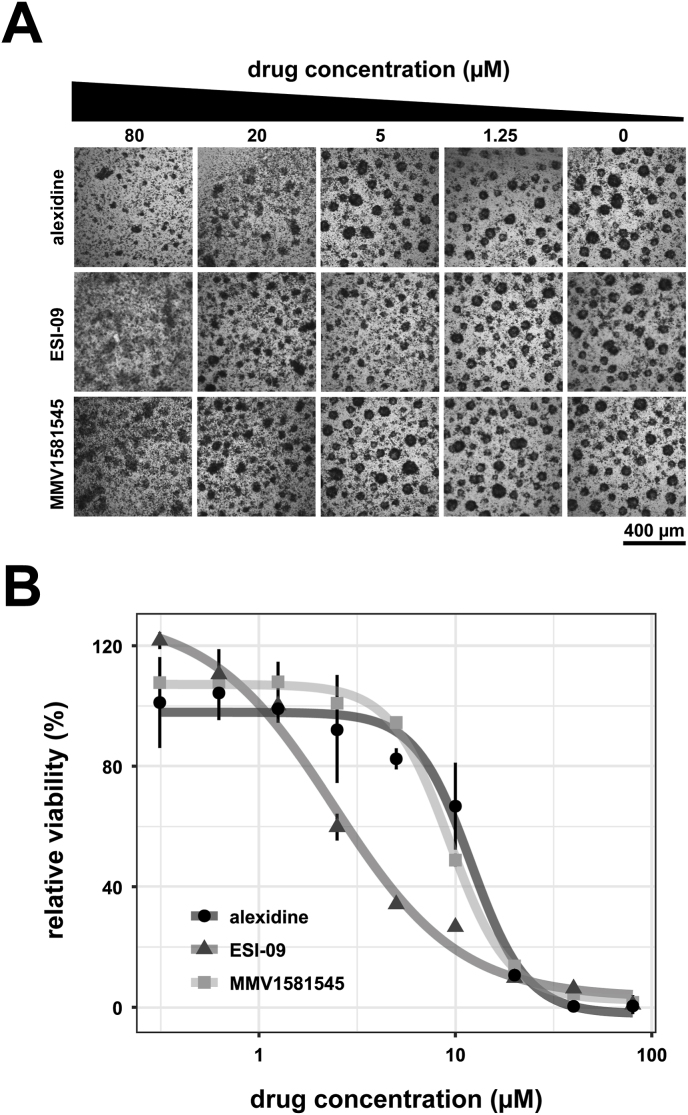
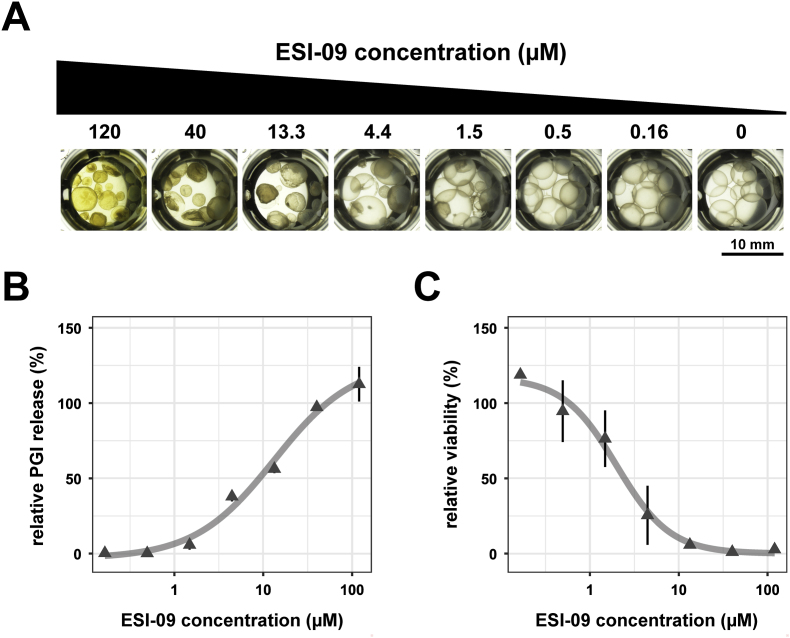
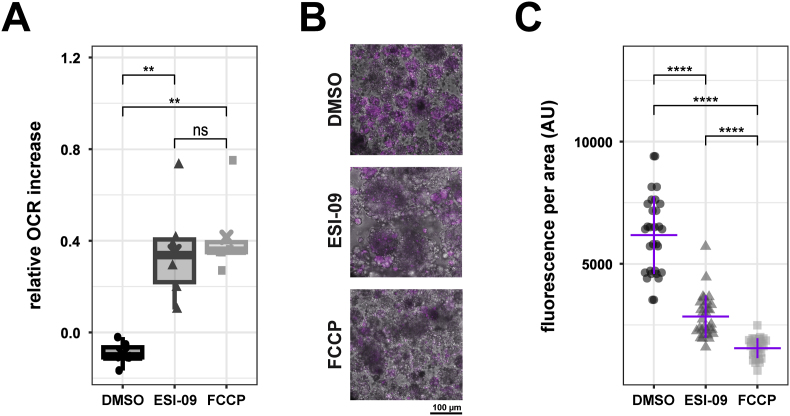
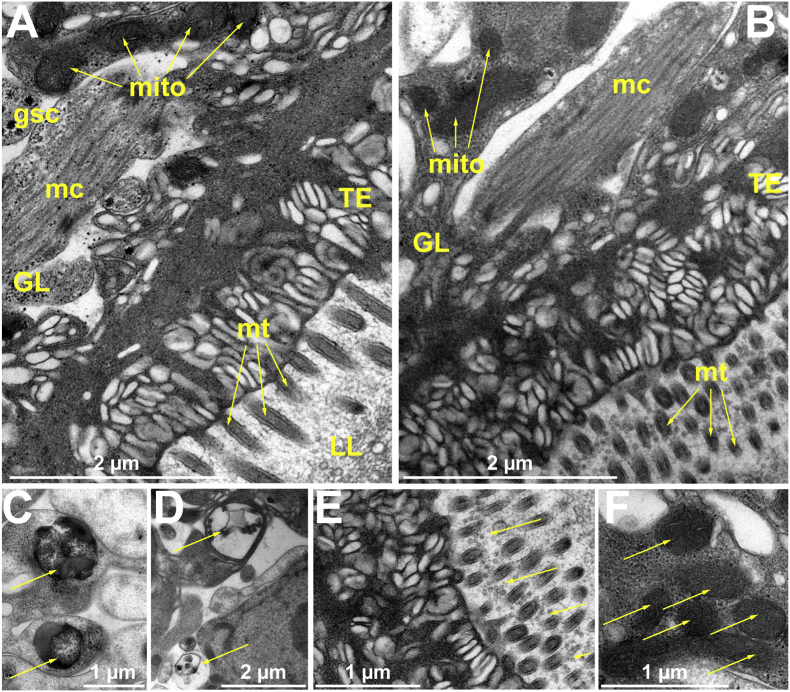
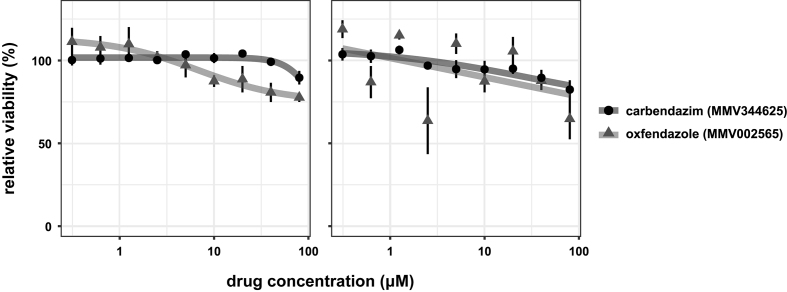
Alveolar echinococcosis (AE) is a life-threatening disease caused by the metacestode stage of the fox tapeworm Echinococcus multilocularis, primarily in the liver. Current drug treatments rely on benzimidazoles, which are not parasiticidal, requiring life-long therapy with significant side effects. Therefore, novel drug treatments are urgently needed. Drug repurposing offers a strategy to identify novel therapies against the neglected disease AE. We report on the in vitro screening of the Pandemic Response Box, an open-access compound library composed of 400 drug-like molecules assembled by Medicines for Malaria Venture (MMV) and the Drugs for Neglected Disease Initiative (DNDi), against E. multilocularis. An overview screen at 10 μM using the metacestode vesicle damage-marker release assay (based on release of phosphoglucose isomerase, PGI) and metacestode vesicle viability assay (based on ATP measurement) identified 37 active compounds. Reassessment in triplicates resulted in five active compounds (alexidine, carbendazim, ESI-09, MMV1581545, oxfendazole) displaying anti-metacestode activity. The parasiticidal activity of these five compounds was evaluated by ATP measurement in germinal layer cells. One compound, ESI-09, acted specifically against E. multilocularis (IC on metacestode vesicles 6.06 ± 3.18 μM by PGI release assay and 2.09 ± 0.56 μM by metacestode vesicle viability assay as well as an IC of 2.45 ± 0.86 μM on germinal layer cells) with a broad therapeutic window when compared to mammalian cell toxicity. Further experiments applying Seahorse technology and tetramethylrhodamine ethyl ester (TMRE) assay revealed that ESI-09 acts as a mitochondrial uncoupler in parasite cells. However, transmission electron microscopy showed no significant ultrastructural changes in parasite mitochondria, though increased secretion of extracellular vesicle-like structures between the tegument and the laminated layer was observed. In summary, screening of the Pandemic Response Box identified ESI-09 as a potential drug candidate for the treatment of AE. Further experiments are needed to evaluate the efficacy of ESI-09 in vivo.
肺泡型包虫病(AE)是一种由狐绦虫多房棘球绦虫的中绦期引起的危及生命的疾病,主要累及肝脏。目前的药物治疗依赖于苯并咪唑类药物,这类药物并无杀寄生虫作用,需要终身治疗且副作用显著。因此,迫切需要新的药物治疗方法。药物重新利用提供了一种策略,以确定针对被忽视疾病AE的新疗法。我们报告了对大流行应对药物库的体外筛选情况,该库是一个开放获取的化合物库,由疟疾药物事业(MMV)和被忽视疾病药物研发倡议(DNDi)组装的400种类药物分子组成,用于筛选抗多房棘球绦虫的药物。使用中绦期囊泡损伤标志物释放试验(基于磷酸葡萄糖异构酶,PGI的释放)和中绦期囊泡活力试验(基于ATP测量)在10μM浓度下进行的初步筛选,确定了37种活性化合物。一式三份重新评估后,有五种活性化合物(氯己定、多菌灵、ESI - 09、MMV1581545、奥芬达唑)显示出抗中绦期囊泡活性。通过测量生发层细胞中的ATP来评估这五种化合物的杀寄生虫活性。一种化合物ESI - 09对多房棘球绦虫具有特异性作用(通过PGI释放试验,中绦期囊泡上的IC为6.06±3.18μM,通过中绦期囊泡活力试验为2.09±0.56μM,在生发层细胞上的IC为2.45±(0.86)μM),与哺乳动物细胞毒性相比,具有较宽的治疗窗口。应用海马技术和四甲基罗丹明乙酯(TMRE)试验的进一步实验表明,ESI - 09在寄生虫细胞中作为线粒体解偶联剂起作用。然而,透射电子显微镜显示寄生虫线粒体没有明显的超微结构变化,尽管观察到皮层和板层之间细胞外囊泡样结构的分泌增加。总之,对大流行应对药物库的筛选确定ESI - 09为治疗AE的潜在候选药物。需要进一步的实验来评估ESI - 09在体内的疗效。