Mulenos Marina R, Lujan Henry, Pitts Lauren R, Sayes Christie M
Department of Environmental Science, Baylor University, Waco, TX 76798-7266, USA.
Nanomaterials (Basel). 2020 Sep 30;10(10):1953. doi: 10.3390/nano10101953.
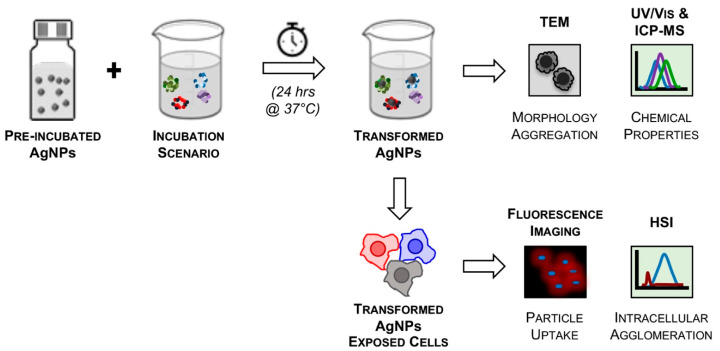
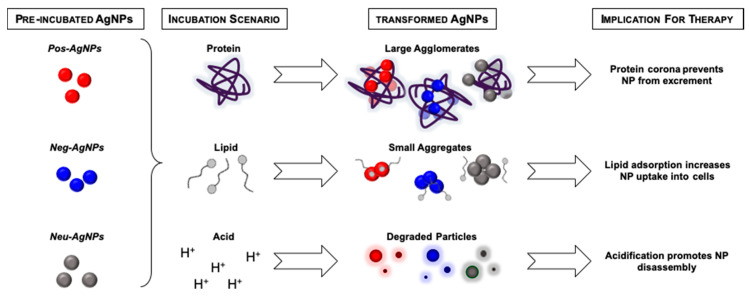
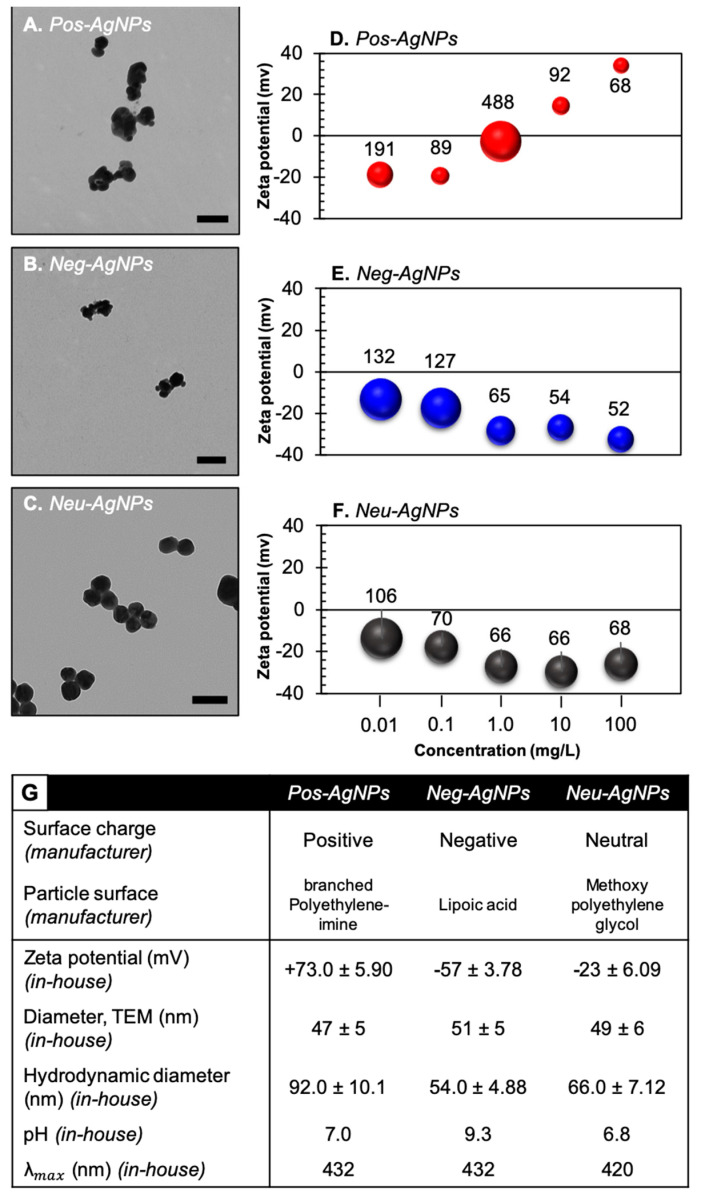
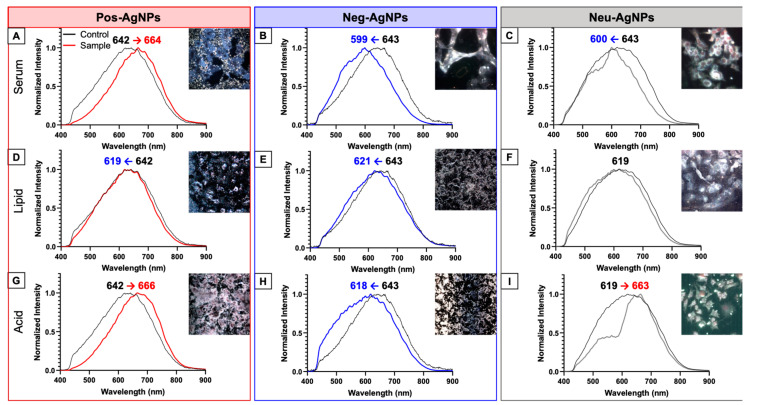
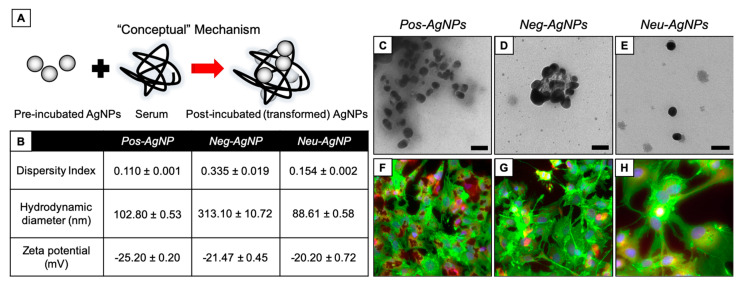
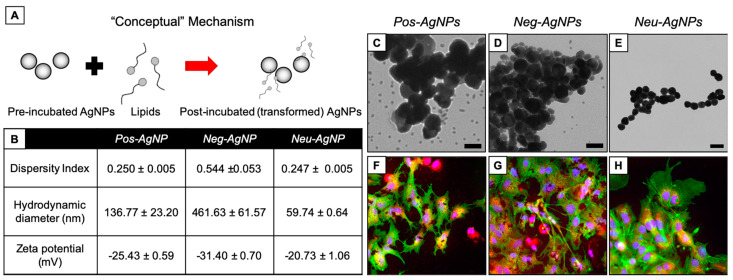
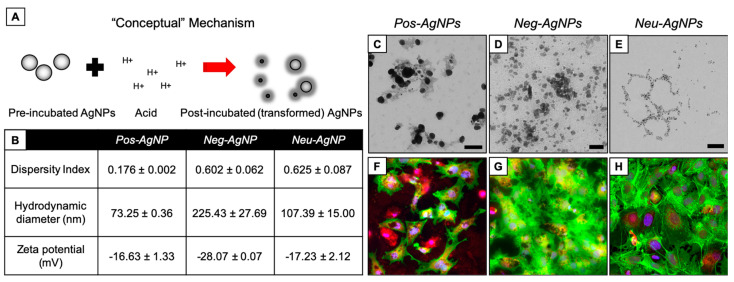
Engineered nanoparticles are utilized as drug delivery carriers in modern medicine due to their high surface area and tailorable surface functionality. After in vivo administration, nanoparticles distribute and interact with biomolecules, such as polar proteins in serum, lipid membranes in cells, and high ionic conditions during digestion. Electrostatic forces and steric hindrances in a nanoparticle population are disturbed and particles agglomerate in biological fluids. Little is known about the stability of nanoparticles in relation to particle surface charge. Here, we compared three different surface-stabilized silver nanoparticles (50 nm) for intracellular agglomeration in human hepatocellular carcinoma cells (HepG2). Nanoparticles stabilized with branched polyethyleneimine conferred a positive surface charge, particles stabilized with lipoic acid conferred a negative surface charge, and particles stabilized with polyethylene glycol conferred a neutral surface charge. Particles were incubated in fetal bovine serum, simulated lung surfactant fluid, and simulated stomach digestion fluid. Each nanoparticle system was characterized via microscopic (transmission electron, fluorescence, and enhanced darkfield) and spectroscopic (hyperspectral, dynamic light scattering, and ultraviolet-visible absorption) techniques. Results showed that nanoparticle transformation included cellular internalization, agglomeration, and degradation and that these changes were dependent upon surface charge and incubation matrix. Hyperspectral analyses showed that positively charged silver nanoparticles red-shifted in spectral analysis after transformations, whereas negatively charged silver nanoparticles blue-shifted. Neutrally charged silver nanoparticles did not demonstrate significant spectral shifts. Spectral shifting indicates de-stabilization in particle suspension, which directly affects agglomeration intracellularly. These characteristics are translatable to critical quality attributes and can be exploited when developing nano-carriers for nanomedicine.
由于具有高比表面积和可定制的表面功能,工程纳米颗粒在现代医学中被用作药物递送载体。体内给药后,纳米颗粒会分布并与生物分子相互作用,例如血清中的极性蛋白质、细胞中的脂质膜以及消化过程中的高离子环境。纳米颗粒群体中的静电力和空间位阻受到干扰,颗粒在生物流体中发生团聚。关于纳米颗粒稳定性与颗粒表面电荷的关系,目前所知甚少。在此,我们比较了三种不同表面稳定的银纳米颗粒(50纳米)在人肝癌细胞(HepG2)中的细胞内团聚情况。用支化聚乙烯亚胺稳定的纳米颗粒具有正表面电荷,用硫辛酸稳定的颗粒具有负表面电荷,用聚乙二醇稳定的颗粒具有中性表面电荷。将颗粒分别在胎牛血清、模拟肺表面活性物质液和模拟胃消化液中孵育。通过显微镜(透射电子、荧光和增强暗场)和光谱(高光谱、动态光散射和紫外可见吸收)技术对每个纳米颗粒系统进行表征。结果表明,纳米颗粒的转变包括细胞内化、团聚和降解,并且这些变化取决于表面电荷和孵育基质。高光谱分析表明,带正电荷的银纳米颗粒在转变后的光谱分析中发生红移,而带负电荷的银纳米颗粒发生蓝移。带中性电荷的银纳米颗粒未显示出明显的光谱位移。光谱位移表明颗粒悬浮液不稳定,这直接影响细胞内的团聚。这些特性可转化为关键质量属性,在开发纳米医学纳米载体时可加以利用。