Department of Psychology, Temple University, Weiss Hall, 1701 N. 13th St., Philadelphia, PA 19122, United States.
Department of Psychology, Harvard University, United States.
J Affect Disord. 2021 Jan 1;278:423-432. doi: 10.1016/j.jad.2020.09.086. Epub 2020 Sep 25.
Mood disorders and problematic substance use co-occur and confer reciprocal risk for each other. Few studies use analytic approaches appropriate for testing whether specific features of one disorder confer risk for the other.
445 participants (59.8% female, Mean age = 20.3 years) completed measures of depression and hypo/mania symptoms and substance use-related impairment; 330 had complete data at follow-up. Of these, 28% reported a history of depression, 4% of bipolar spectrum disorder, 11% of substance use disorder, and 55% reported substance-related impairment. Symptoms and domains of substance-related impairment were modeled in cross-sectional and cross-lagged panel network models.
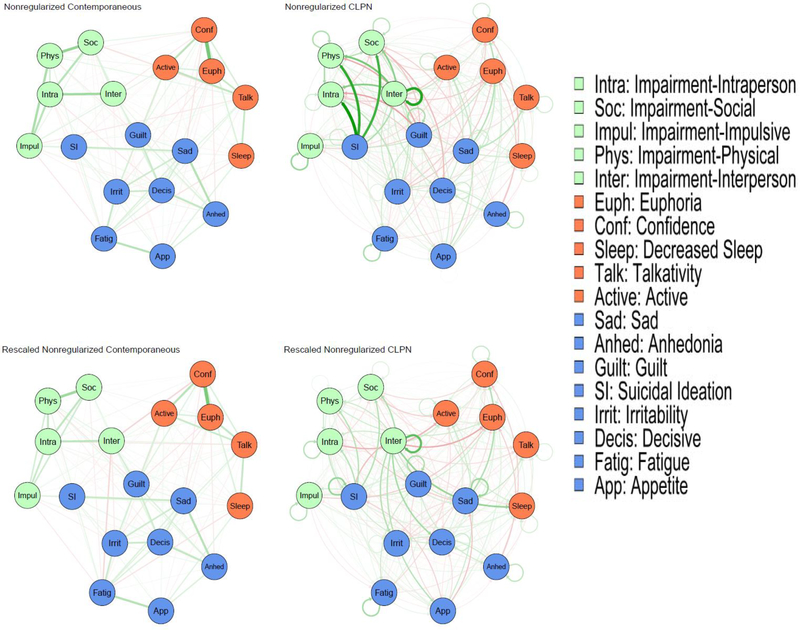
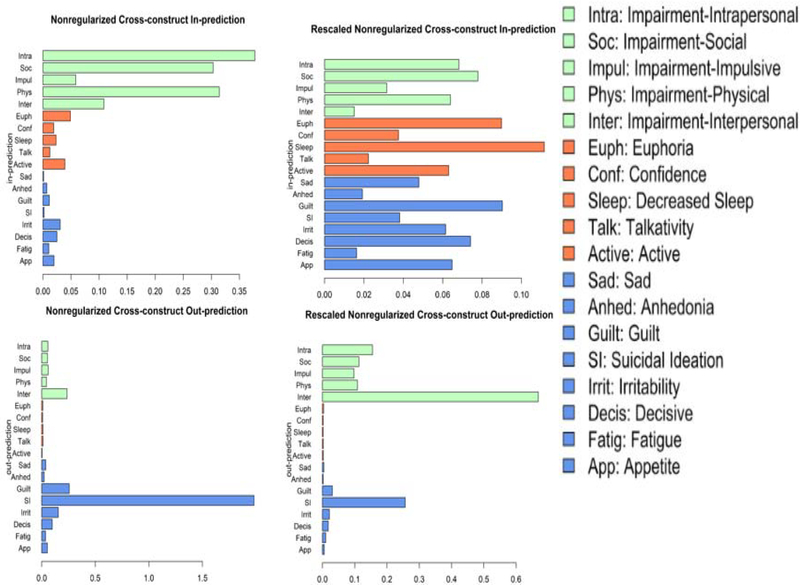
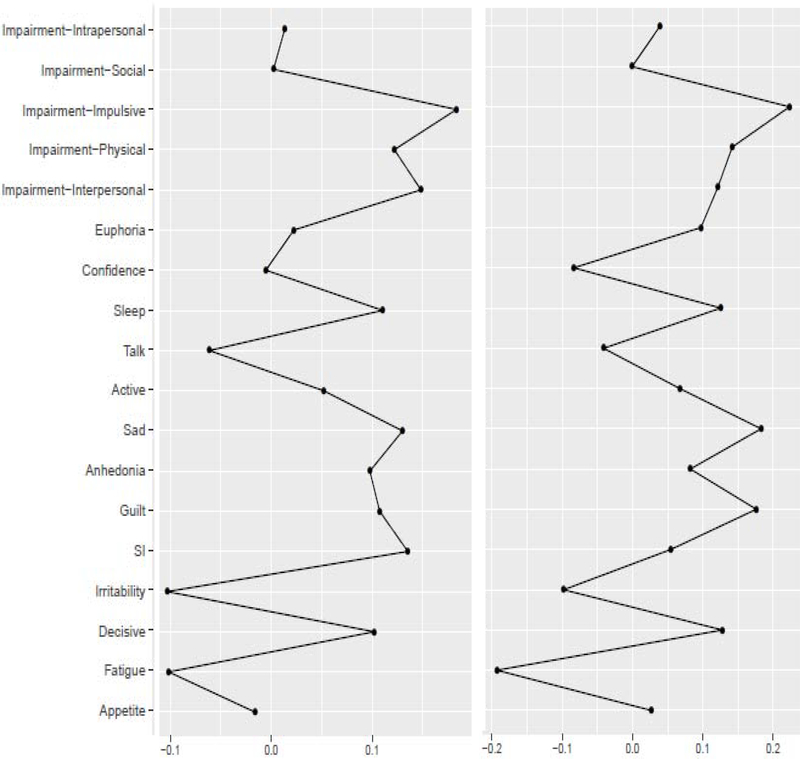
Impulsive and interpersonal impairment were most highly comorbid with mood symptoms. Suicidal ideation, sadness, decreased need for sleep, and guilt were the symptoms most highly comorbid with impairment. Interpersonal impairment due to substance use was the strongest cross-construct predictor of mood symptoms and suicidal ideation was most predictive of impairment. Social, intrapersonal, and physical impairment due to substance use were most predicted by previous mood symptoms and decreased need for sleep, guilt, and euphoria were most strongly predicted by past impairment.
Measures do not assess all mood symptoms, participants with low reward sensitivity were excluded, only self-report measures were used, and some variables were single-items.
Components of these syndromes that confer cross-construct risk might not be the same components that are predicted by the other construct. The bidirectional relationship between mood symptoms and problematic substance use might be better conceptualized at the element, rather than diagnostic, level.
情绪障碍和问题性物质使用共病,并相互为对方带来风险。很少有研究采用分析方法来检验一种障碍的特定特征是否会对另一种障碍产生风险。
445 名参与者(59.8%为女性,平均年龄为 20.3 岁)完成了抑郁和轻躁狂/躁狂症状以及物质使用相关障碍的测量;其中 330 名在随访时有完整的数据。其中,28%报告有抑郁病史,4%有双相谱系障碍,11%有物质使用障碍,55%报告有物质相关障碍。在横断面和交叉滞后面板网络模型中对症状和物质相关障碍的领域进行建模。
冲动和人际障碍与情绪症状的共病性最高。自杀意念、悲伤、睡眠需求减少和内疚是与障碍共病性最高的症状。物质使用引起的人际障碍是情绪症状最强的跨结构预测因子,而自杀意念是对障碍最具预测性的。物质使用引起的社会、内在和身体障碍最受先前情绪症状的预测,而睡眠需求减少、内疚和欣快最受过去障碍的预测。
这些综合征的评估措施没有涵盖所有的情绪症状,排除了对奖励敏感度低的参与者,只使用了自我报告的措施,并且一些变量是单一项目。
这些综合征的交叉结构风险的组成部分可能与由另一个结构预测的组成部分不同。情绪症状和问题性物质使用之间的双向关系可能在元素而不是诊断水平上更好地得到概念化。