Anatomical Sciences Research Center, Basic Sciences Research Institute, Kashan University of Medical Sciences, Kashan, Iran; Gametogenesis Research Center, Kashan University of Medical Sciences, Kashan, Iran.
Department of Radiology, Faculty of Medicin, Kashan University of Medical Sciences, Kashan, Iran.
Virology. 2020 Dec;551:1-9. doi: 10.1016/j.virol.2020.08.011. Epub 2020 Sep 24.
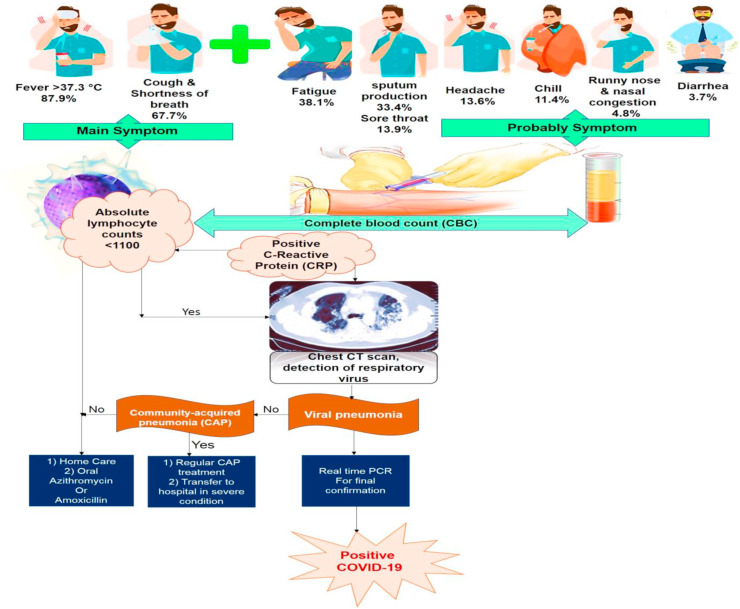
Novel coronavirus SARS-CoV-2, designated as COVID-19 by the World Health Organization (WHO) on the February 11, 2020, is one of the highly pathogenic β-coronaviruses which infects human. Early diagnosis of COVID-19 is the most critical step to treat infection. The diagnostic tools are generally molecular methods, serology and viral culture. Recently CRISPR-based method has been investigated to diagnose and treat coronavirus infection. The emergence of 2019-nCoV during the influenza season, has led to the extensive use of antibiotics and neuraminidase enzyme inhibitors, taken orally and intravenously. Currently, antiviral inhibitors of SARS and MERS spike proteins, neuraminidase inhibitors, anti-inflammatory drugs and EK1 peptide are the available therapeutic options for SARS-CoV-2 infected individuals. In addition, Chloroquine, which was previously used for malarial and autoimmune disease, has shown efficacy in the 2019-nCoV infection treatment. In severe hypoxaemia, a combination of antibiotics, α-interferon, lopinavir and mechanical ventilation can effectively mitigate the symptoms. Comprehensive knowledge on the innate and adaptive immune responses, will make it possible to propose potent antiviral drugs with their effective therapeutic measures for the prevention of viral infection. This therapeutic strategy will help patients worldwide to protect themselves against severe and fatal viral infections, that potentially can evolve and develop drug resistance, and to reduce mortality rates.
新型冠状病毒 SARS-CoV-2,世界卫生组织(WHO)于 2020 年 2 月 11 日指定为 COVID-19,是感染人类的高致病性β冠状病毒之一。COVID-19 的早期诊断是治疗感染的最关键步骤。诊断工具通常是分子方法、血清学和病毒培养。最近,基于 CRISPR 的方法已被用于诊断和治疗冠状病毒感染。2019 年新型冠状病毒在流感季节的出现,导致了抗生素和神经氨酸酶抑制剂的广泛使用,包括口服和静脉注射。目前,针对 SARS-CoV-2 感染个体的治疗选择包括 SARS 和 MERS 刺突蛋白的抗病毒抑制剂、神经氨酸酶抑制剂、抗炎药物和 EK1 肽。此外,先前用于治疗疟疾和自身免疫性疾病的氯喹在 2019 年新型冠状病毒感染治疗中显示出疗效。在严重低氧血症的情况下,抗生素联合使用、α-干扰素、洛匹那韦和机械通气可以有效缓解症状。对固有和适应性免疫反应的综合了解,将有可能提出有效的抗病毒药物及其治疗措施,以预防病毒感染。这种治疗策略将帮助全球患者保护自己免受严重和致命的病毒感染,这些感染可能会进化并产生耐药性,并降低死亡率。