Kelly Colleen R, Yen Eugene F, Grinspan Ari M, Kahn Stacy A, Atreja Ashish, Lewis James D, Moore Thomas A, Rubin David T, Kim Alison M, Serra Sonya, Nersesova Yanina, Fredell Lydia, Hunsicker Dea, McDonald Daniel, Knight Rob, Allegretti Jessica R, Pekow Joel, Absah Imad, Hsu Ronald, Vincent Jennifer, Khanna Sahil, Tangen Lyn, Crawford Carl V, Mattar Mark C, Chen Lea Ann, Fischer Monika, Arsenescu Razvan I, Feuerstadt Paul, Goldstein Jonathan, Kerman David, Ehrlich Adam C, Wu Gary D, Laine Loren
Department of Medicine, Warren Alpert Medical School of Brown University, Providence, Rhode Island.
Division of Gastroenterology, NorthShore University HealthSystem, Evanston, Illinois.
Gastroenterology. 2021 Jan;160(1):183-192.e3. doi: 10.1053/j.gastro.2020.09.038. Epub 2020 Oct 1.
BACKGROUND & AIMS: Fecal microbiota transplantation (FMT) is used commonly for treatment of Clostridioides difficile infections (CDIs), although prospective safety data are limited and real-world FMT practice and outcomes are not well described. The FMT National Registry was designed to assess FMT methods and both safety and effectiveness outcomes from North American FMT providers.
Patients undergoing FMT in clinical practices across North America were eligible. Participating investigators enter de-identified data into an online platform, including FMT protocol, baseline patient characteristics, CDI cure and recurrence, and short and long-term safety outcomes.
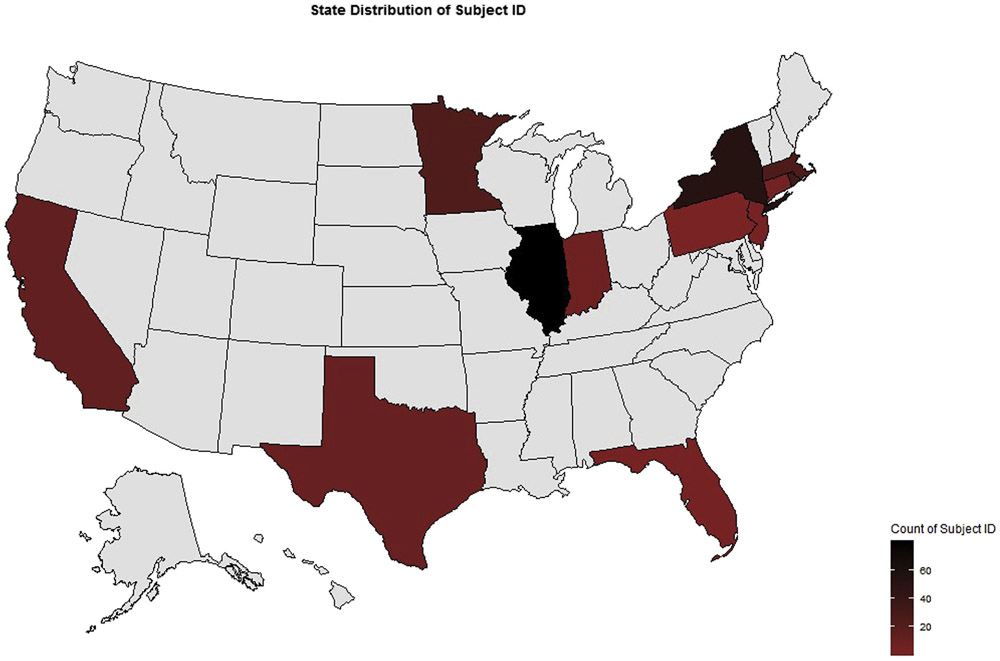
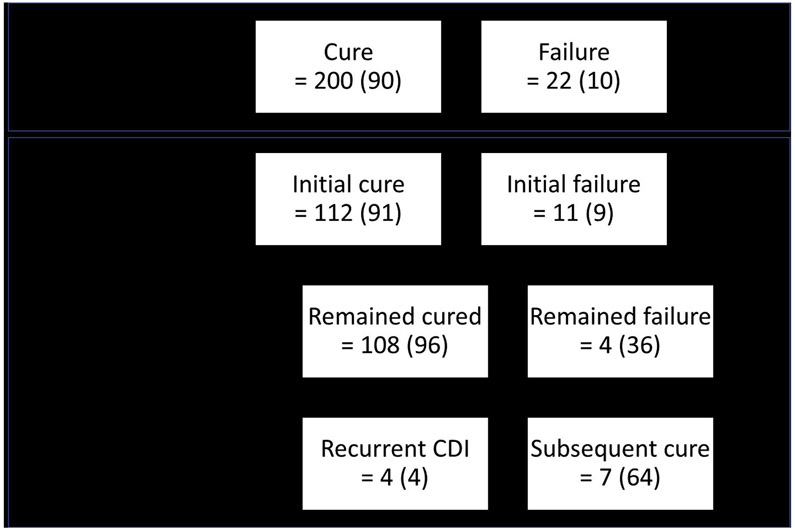
Of the first 259 participants enrolled at 20 sites, 222 had completed short-term follow-up at 1 month and 123 had follow-up to 6 months; 171 (66%) were female. All FMTs were done for CDI and 249 (96%) used an unknown donor (eg, stool bank). One-month cure occurred in 200 patients (90%); of these, 197 (98%) received only 1 FMT. Among 112 patients with initial cure who were followed to 6 months, 4 (4%) had CDI recurrence. Severe symptoms reported within 1-month of FMT included diarrhea (n = 5 [2%]) and abdominal pain (n = 4 [2%]); 3 patients (1%) had hospitalizations possibly related to FMT. At 6 months, new diagnoses of irritable bowel syndrome were made in 2 patients (1%) and inflammatory bowel disease in 2 patients (1%).
This prospective real-world study demonstrated high effectiveness of FMT for CDI with a good safety profile. Assessment of new conditions at long-term follow-up is planned as this registry grows and will be important for determining the full safety profile of FMT.
粪菌移植(FMT)常用于治疗艰难梭菌感染(CDI),尽管前瞻性安全性数据有限,且真实世界中的FMT实践及结果尚无充分描述。FMT国家注册研究旨在评估北美FMT提供者的FMT方法以及安全性和有效性结果。
在北美各地临床实践中接受FMT的患者符合条件。参与研究的调查人员将去识别化的数据录入在线平台,包括FMT方案、患者基线特征、CDI治愈和复发情况以及短期和长期安全性结果。
在20个地点登记的首批259名参与者中,222人在1个月时完成了短期随访,123人随访至6个月;171人(66%)为女性。所有FMT均用于治疗CDI,249例(96%)使用了未知供体(如粪便库)。200例患者(90%)在1个月时治愈;其中,197例(98%)仅接受了1次FMT。在112例最初治愈且随访至6个月的患者中,4例(4%)出现CDI复发。FMT后1个月内报告的严重症状包括腹泻(n = 5 [2%])和腹痛(n = 4 [2%]);3例患者(1%)因可能与FMT相关的原因住院。在6个月时,2例患者(1%)被新诊断为肠易激综合征,2例患者(1%)被诊断为炎症性肠病。
这项前瞻性真实世界研究表明,FMT治疗CDI具有高效性且安全性良好。随着该注册研究的扩大,计划对长期随访中的新情况进行评估,这对于确定FMT的全面安全性至关重要。