Grondin Jensine A, Kwon Yun Han, Far Parsa Mehraban, Haq Sabah, Khan Waliul I
Farncombe Family Digestive Health Research Institute, McMaster University, Hamilton, ON, Canada.
Department of Pathology and Molecular Medicine, McMaster University, Hamilton, ON, Canada.
Front Immunol. 2020 Sep 4;11:2054. doi: 10.3389/fimmu.2020.02054. eCollection 2020.
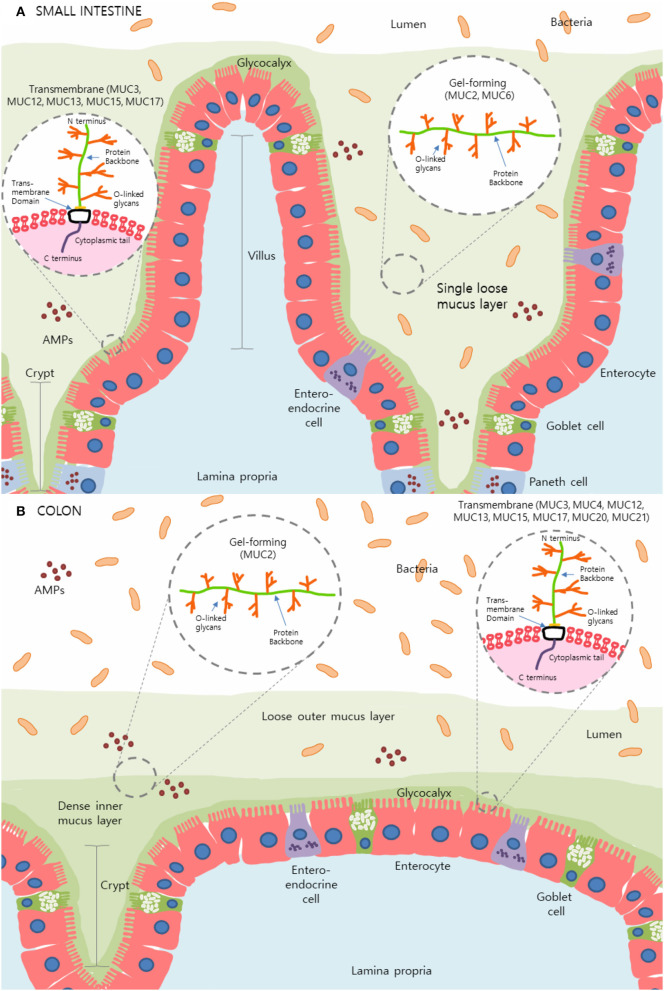
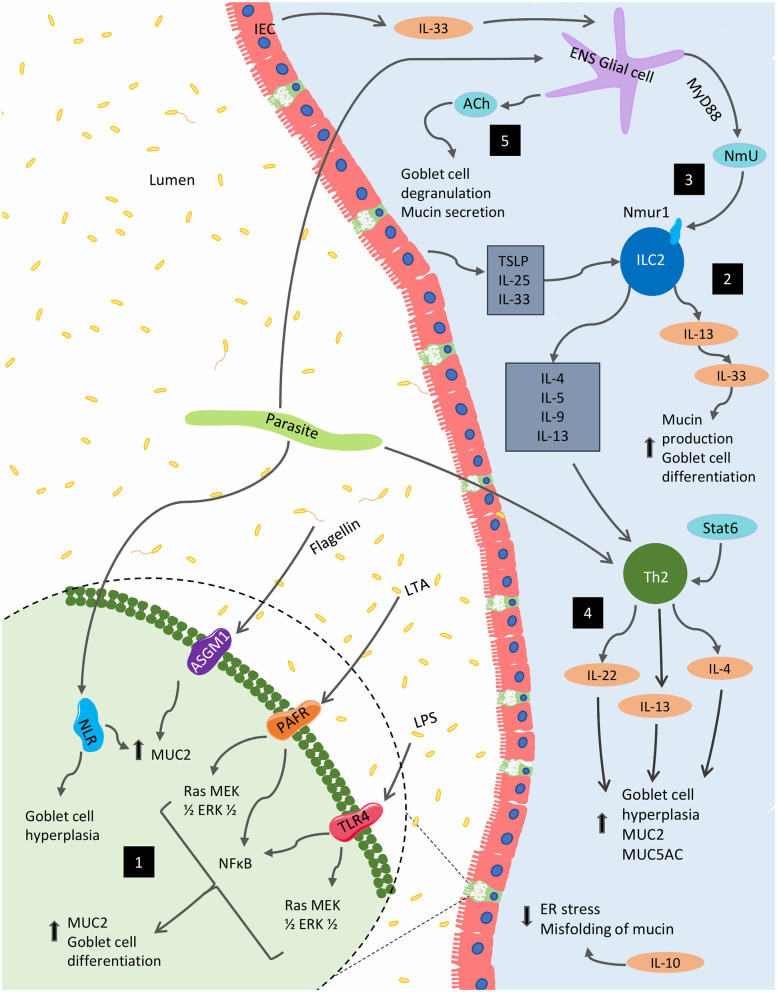
Throughout the gastrointestinal (GI) tract, a distinct mucus layer composed of highly glycosylated proteins called mucins plays an essential role in providing lubrication for the passage of food, participating in cell signaling pathways and protecting the host epithelium from commensal microorganisms and invading pathogens, as well as toxins and other environmental irritants. These mucins can be broadly classified into either secreted gel-forming mucins, those that provide the structural backbone for the mucus barrier, or transmembrane mucins, those that form the glycocalyx layer covering the underlying epithelial cells. Goblet cells dispersed among the intestinal epithelial cells are chiefly responsible for the synthesis and secretion of mucins within the gut and are heavily influenced by interactions with the immune system. Evidence from both clinical and animal studies have indicated that several GI conditions, including inflammatory bowel disease (IBD), colorectal cancer, and numerous enteric infections are accompanied by considerable changes in mucin quality and quantity. These changes include, but are not limited to, impaired goblet cell function, synthesis dysregulation, and altered post-translational modifications. The current review aims to highlight the structural and functional features as well as the production and immunological regulation of mucins and the impact these key elements have within the context of barrier function and host defense in intestinal inflammation.
在整个胃肠道中,由称为粘蛋白的高度糖基化蛋白质组成的独特粘液层,在为食物通过提供润滑、参与细胞信号通路、保护宿主上皮免受共生微生物和入侵病原体以及毒素和其他环境刺激物的侵害方面发挥着重要作用。这些粘蛋白大致可分为分泌型凝胶形成粘蛋白(为粘液屏障提供结构骨架)或跨膜粘蛋白(形成覆盖下层上皮细胞的糖萼层)。散布在肠上皮细胞之间的杯状细胞主要负责肠道内粘蛋白的合成和分泌,并受到与免疫系统相互作用的严重影响。临床和动物研究的证据均表明,包括炎症性肠病(IBD)、结直肠癌和多种肠道感染在内的几种胃肠道疾病,都伴随着粘蛋白质量和数量的显著变化。这些变化包括但不限于杯状细胞功能受损、合成失调以及翻译后修饰改变。本综述旨在强调粘蛋白的结构和功能特征、产生及免疫调节,以及这些关键要素在肠道炎症的屏障功能和宿主防御背景下所产生的影响。