Bui Tat-Dat, Tsai Feng Ming, Tseng Ming-Lang, Tan Raymond R, Yu Krista Danielle S, Lim Ming K
Department of Shipping and Transportation Management, National Taiwan Ocean University, Taiwan.
Institute of Innovation and Circular Economy, Asia University Taiwan, Taichung, Taiwan.
Sustain Prod Consum. 2021 Apr;26:373-410. doi: 10.1016/j.spc.2020.09.017. Epub 2020 Sep 28.
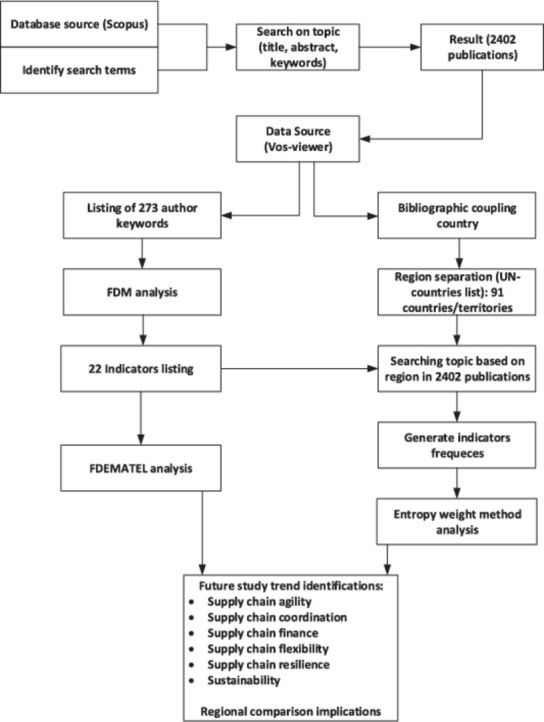
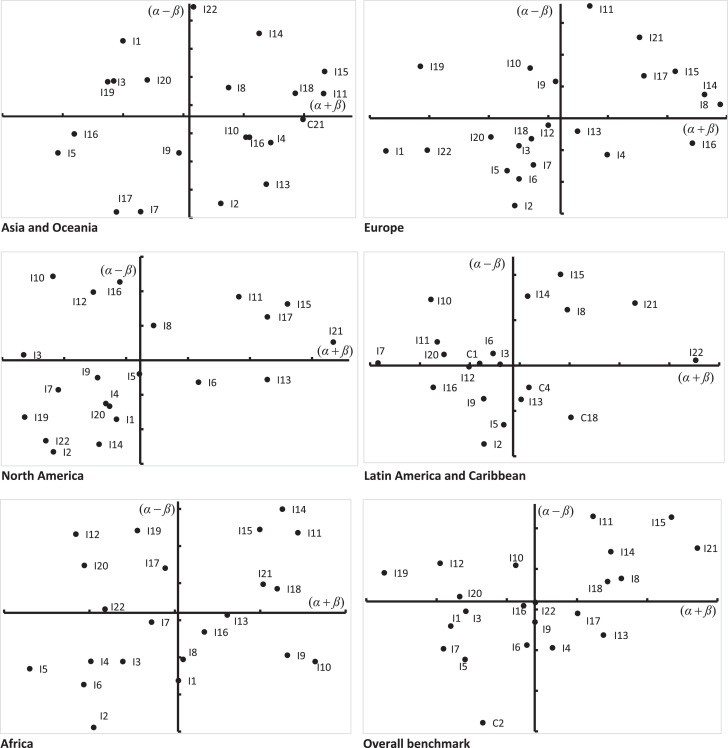
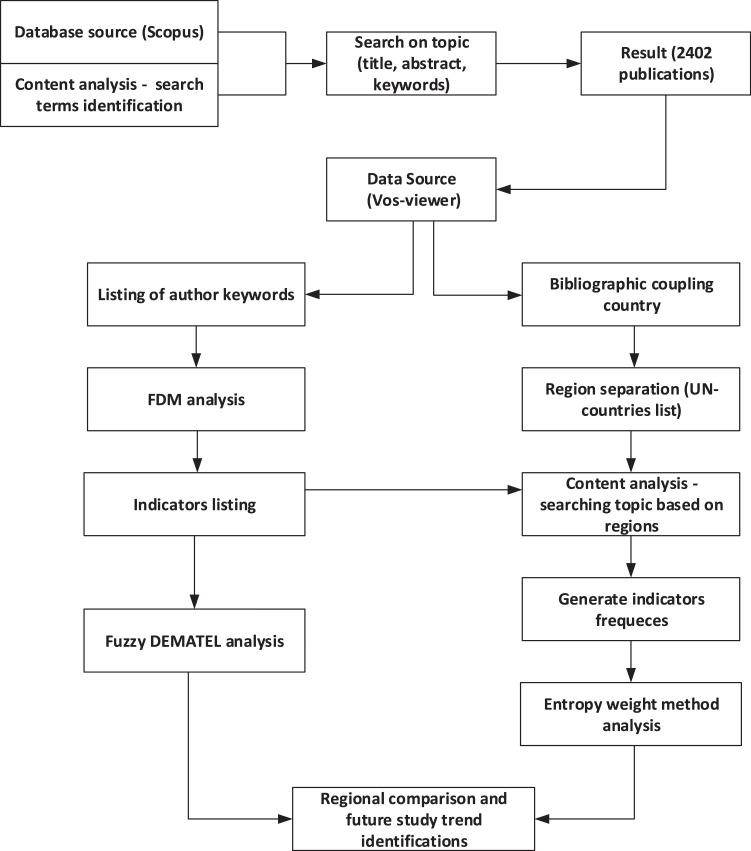
Balancing sustainability and disruption of supply chains requires organizational ambidexterity. Sustainable supply chains prioritize efficiency and economies of scale and may not have sufficient redundancy to withstand disruptive events. There is a developing body of literature that attempts to reconcile these two aspects. This study gives a data-driven literature review of sustainable supply chain management trends toward ambidexterity and disruption. The critical review reveals temporal trends and geographic distribution of literature. A hybrid of data-driven analysis approach based on content and bibliometric analyses, fuzzy Delphi method, entropy weight method, and fuzzy decision-making trial and evaluation laboratory is used on 273 keywords and 22 indicators obtained based on the experts' evaluation. The most important indicators are identified as supply chain agility, supply chain coordination, supply chain finance, supply chain flexibility, supply chain resilience, and sustainability. The regions show different tendencies compared with others. Asia and Oceania, Latin America and the Caribbean, and Africa are the regions needs improvement, while Europe and North America show distinct apprehensions on supply chain network design. The main contribution of this review is the identification of the knowledge frontier, which then leads to a discussion of prospects for future studies and practical industry implementation.
平衡供应链的可持续性与颠覆性需要组织具备双元性。可持续供应链将效率和规模经济置于优先地位,可能没有足够的冗余来抵御颠覆性事件。有一批正在发展的文献试图调和这两个方面。本研究对可持续供应链管理向双元性和颠覆性发展的趋势进行了数据驱动的文献综述。批判性综述揭示了文献的时间趋势和地理分布。基于内容分析和文献计量分析、模糊德尔菲法、熵权法以及模糊决策试验与评价实验室的数据驱动分析方法相结合,应用于根据专家评估获得的273个关键词和22个指标。最重要的指标被确定为供应链敏捷性、供应链协调、供应链金融、供应链灵活性、供应链弹性和可持续性。与其他地区相比,各地区呈现出不同的趋势。亚洲和大洋洲、拉丁美洲和加勒比地区以及非洲是需要改进的地区,而欧洲和北美在供应链网络设计方面表现出明显的担忧。本综述的主要贡献在于确定了知识前沿,进而引发了对未来研究前景和实际行业实施的讨论。