Samani Mohammad Reza Ghatreh, Hosseini-Motlagh Seyyed-Mahdi, Homaei Shamim
School of Industrial Engineering, Iran University of Science and Technology, University Ave, Narmak 16846, Tehran, Iran.
Transp Res E Logist Transp Rev. 2020 Aug;140:102008. doi: 10.1016/j.tre.2020.102008. Epub 2020 Jun 27.
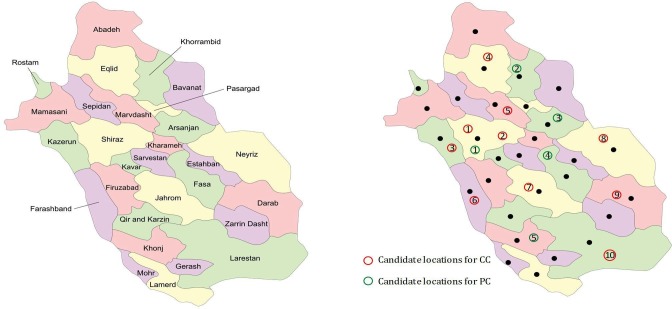
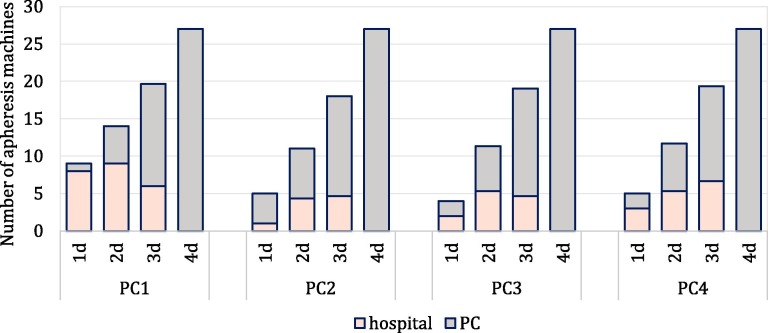
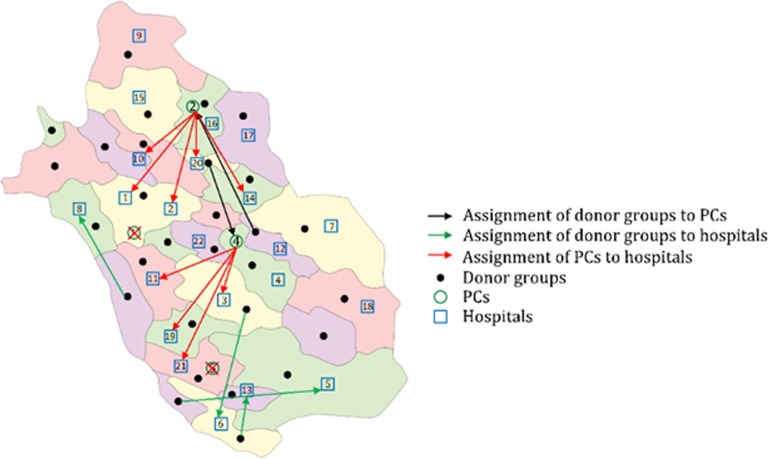
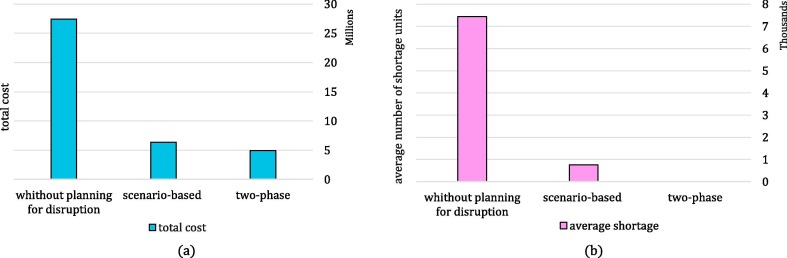
Previous studies in blood supply chain network design often follow a commonly used approach in protecting the chain against disruptions, considering the effects of disruptions on the designing phase. However, in many real-world situations, disruptions cannot be adequately measured in advance. Moreover, using disruptions in the designing phase through the common two-stage stochastic programming models impose high costs on the network, since they cannot be updated based on unpredicted disruptions. This paper proposes an updatable two-phase approach which deals with disruptions in the operational phase, not in the strategic design phase. In the first step, called the , a nominal platelet supply chain network is designed under operational uncertainty, using the whole-blood collection method. In the event of disruptions, the second step, called the , is applied, and the tailored network is updated based on the realized data, using apheresis as the collection mechanism. The operational risks are captured using a fuzzy programming approach in the model. Based on the real data from Fars province of Iran, we compare the performance of the two-phase approach with the commonly used approaches in the literature, resulting in more flexible decisions, and consequently, less conservatism degree rather than the existing approaches.
以往关于血液供应链网络设计的研究通常采用一种常用方法来保护供应链免受干扰,即在设计阶段考虑干扰的影响。然而,在许多实际情况中,干扰无法提前得到充分衡量。此外,通过常见的两阶段随机规划模型在设计阶段使用干扰会给网络带来高昂成本,因为它们无法根据未预测到的干扰进行更新。本文提出了一种可更新的两阶段方法,该方法在运营阶段而非战略设计阶段处理干扰。第一步,称为 ,在运营不确定性下使用全血采集方法设计一个名义血小板供应链网络。在发生干扰时,应用第二步,称为 ,并基于实际数据使用单采作为采集机制更新定制网络。在模型中使用模糊规划方法来捕捉运营风险。基于伊朗法尔斯省的实际数据,我们将两阶段方法的性能与文献中常用的方法进行比较,结果表明该方法能做出更灵活的决策,因此,与现有方法相比,保守程度更低。