Institute of Clinical Molecular Biology, University of Kiel, Rosalind-Franklin-Straße 12, 24105 Kiel, Germany.
Nutrients. 2020 Oct 3;12(10):3032. doi: 10.3390/nu12103032.
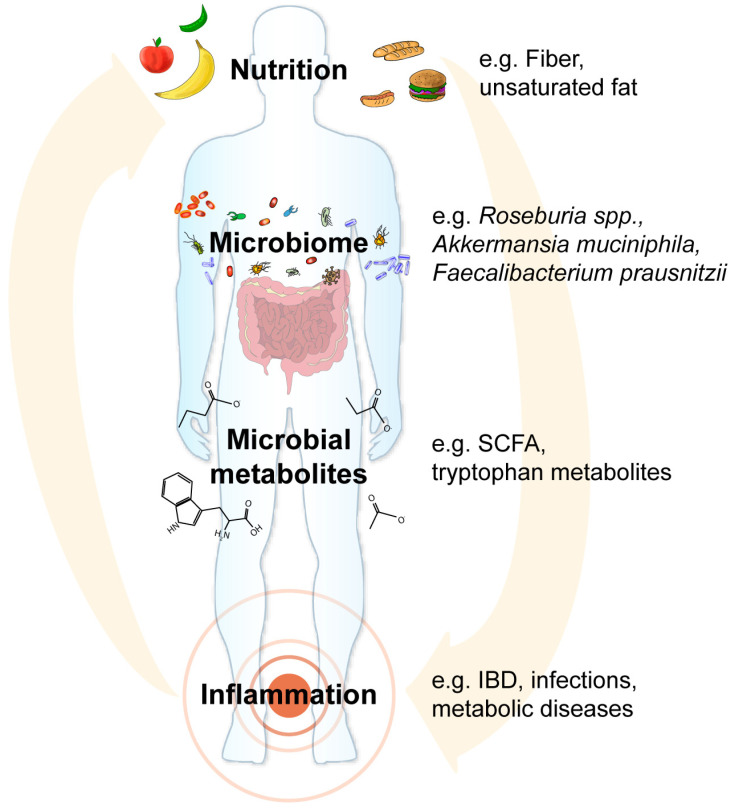
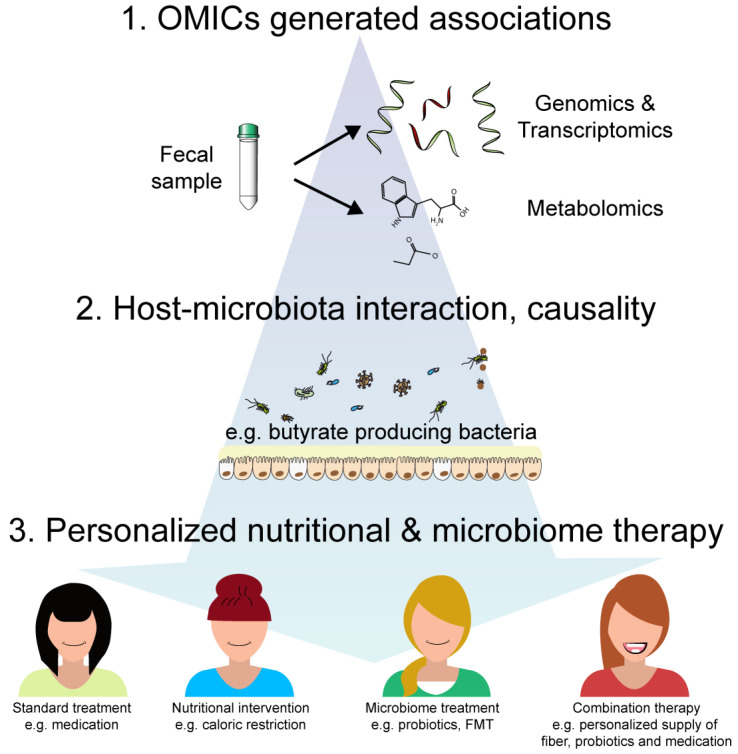
Homeostatic interactions with the microbiome are central for a healthy human physiology and nutrition is the main driving force shaping the microbiome. In the past decade, a wealth of preclinical studies mainly using gnotobiotic animal models demonstrated that malnutrition and chronic inflammation stress these homeostatic interactions and various microbial species and their metabolites or metabolic activities have been associated with disease. For example, the dysregulation of the bacterial metabolism of dietary tryptophan promotes an inflammatory environment and susceptibility to pathogenic infection. Clinical studies have now begun to evaluate the therapeutic potential of nutritional and probiotic interventions in malnutrition and chronic inflammation to ameliorate disease symptoms or even prevent pathogenesis. Here, we therefore summarize the recent progress in this field and propose to move further towards the nutritional targeting of the microbiome for malnutrition and chronic inflammation.
与微生物组的内稳态相互作用对人类健康的生理学至关重要,而营养是塑造微生物组的主要驱动力。在过去的十年中,大量的临床前研究主要使用无菌动物模型表明,营养不良和慢性炎症会破坏这些内稳态相互作用,各种微生物及其代谢物或代谢活动与疾病有关。例如,饮食色氨酸的细菌代谢失调会促进炎症环境和对病原体感染的易感性。临床研究现在已经开始评估营养和益生菌干预在营养不良和慢性炎症中的治疗潜力,以改善疾病症状甚至预防发病机制。因此,我们在这里总结了这一领域的最新进展,并提出进一步朝着营养不良和慢性炎症的微生物组的营养靶向方向发展。