Department of Clinical Microbiology, Christian Medical College, Vellore, India.
Department of Medicine, University of Cambridge, Cambridge, United Kingdom.
mSphere. 2020 Oct 7;5(5):e00569-20. doi: 10.1128/mSphere.00569-20.
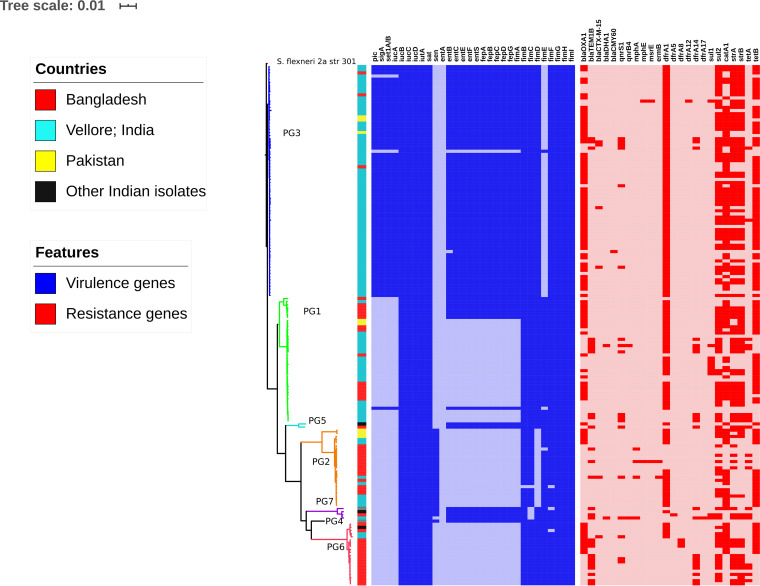
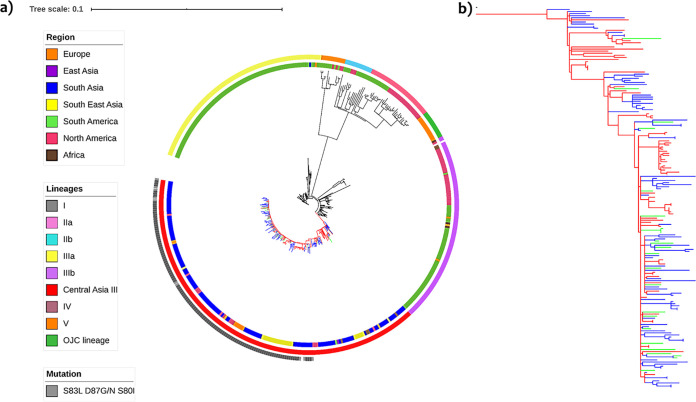
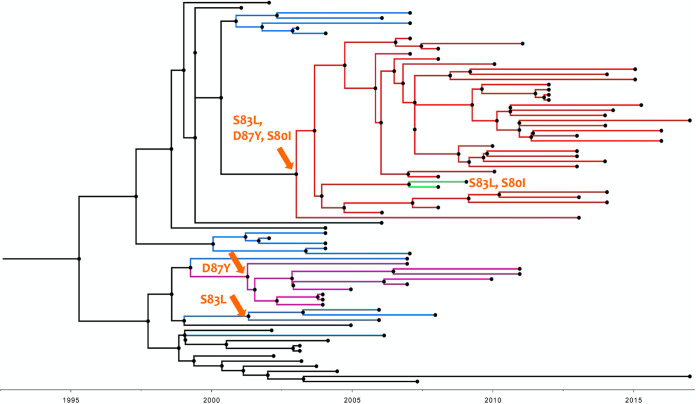
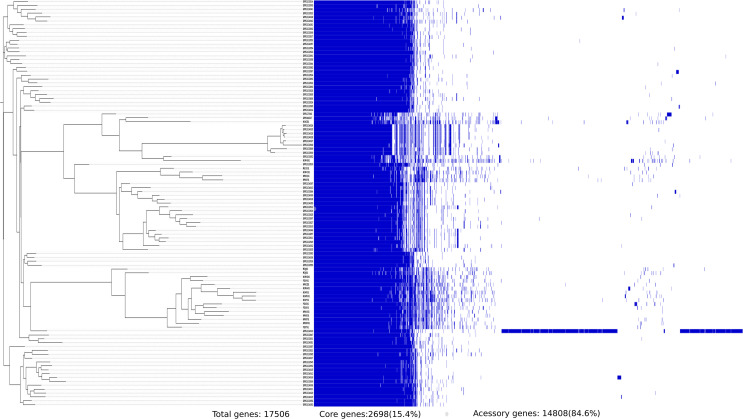
is the second leading cause of bacterial diarrhea worldwide. Recently, seems to be replacing in low- and middle-income countries undergoing economic development. Despite this, studies focusing on these species at the genomic level remain largely unexplored. Here, we compared the genome sequences of and isolates from India with the publicly available genomes of global strains. Our analysis provides evidence for the long-term persistence of all phylogenetic groups (PGs) of and the recent dominance of the ciprofloxacin-resistant lineage in India. Within PGs, the majority of the study isolates belonged to PG3 within the predominance of serotype 2. For , the current pandemic involves globally distributed multidrug-resistant (MDR) clones that belong to Central Asia lineage III. The presence of such epidemiologically dominant lineages in association with stable antimicrobial resistance (AMR) determinants results in successful survival in the community. is the second leading cause of bacterial diarrhea worldwide. This has been categorized as a priority pathogen among enteric bacteria by the Global Antimicrobial Resistance Surveillance System (GLASS) of the World Health Organization (WHO). Recently, seems to be replacing in low- and middle-income countries undergoing economic development. Antimicrobial resistance in and is a growing international concern, specifically with the international dominance of the multidrug-resistant (MDR) lineage. Genomic studies focusing on and in India remain largely unexplored. This study provides information on the introduction and expansion of drug-resistant strains in India for the first time by comparing the genome sequences of and isolates from India with the publicly available genomes of global strains. The study discusses the key differences between the two dominant species of at the genomic level to understand the evolutionary trends and genome dynamics of emerging and existing resistance clones. The present work demonstrates evidence for the long-term persistence of all PGs of and the recent dominance of a ciprofloxacin-resistant lineage in India.
是全球第二大细菌性腹泻致病菌。最近,似乎正在取代在经济发展中的中低收入国家。尽管如此,针对这些物种在基因组水平上的研究仍然在很大程度上尚未得到探索。在这里,我们比较了来自印度的和的基因组序列与全球菌株的公开基因组。我们的分析为所有系统发育群(PG)的长期存在提供了证据,并且最近在印度,环丙沙星耐药谱系占据主导地位。在 PG 中,研究中的大多数分离株属于 PG3,而血清型 2 占主导地位。对于,当前的大流行涉及在全球范围内分布的多药耐药(MDR)克隆,这些克隆属于中亚谱系 III。这种具有流行病学优势的谱系与稳定的抗生素耐药性(AMR)决定因素共存,导致其在社区中成功生存。是全球第二大细菌性腹泻致病菌。这已被世界卫生组织(WHO)的全球抗菌药物耐药性监测系统(GLASS)列为肠细菌中的优先病原体。最近,似乎正在取代在经济发展中的中低收入国家。和的抗菌药物耐药性是一个日益严重的国际关注问题,特别是具有国际优势的多药耐药(MDR)谱系。针对印度的和的基因组研究在很大程度上仍未得到探索。本研究通过比较来自印度的和分离株的基因组序列与全球菌株的公开基因组,首次提供了印度耐药菌株传入和扩展的信息。该研究讨论了这两种主要物种在基因组水平上的关键差异,以了解新兴和现有耐药克隆的进化趋势和基因组动态。本工作证明了所有 PG 的长期存在的证据,以及最近在印度环丙沙星耐药谱系的主导地位。