Oxford University Clinical Research Unit, Ho Chi Minh City, Vietnam.
Department of Enteric Diseases, Armed Forces Research Institute of Medical Sciences, Bangkok, Thailand.
Commun Biol. 2021 Mar 19;4(1):353. doi: 10.1038/s42003-021-01905-9.
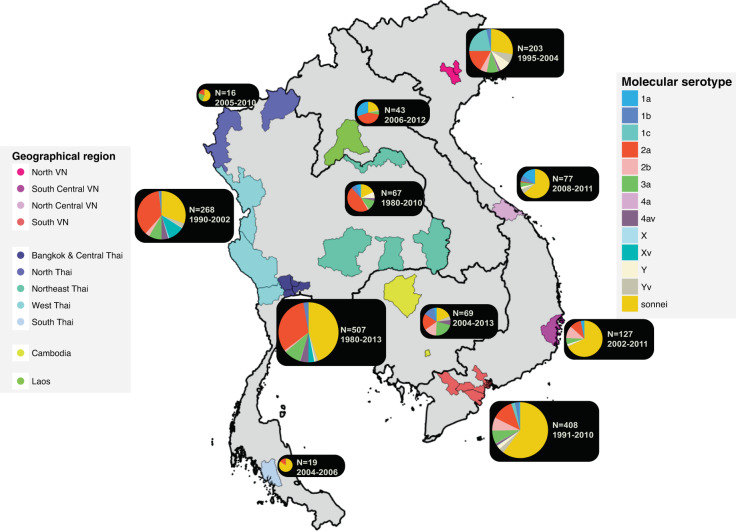
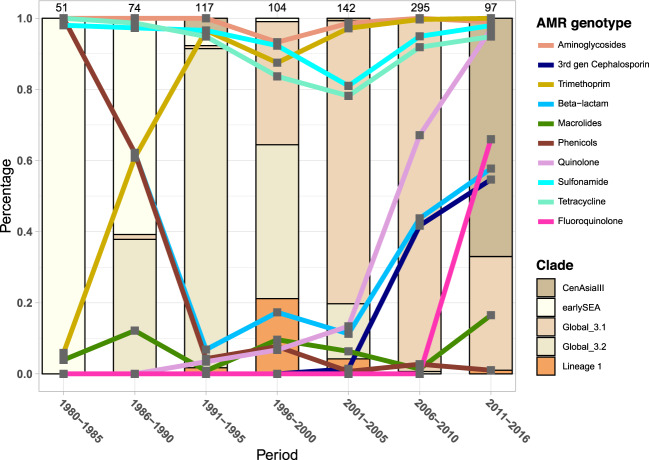
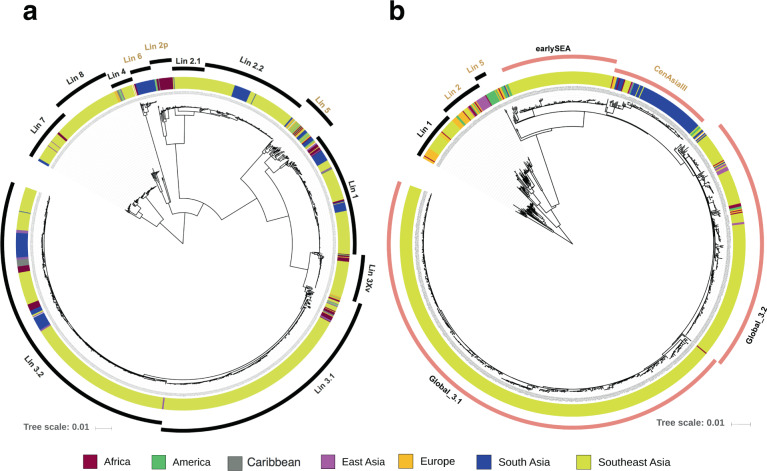
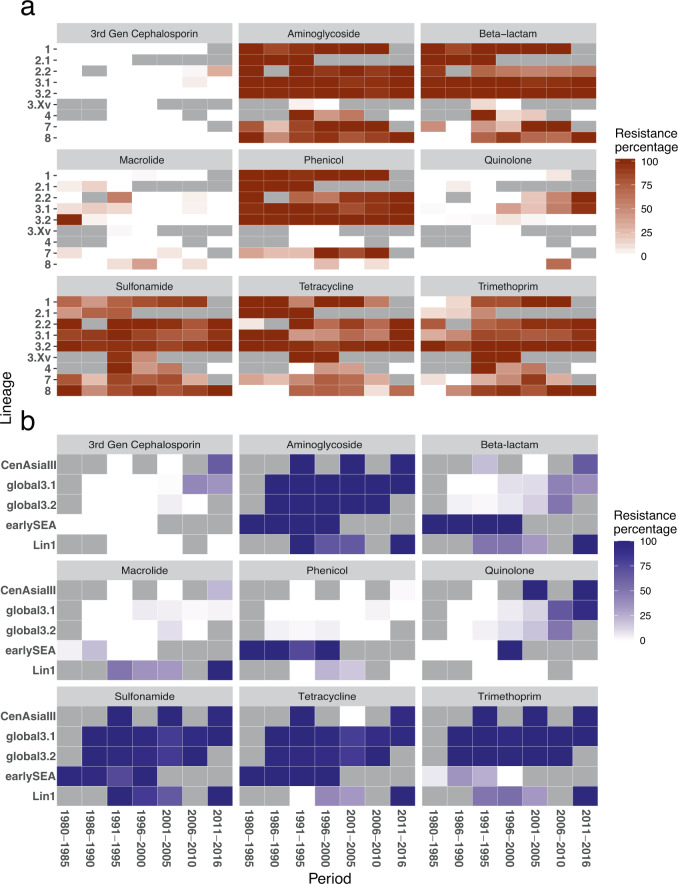
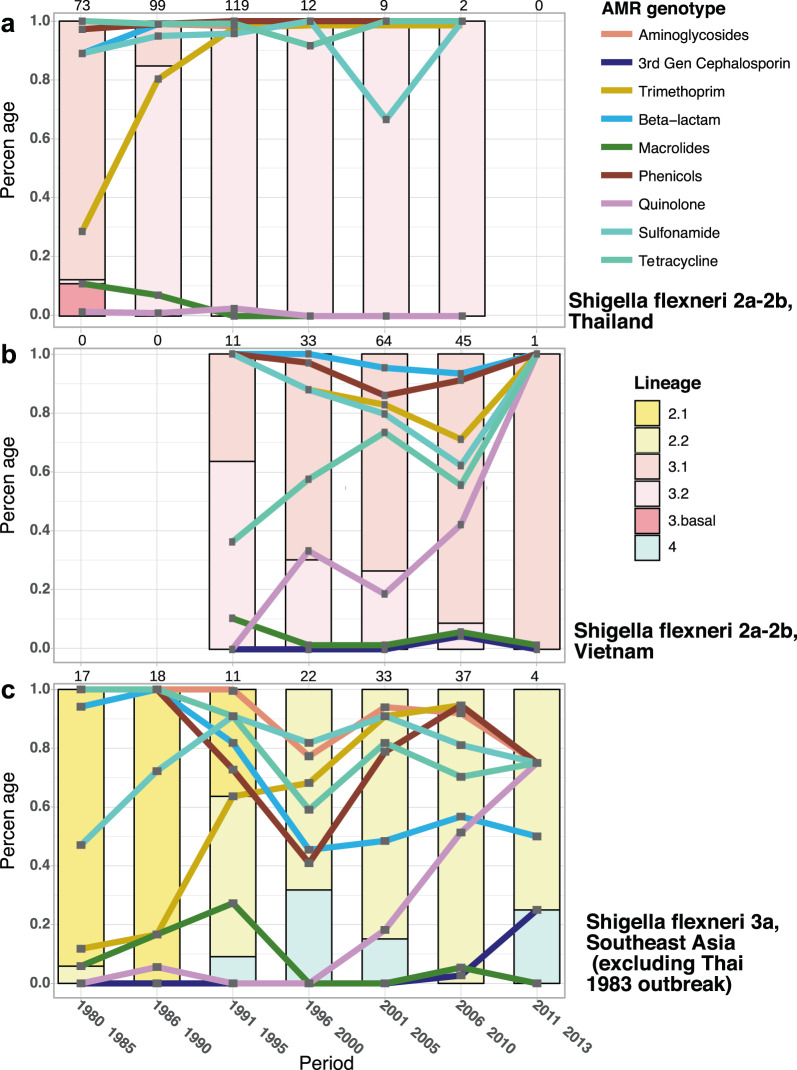
Conventional disease surveillance for shigellosis in developing country settings relies on serotyping and low-resolution molecular typing, which fails to contextualise the evolutionary history of the genus. Here, we interrogated a collection of 1,804 Shigella whole genome sequences from organisms isolated in four continental Southeast Asian countries (Thailand, Vietnam, Laos, and Cambodia) over three decades to characterise the evolution of both S. flexneri and S. sonnei. We show that S. sonnei and each major S. flexneri serotype are comprised of genetically diverse populations, the majority of which were likely introduced into Southeast Asia in the 1970s-1990s. Intranational and regional dissemination allowed widespread propagation of both species across the region. Our data indicate that the epidemiology of S. sonnei and the major S. flexneri serotypes were characterised by frequent clonal replacement events, coinciding with changing susceptibility patterns against contemporaneous antimicrobials. We conclude that adaptation to antimicrobial pressure was pivotal to the recent evolutionary trajectory of Shigella in Southeast Asia.
在发展中国家的环境中,传统的志贺氏菌病监测依赖于血清型和低分辨率分子分型,这无法说明该属的进化历史。在这里,我们分析了来自泰国、越南、老挝和柬埔寨四个东南亚国家的 1804 株志贺氏菌全基因组序列,这些序列是在过去三十年中分离得到的,以描述 S. flexneri 和 S. sonnei 的进化。我们表明,S. sonnei 和每个主要的 S. flexneri 血清型都由遗传上多样化的群体组成,其中大多数可能是在 20 世纪 70 年代至 90 年代引入东南亚的。国内和区域传播使得这两个物种在该地区广泛传播。我们的数据表明,S. sonnei 和主要的 S. flexneri 血清型的流行病学特点是频繁的克隆替代事件,这与当时对抗微生物药物的敏感性模式变化一致。我们得出结论,对抗菌压力的适应是志贺氏菌在东南亚最近进化轨迹的关键。