The Novo Nordisk Foundation Center for Biosustainability, Technical University of Denmark, 2800 Kgs, Lyngby, Denmark.
School of Chemistry, University of St. Andrews, KY16 9ST St, Andrews, UK.
Nat Commun. 2020 Oct 7;11(1):5045. doi: 10.1038/s41467-020-18813-x.
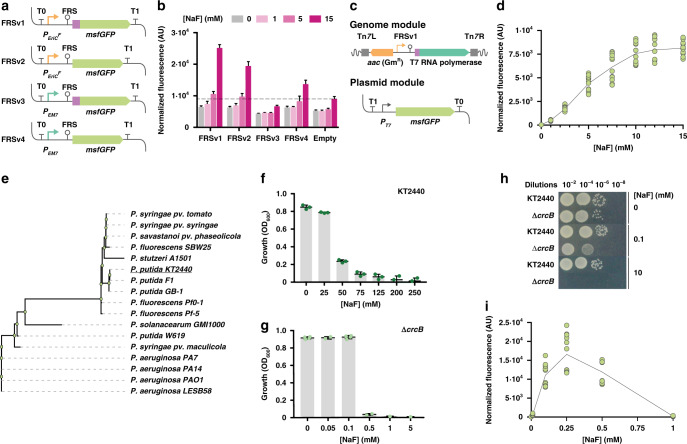
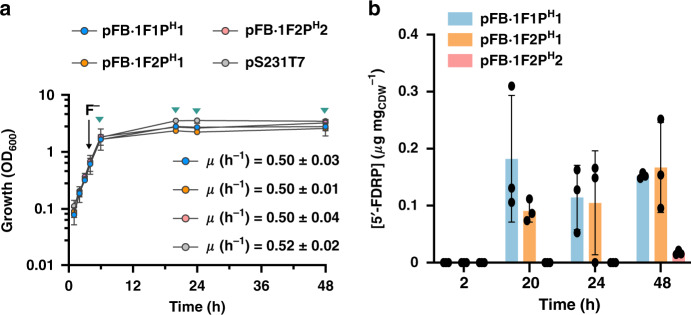
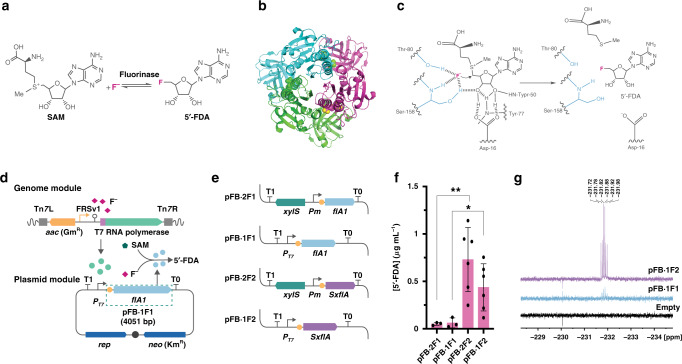
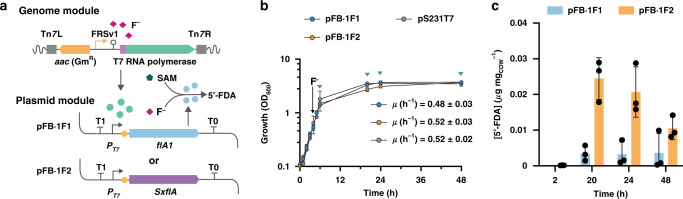
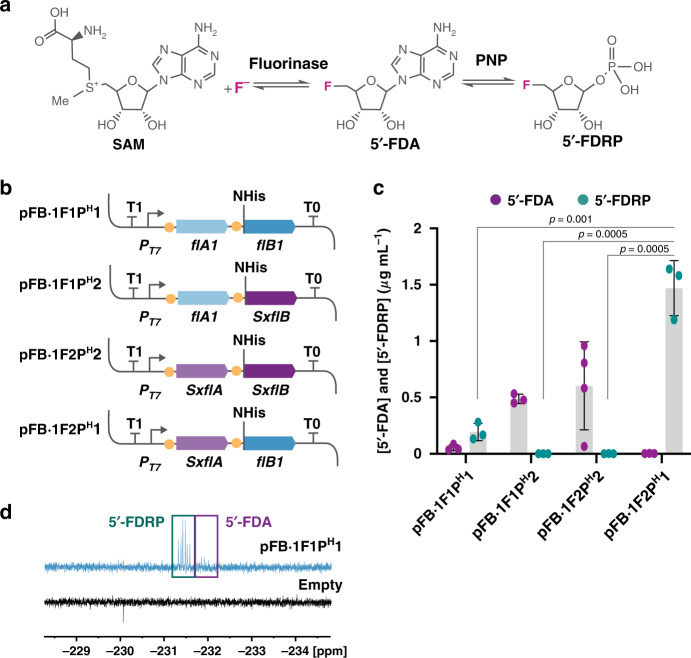
Fluorine is a key element in the synthesis of molecules broadly used in medicine, agriculture and materials. Addition of fluorine to organic structures represents a unique strategy for tuning molecular properties, yet this atom is rarely found in Nature and approaches to integrate fluorometabolites into the biochemistry of living cells are scarce. In this work, synthetic gene circuits for organofluorine biosynthesis are implemented in the platform bacterium Pseudomonas putida. By harnessing fluoride-responsive riboswitches and the orthogonal T7 RNA polymerase, biochemical reactions needed for in vivo biofluorination are wired to the presence of fluoride (i.e. circumventing the need of feeding expensive additives). Biosynthesis of fluoronucleotides and fluorosugars in engineered P. putida is demonstrated with mineral fluoride both as only fluorine source (i.e. substrate of the pathway) and as inducer of the synthetic circuit. This approach expands the chemical landscape of cell factories by providing alternative biosynthetic strategies towards fluorinated building-blocks.
氟是在医学、农业和材料领域广泛应用的分子合成中的关键元素。在有机结构中添加氟是一种调节分子性质的独特策略,但自然界中很少存在这种原子,而且将氟代谢物整合到活细胞的生物化学中的方法也很少。在这项工作中,用于有机氟生物合成的合成基因电路在平台细菌恶臭假单胞菌中实现。通过利用氟响应性核糖体开关和正交 T7 RNA 聚合酶,将体内生物氟化所需的生化反应连接到氟化物的存在上(即避免了需要喂食昂贵的添加剂)。通过以矿物氟化物作为唯一的氟源(即途径的底物)和合成电路的诱导物,在工程化的恶臭假单胞菌中展示了氟核苷酸和氟糖的生物合成。这种方法通过提供替代的生物合成策略来合成含氟构建块,扩展了细胞工厂的化学景观。