Department of Physiology, University of Murcia, IMIB-Arrixaca, CP 30100, Murcia, Spain.
Health Area of Lorca, Lorca, Murcia, Spain.
Sci Rep. 2020 Oct 7;10(1):16747. doi: 10.1038/s41598-020-73297-5.
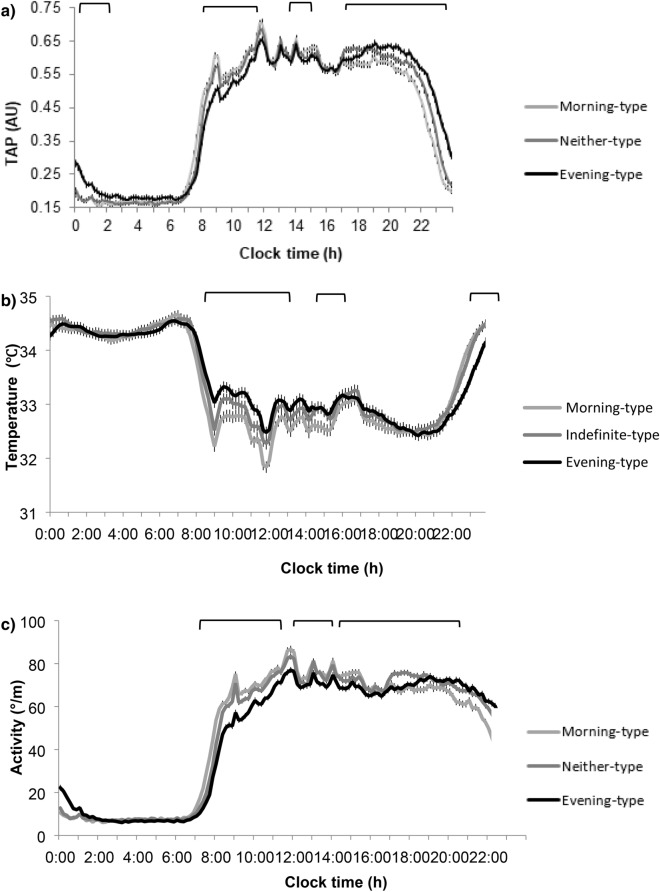
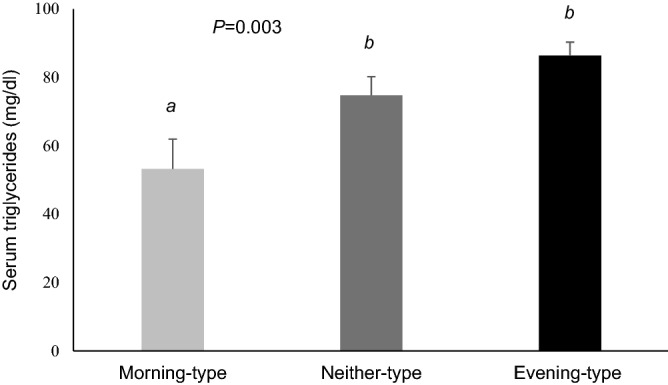
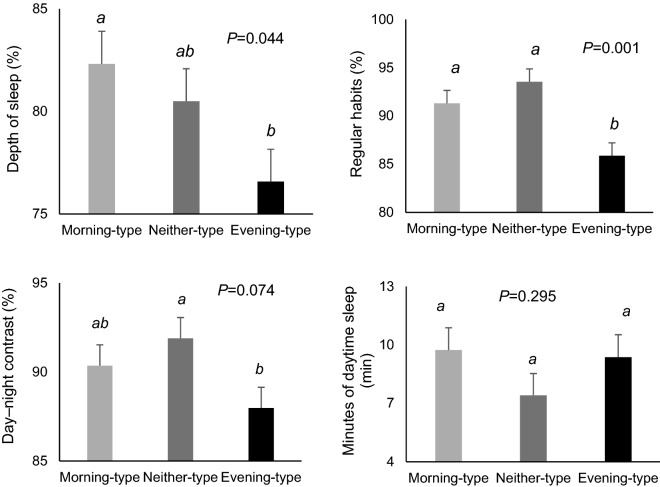
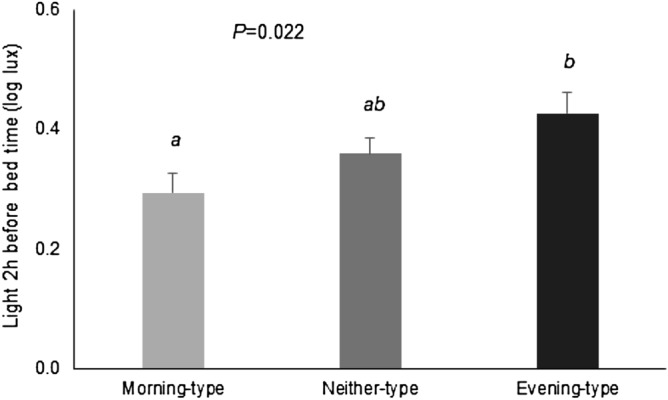
Chronotype has been mostly assessed with subjective scales. Objective assessment has been undertaken with actigraphy, although problems may occur in classifying chronotype. The aims of the study were to assess chronotype in school-age children using a novel integrative measurement (TAP) derived from non-invasive assessments of wrist temperature (T) physical activity (A) and body position (P) and to explore associations between chronotype, sleep disturbances, and metabolic components. Four-hundred-thirty-two children of 8-12 years were recruited from a Mediterranean area of Spain. Measurements were: (a) Chronotype objectively (7-day-rhythms of TAP) and subjectively measured (Munich-chronotype-self-reported questionnaire); (b) sleep rhythms and light exposition; (c) 7-day-diaries of food intake; (d) anthropometry and metabolic parameters; (e) academic scores. TAP acrophase was able to assess eveningness. As compared to more morning-types, more evening-types displayed lower amplitude in temperature rhythms, increased physical activity in the evening, delayed sleep and midpoint of intake and had more frequent social jet lag (P < 0.05). More evening-types had higher light intensity at 2 h before sleep and lower melatonin values (01:00 h). Eveningness associated with higher BMI and metabolic risk (higher values of insulin, glucose, triglycerides and cholesterol). Evening-types presented better grades in art. In conclusion, more evening-types, as objectively assessed, presented sleep alterations, social jet lag, obesity and higher metabolic risk.
时型主要通过主观量表进行评估。客观评估采用活动记录仪进行,但在对时型进行分类时可能会出现问题。本研究的目的是使用一种新的综合测量方法(TAP)评估学龄儿童的时型,该方法源自手腕温度(T)、体力活动(A)和身体姿势(P)的非侵入性评估,并探讨时型、睡眠障碍和代谢成分之间的关联。从西班牙地中海地区招募了 432 名 8-12 岁的儿童。测量内容包括:(a)时型的客观(TAP 的 7 天节律)和主观测量(慕尼黑时型自我报告问卷);(b)睡眠节律和光照暴露;(c)7 天饮食日记;(d)人体测量和代谢参数;(e)学业成绩。TAP 峰值可评估夜间型。与更多的早型相比,更多的晚型表现出更低的体温节律振幅、晚上更高的体力活动、更晚的睡眠和摄入中点,并且更频繁地出现社交时差(P < 0.05)。更多的晚型在睡前 2 小时有更高的光照强度和更低的褪黑素值(01:00 时)。夜间型与更高的 BMI 和代谢风险(更高的胰岛素、葡萄糖、甘油三酯和胆固醇值)相关。晚型在艺术方面的成绩更好。总之,更多的晚型作为客观评估,表现出睡眠改变、社交时差、肥胖和更高的代谢风险。