Madrid-Navarro Carlos Javier, Puertas Cuesta Francisco Javier, Escamilla-Sevilla Francisco, Campos Manuel, Ruiz Abellán Fernando, Rol Maria Angeles, Madrid Juan Antonio
Neurology Service, Hospital Universitario Virgen de las Nieves, Granada, Spain.
Instituto de Investigación Biosanitaria ibs. GRANADA, Granada, Spain.
Front Neurol. 2019 Apr 11;10:356. doi: 10.3389/fneur.2019.00356. eCollection 2019.
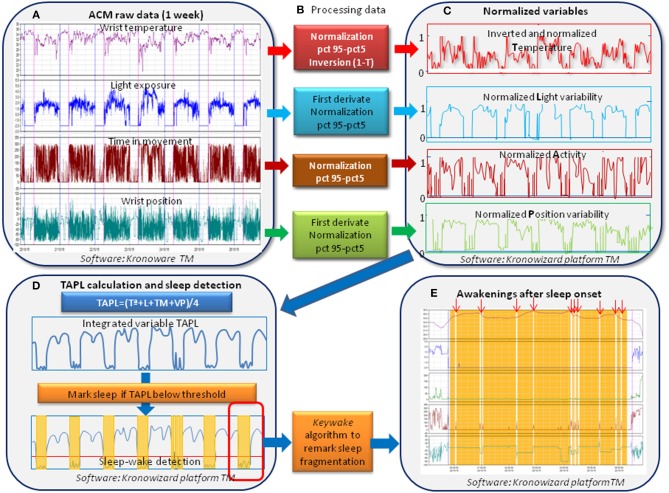
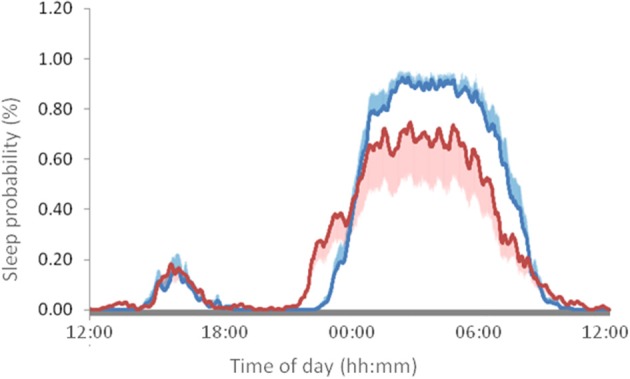
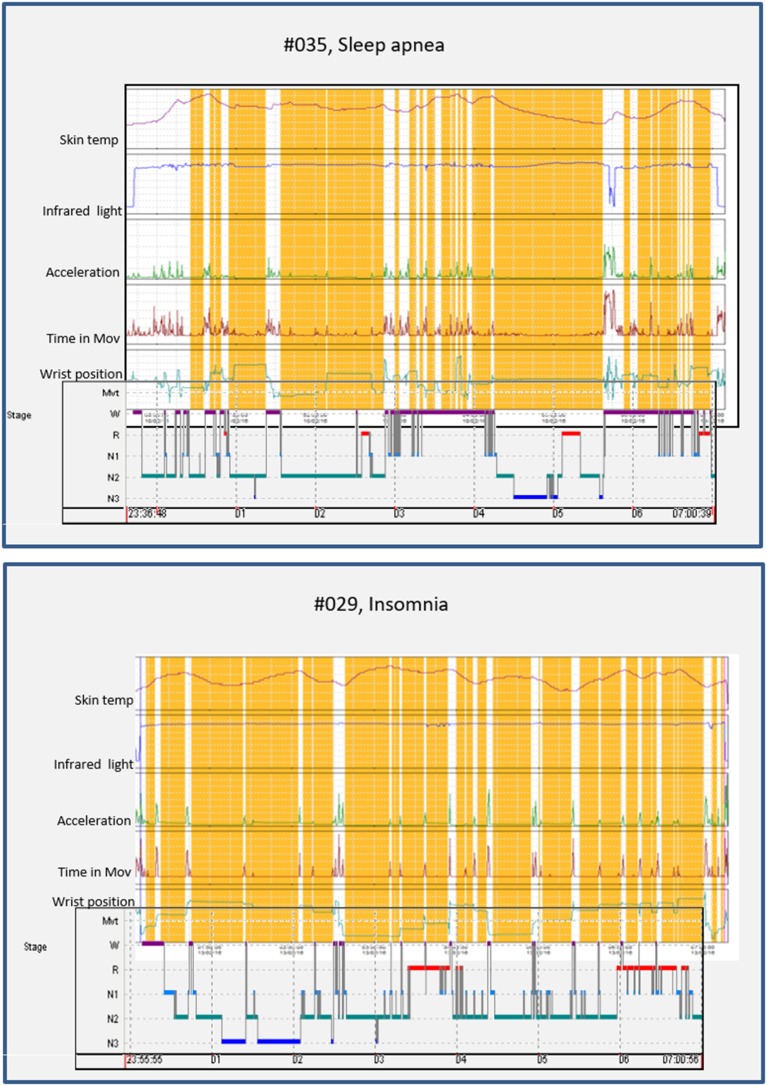
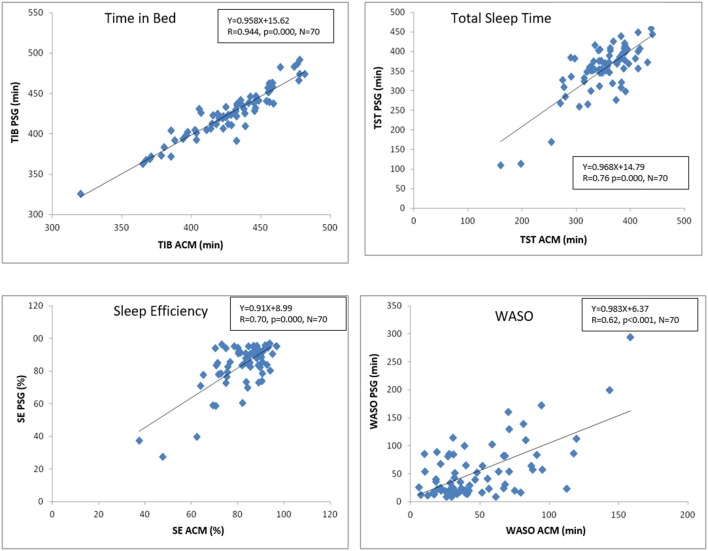
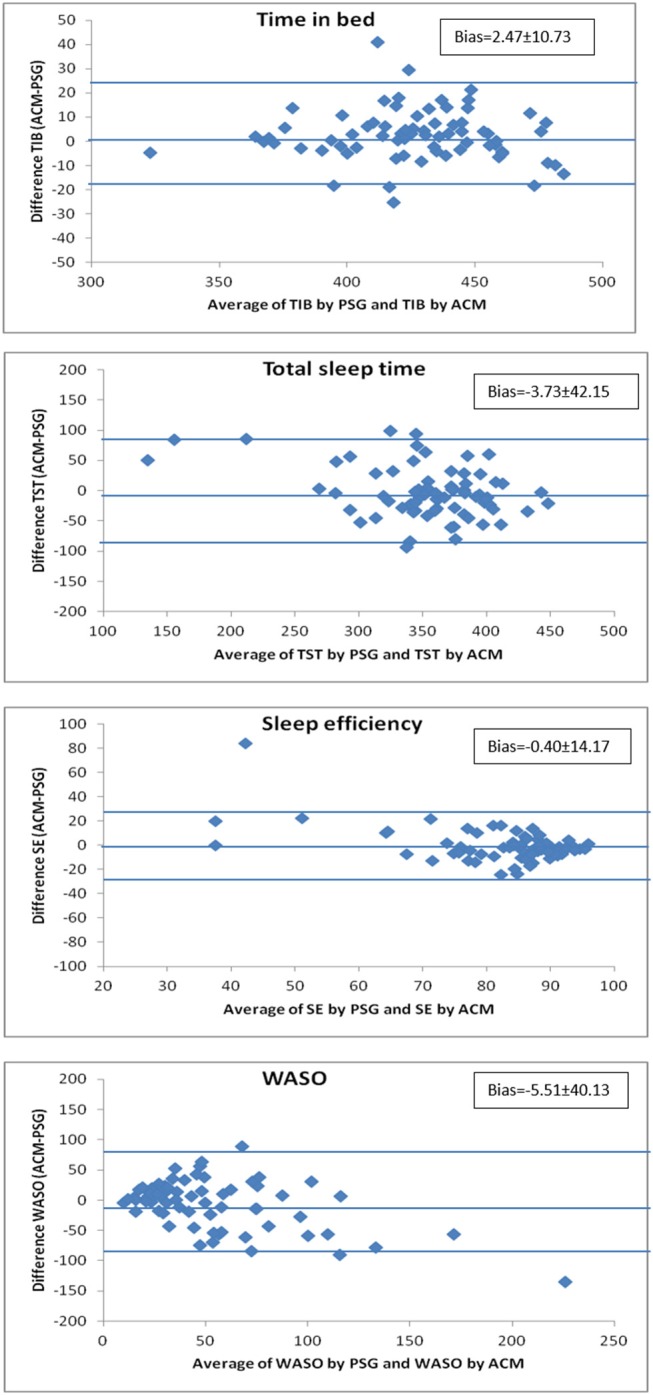
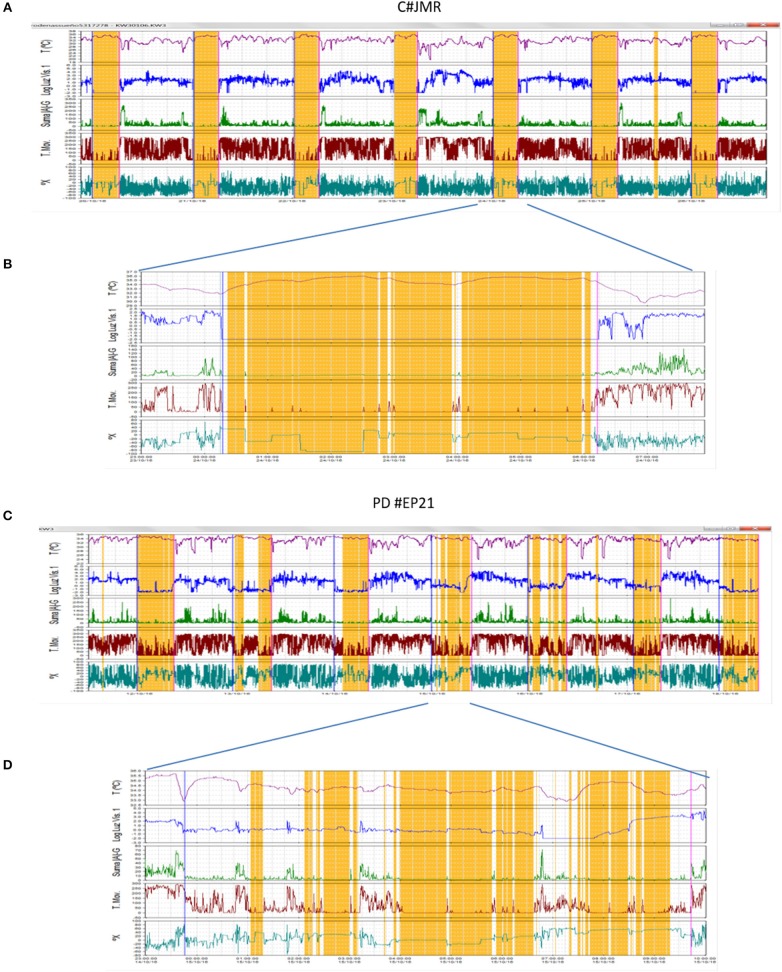
The development of devices has increase interest in the use of ambulatory methods to detect sleep disorders more objectively than those permitted by subjective scales evaluating sleep quality, while subjects maintain their usual lifestyle. This study aims to validate an ambulatory circadian monitoring (ACM) device for the detection of sleep and wake states and apply it to the evaluation of sleep quality in patients with Parkinson disease (PD). A polysomnographic validation study was conducted on a group of patients with different sleep disorders in a preliminary phase, followed by a pilot study to apply this methodology to PD patients. The ACM device makes it possible to estimate the main sleep parameters very accurately, as demonstrated by: (a) the lack of significant differences between the mean values detected by PSG and ACM in time in bed (TIB), total sleep time (TST), sleep efficiency (SE), and time awake after sleep onset (WASO); (b) the slope of the correlation lines between the parameters estimated by the two procedures, very close to 1, which demonstrates the linearity of the predictions; (c) the low bias value in the estimates obtained through ACM. Sleep in PD is associated with lower distal skin temperature, efficiency and overall sleep time; greater WASO, activity during sleep and duration of naps and a worse circadian function index. In summary, the ACM device has proven to be clinically useful to evaluate sleep in an objective manner, thanks to the integrated management of different complementary variables, having advantages over conventional actigraphy.
设备的发展激发了人们对使用动态监测方法的兴趣,以便在受试者保持日常生活方式的情况下,比通过评估睡眠质量的主观量表更客观地检测睡眠障碍。本研究旨在验证一种用于检测睡眠和清醒状态的动态昼夜节律监测(ACM)设备,并将其应用于帕金森病(PD)患者的睡眠质量评估。在初步阶段,对一组患有不同睡眠障碍的患者进行了多导睡眠图验证研究,随后进行了一项试点研究,将该方法应用于PD患者。ACM设备能够非常准确地估计主要睡眠参数,如下所示:(a)多导睡眠图(PSG)和ACM检测到的卧床时间(TIB)、总睡眠时间(TST)、睡眠效率(SE)和睡眠开始后清醒时间(WASO)的平均值之间没有显著差异;(b)两种方法估计的参数之间的相关线斜率非常接近1,这表明预测具有线性;(c)通过ACM获得的估计值中的偏差值较低。PD患者的睡眠与较低的远端皮肤温度、效率和总体睡眠时间相关;WASO更长、睡眠期间活动更多、小睡时间更长且昼夜节律功能指数更差。总之,由于对不同补充变量的综合管理,ACM设备已被证明在客观评估睡眠方面具有临床实用性,比传统的活动记录仪具有优势。