Madrid-Navarro Carlos J, Escamilla-Sevilla Francisco, Mínguez-Castellanos Adolfo, Campos Manuel, Ruiz-Abellán Fernando, Madrid Juan A, Rol M A
Neurology Service, Hospital Universitario Virgen de las Nieves, Granada, Spain.
Instituto de Investigación Biosanitaria ibs.GRANADA, Granada, Spain.
Front Neurol. 2018 Mar 26;9:157. doi: 10.3389/fneur.2018.00157. eCollection 2018.
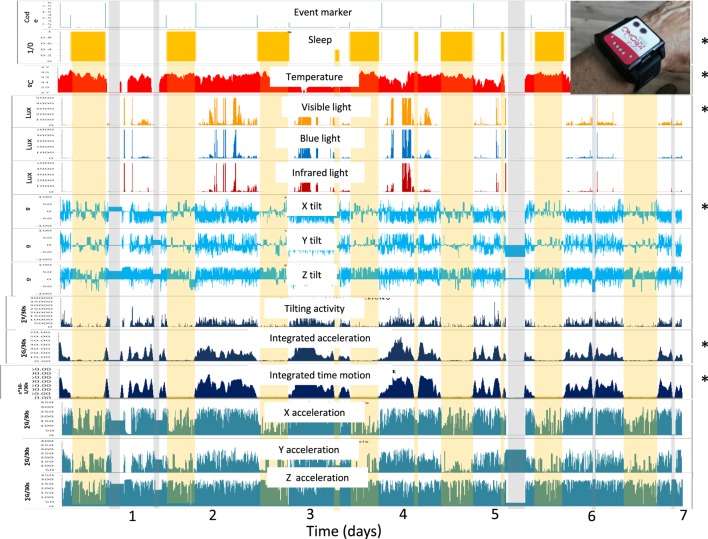
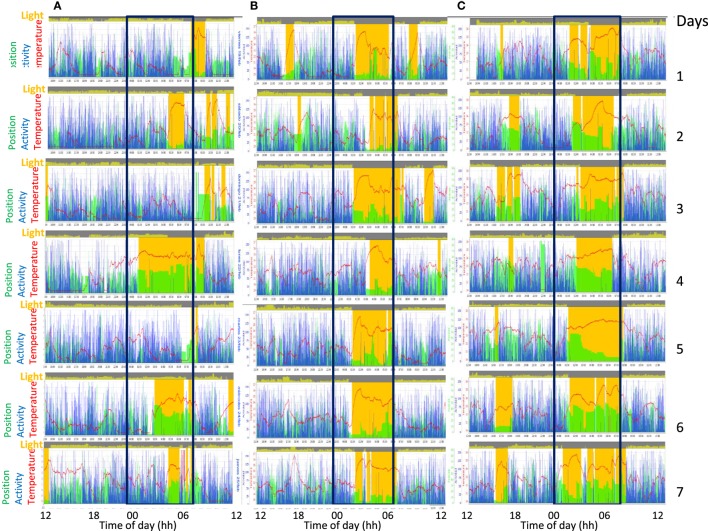
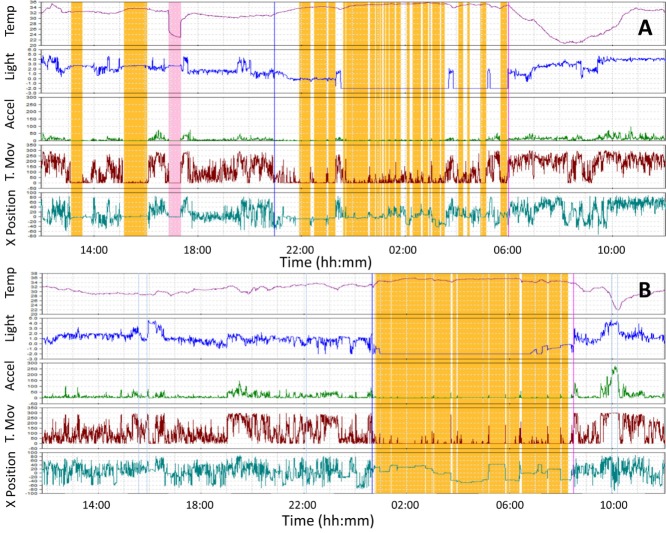
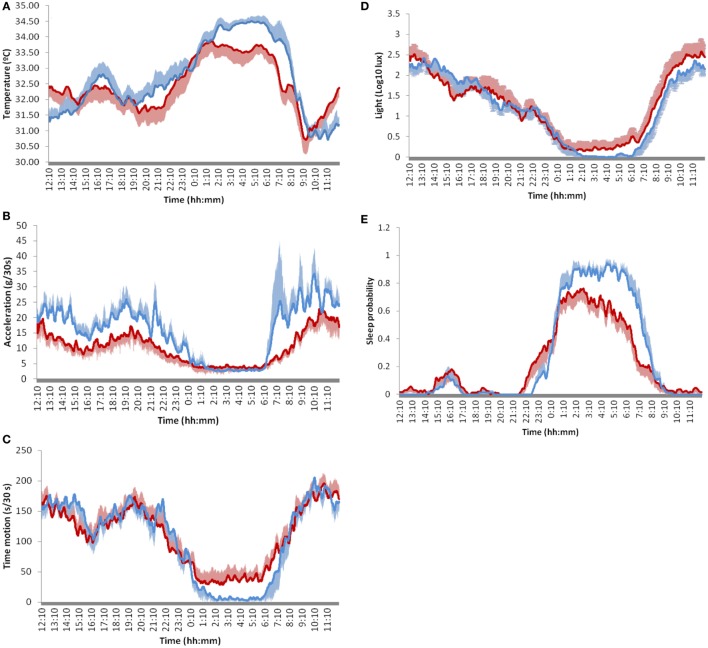
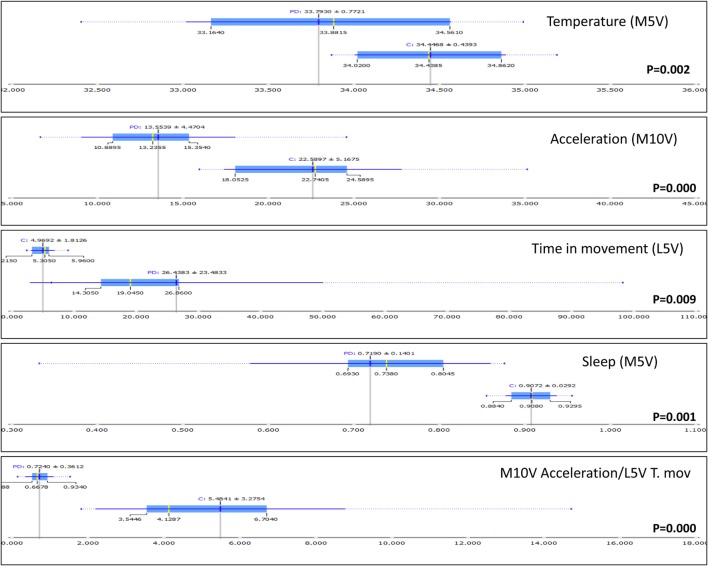
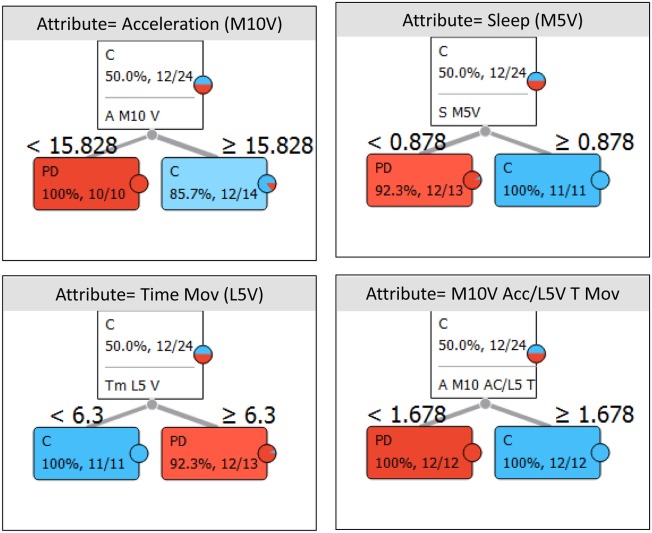
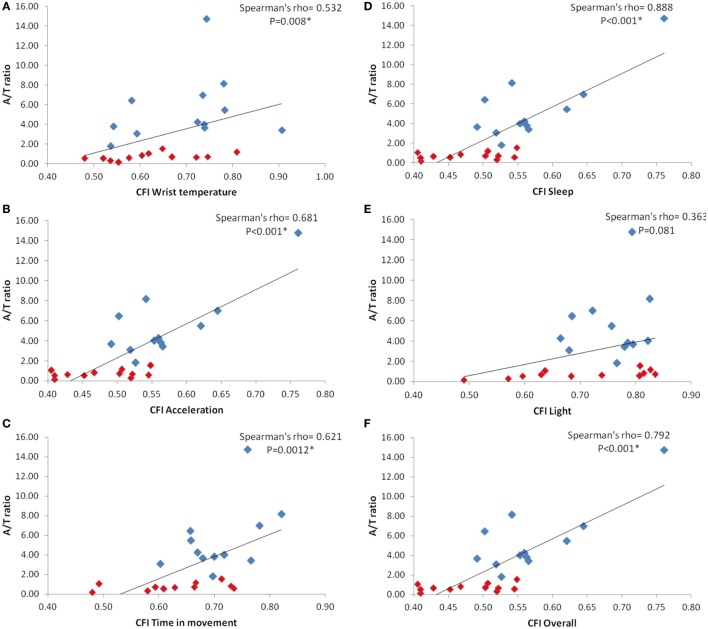
Parkinson's disease (PD) is associated with several non-motor symptoms that may precede the diagnosis and constitute a major source of frailty in this population. The digital era in health care has open up new prospects to move forward from the qualitative and subjective scoring for PD with the use of new wearable biosensors that enable frequent quantitative, reliable, repeatable, and multidimensional measurements to be made with minimal discomfort and inconvenience for patients. A cross-sectional study was conducted to test a wrist-worn device combined with machine-learning processing to detect circadian rhythms of sleep, motor, and autonomic disruption, which can be suitable for the objective and non-invasive evaluation of PD patients. Wrist skin temperature, motor acceleration, time in movement, hand position, light exposure, and sleep rhythms were continuously measured in 12 PD patients and 12 age-matched healthy controls for seven consecutive days using an ambulatory circadian monitoring device (ACM). Our study demonstrates that a multichannel ACM device collects reliable and complementary information from motor (acceleration and time in movement) and common non-motor (sleep and skin temperature rhythms) features frequently disrupted in PD. Acceleration during the daytime (as indicative of motor impairment), time in movement during sleep (representative of fragmented sleep) and their ratio (A/T) are the best indexes to objectively characterize the most common symptoms of PD, allowing for a reliable and easy scoring method to evaluate patients. Chronodisruption score, measured by the integrative algorithm known as the circadian function index is directly linked to a low A/T score. Our work attempts to implement innovative technologies based on wearable, multisensor, objective, and easy-to-use devices, to quantify PD circadian rhythms in huge populations over extended periods of time, while controlling at the same time exposure to exogenous circadian synchronizers.
帕金森病(PD)与多种非运动症状相关,这些症状可能在诊断之前出现,并构成该人群虚弱的主要来源。医疗保健的数字时代开辟了新的前景,借助新型可穿戴生物传感器,从对PD的定性和主观评分向前迈进,这些传感器能够以最小的不适和不便对患者进行频繁的定量、可靠、可重复和多维度测量。本研究进行了一项横断面研究,以测试一种腕部佩戴设备与机器学习处理相结合,以检测睡眠、运动和自主神经紊乱的昼夜节律,这可能适用于对PD患者进行客观和非侵入性评估。使用动态昼夜监测设备(ACM),对12名PD患者和12名年龄匹配的健康对照连续7天持续测量腕部皮肤温度、运动加速度、运动时间、手部位置、光照暴露和睡眠节律。我们的研究表明,多通道ACM设备从PD中频繁紊乱的运动(加速度和运动时间)和常见非运动(睡眠和皮肤温度节律)特征中收集可靠且互补的信息。白天的加速度(作为运动障碍的指标)、睡眠期间的运动时间(代表碎片化睡眠)及其比率(A/T)是客观表征PD最常见症状的最佳指标,从而产生一种可靠且易于评分的方法来评估患者。通过称为昼夜功能指数的综合算法测量的昼夜节律紊乱评分与低A/T评分直接相关。我们的工作试图基于可穿戴、多传感器、客观且易于使用的设备实施创新技术,以便在长时间内对大量人群的PD昼夜节律进行量化,同时控制对外源性昼夜同步器的暴露。