Medical Physics Section, Department of Biomedicine and Prevention, University of Rome "Tor Vergata", Italy.
Neuroradiology Unit, Department of Biomedicine and Prevention, University of Rome "Tor Vergata", Rome, Italy; San Raffaele Cassino, Frosinone, Italy.
Neuroimage Clin. 2020;28:102419. doi: 10.1016/j.nicl.2020.102419. Epub 2020 Sep 9.
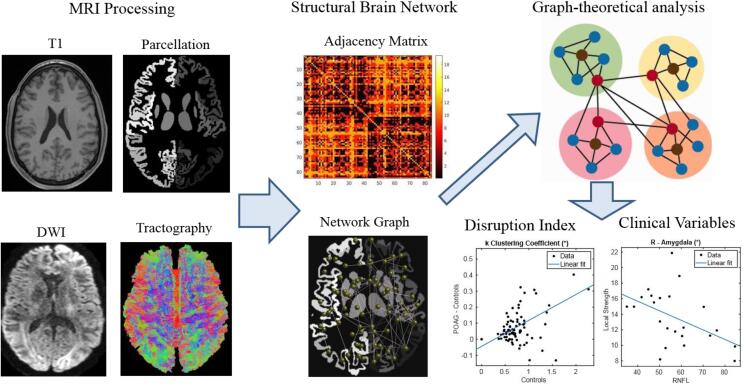
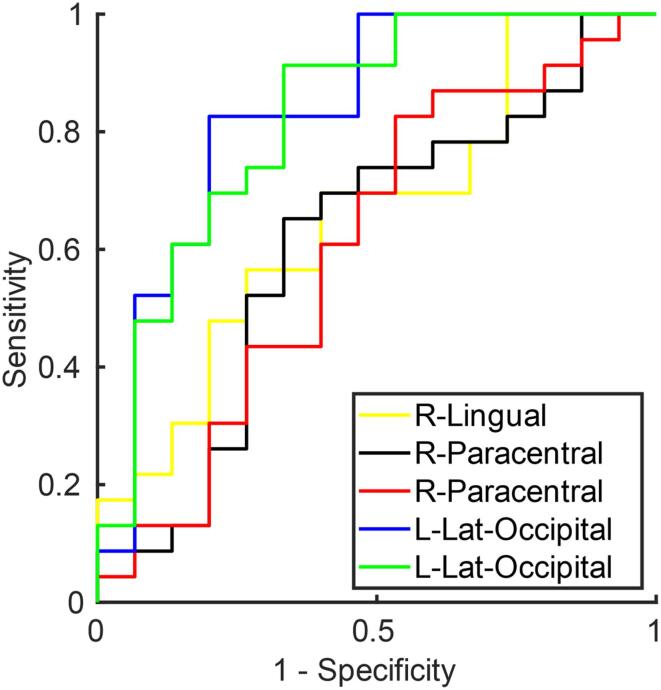
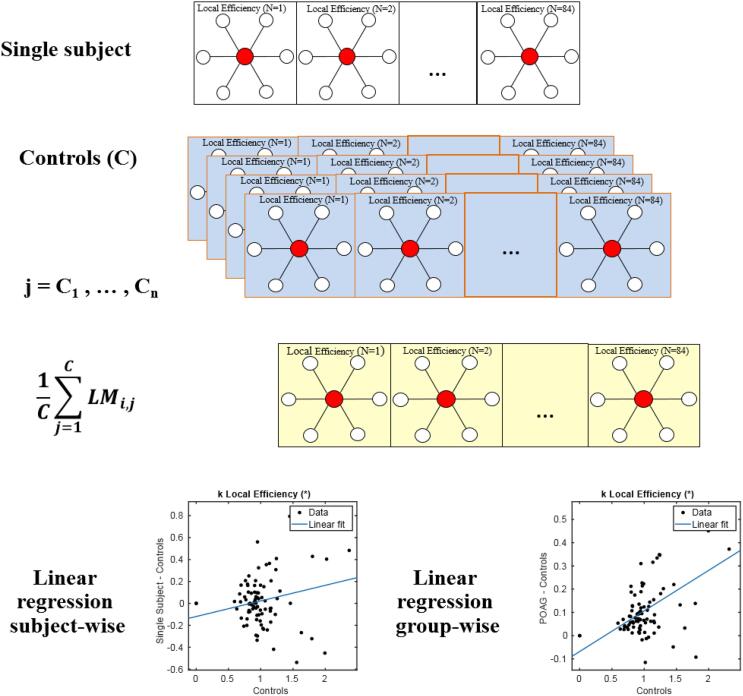
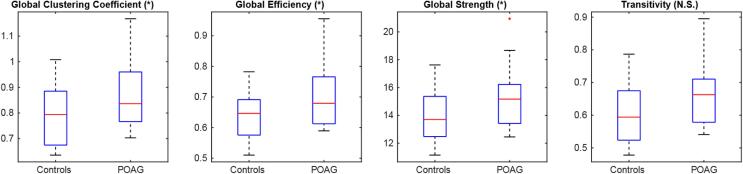
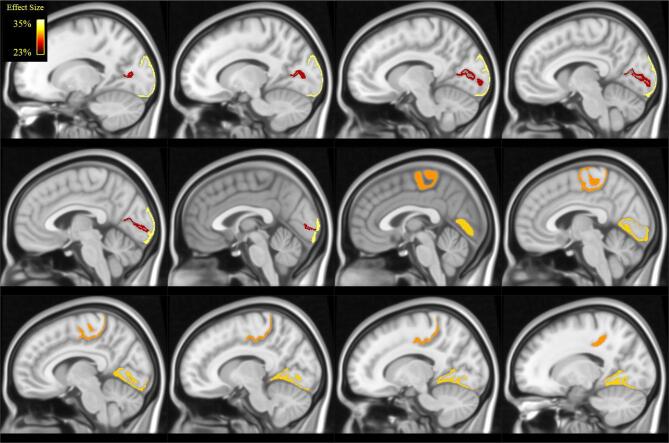
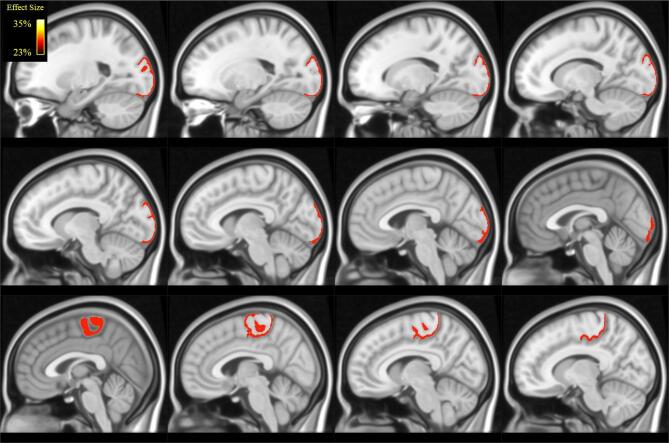
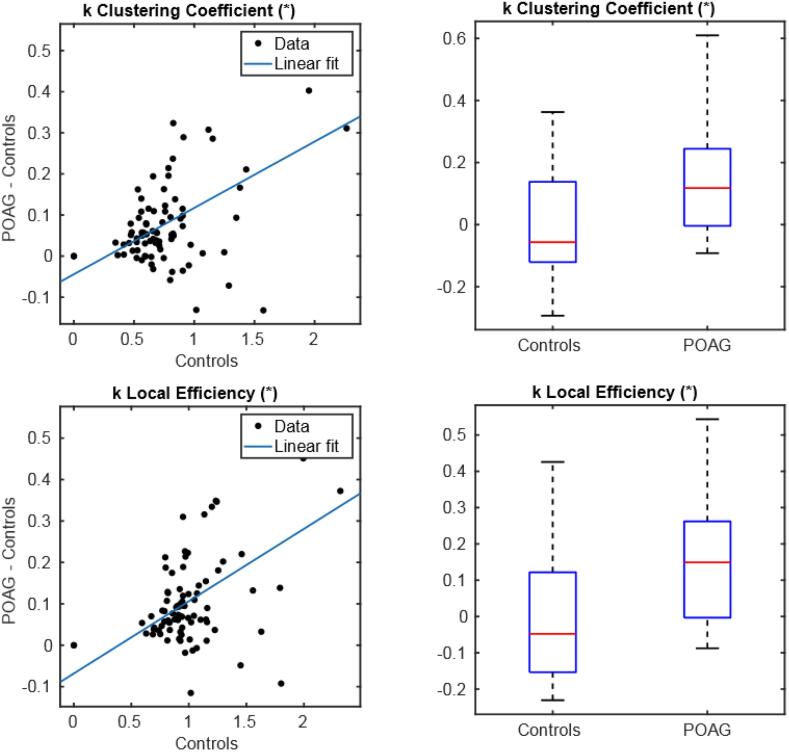
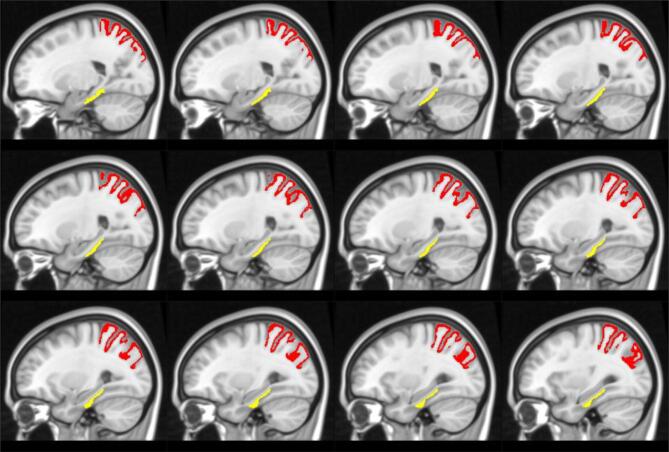
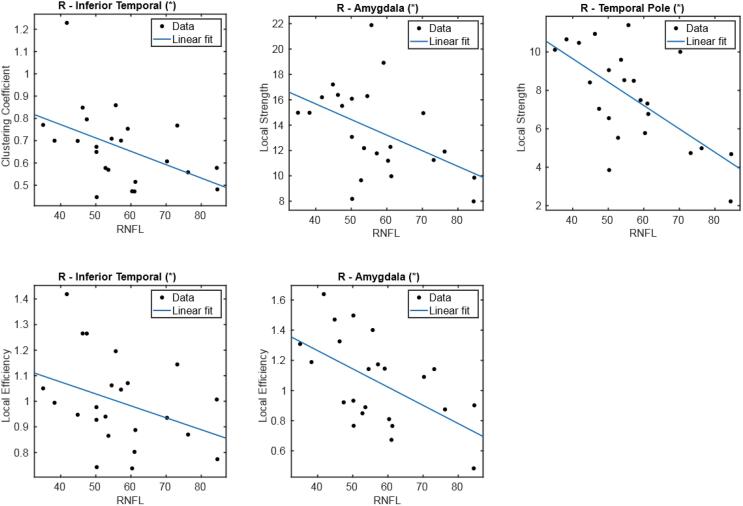
Primary open angle Glaucoma (POAG) is one of the most common causes of permanent blindness in the world. Recent studies have suggested the hypothesis that POAG is also a central nervous system disorder which may result in additional (i.e., extra-ocular) involvement. The aim of this study is to assess possible structural, whole-brain connectivity alterations in POAG patients. We evaluated 23 POAG patients and 15 healthy controls by combining multi-shell diffusion weighted imaging, multi-shell, multi-tissue probabilistic tractography, graph theoretical measures and a recently designed 'disruption index', which evaluates the global reorganization of brain networks. We also studied the associations between the whole-brain structural connectivity measures and indices of visual acuity including the field index (VFI) and two Optical Coherence Tomography (OCT) parameters, namely the Macula Ganglion Cell Layer (MaculaGCL) and Retinal Nerve Fiber Layer (RNFL) thicknesses. We found both global and local structural connectivity differences between POAG patients and controls, which extended well beyond the primary visual pathway and were localized in the left calcarine gyrus (clustering coefficient p = 0.036), left lateral occipital cortex (clustering coefficient p = 0.017, local efficiency p = 0.035), right lingual gyrus (clustering coefficient p = 0.009), and right paracentral lobule (clustering coefficient p = 0.009, local efficiency p = 0.018). Group-wise (clustering coefficient, p = 6.59∙10 and local efficiency p = 6.23·10) and subject-wise disruption indices (clustering coefficient, p = 0.018 and local efficiency, p = 0.01) also differed between POAG patients and controls. In addition, we found negative associations between RNFL thickness and local measures (clustering coefficient, local efficiency and strength) in the right amygdala (local efficiency p = 0.008, local strength p = 0.016), right inferior temporal gyrus (clustering coefficient p = 0.036, local efficiency p = 0.042), and right temporal pole (local strength p = 0.008). Overall, we show, in patients with POAG, a whole-brain structural reorganization that spans across a variety of brain regions involved in visual processing, motor control, and emotional/cognitive functions. We also identified a pattern of brain structural changes in relation to POAG clinical severity. Taken together, our findings support the hypothesis that the reduction in visual acuity from POAG can be driven by a combination of local (i.e., in the eye) and more extended (i.e., brain) effects.
原发性开角型青光眼(POAG)是世界上导致永久性失明的最常见原因之一。最近的研究表明,POAG 也是一种中枢神经系统疾病,可能导致额外的(即眼外)受累。本研究旨在评估 POAG 患者可能存在的结构和全脑连接改变。我们通过结合多壳扩散加权成像、多壳、多组织概率追踪、图论测量和最近设计的“破坏指数”,评估了 23 名 POAG 患者和 15 名健康对照者的结构。我们还研究了全脑结构连接测量值与视力指标(包括视野指数(VFI)和两种光学相干断层扫描(OCT)参数,即黄斑神经节细胞层(MaculaGCL)和视网膜神经纤维层(RNFL)厚度)之间的相关性。我们发现 POAG 患者和对照组之间存在全脑和局部结构连接差异,这些差异不仅延伸到初级视觉通路,而且还局限于左侧距状回(聚类系数 p=0.036)、左侧外侧枕叶皮层(聚类系数 p=0.017,局部效率 p=0.035)、右侧舌回(聚类系数 p=0.009)和右侧中央旁小叶(聚类系数 p=0.009,局部效率 p=0.018)。组间(聚类系数,p=6.59·10 和局部效率,p=6.23·10)和个体间破坏指数(聚类系数,p=0.018 和局部效率,p=0.01)也存在差异。此外,我们还发现右侧杏仁核(局部效率,p=0.018,局部强度,p=0.01)的局部测量值(聚类系数、局部效率和强度)与 RNFL 厚度之间存在负相关,右侧颞下回(聚类系数 p=0.036,局部效率 p=0.042)和右侧颞极(局部强度 p=0.008)。总的来说,我们在 POAG 患者中发现了一种跨越多种参与视觉处理、运动控制和情感/认知功能的脑区的全脑结构重排。我们还确定了与 POAG 临床严重程度相关的脑结构变化模式。总之,我们的研究结果支持这样的假设,即 POAG 导致的视力下降可能是由局部(即眼内)和更广泛(即大脑)效应共同作用的结果。