Department of Radiology & Nuclear Medicine, Maastricht University Medical Center+, Maastricht, The Netherlands.
School for Mental Health and Neuroscience (MHeNs), Maastricht University, Maastricht, The Netherlands.
Geroscience. 2021 Feb;43(1):239-252. doi: 10.1007/s11357-020-00276-z. Epub 2020 Oct 9.
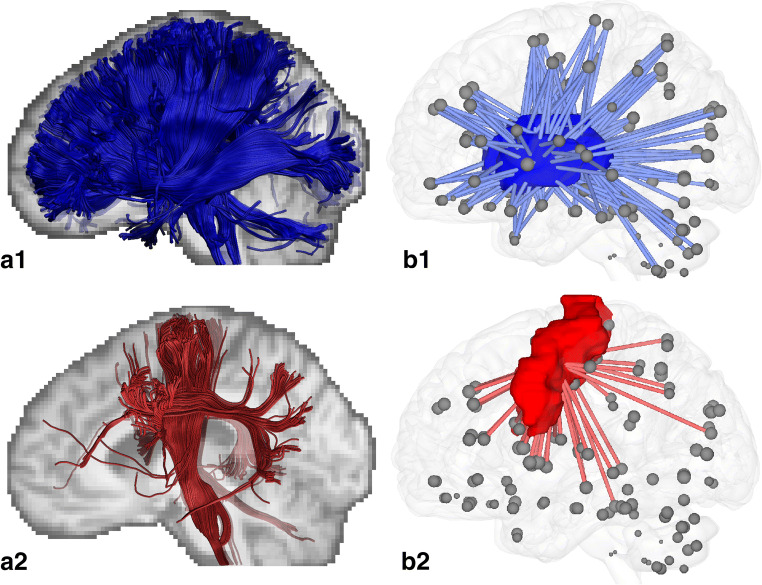
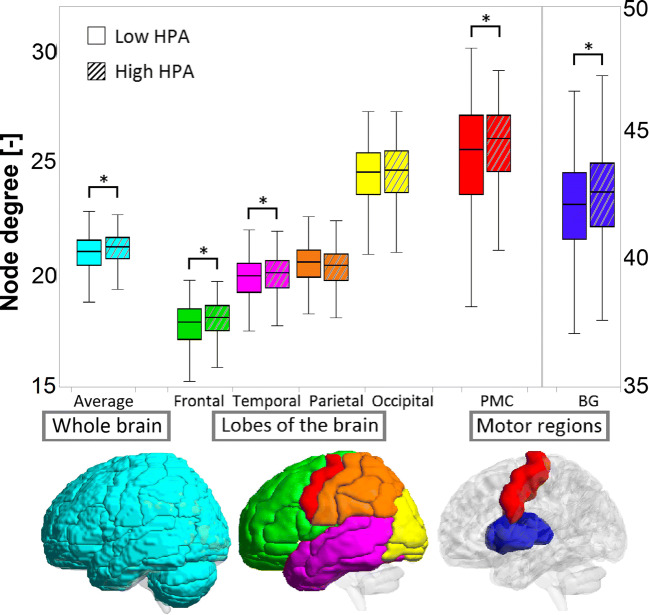
We assessed whether objectively measured low- and high-intensity physical activity (LPA and HPA) and sedentary time (ST) were associated with white matter connectivity, both throughout the whole brain and in brain regions involved in motor function. In the large population-based Maastricht Study (n = 1715, age 59.6 ± 8.1 (mean ± standard deviation) years, and 48% women), the amounts of LPA, HPA, and ST were objectively measured during 7 days by an activPAL accelerometer. In addition, using 3T structural and diffusion MRI, we calculated whole brain node degree and node degree of the basal ganglia and primary motor cortex. Multivariable linear regression analysis was performed, and we report standardized regression coefficients (stβ) adjusted for age, sex, education level, wake time, diabetes status, BMI, office systolic blood pressure, antihypertensive medication, total-cholesterol-to-HDL-cholesterol ratio, lipid-modifying medication, alcohol use, smoking status, and history of cardiovascular disease. Lower HPA was associated with lower whole brain node degree after full adjustment (stβ [95%CI] = - 0.062 [- 0.101, - 0.013]; p = 0.014), whereas lower LPA (stβ [95%CI] = - 0.013 [- 0.061, 0.034]; p = 0.580) and higher ST (stβ [95%CI] = - 0.030 [- 0.081, 0.021]; p = 0.250) was not. In addition, lower HPA was associated with lower node degree of the basal ganglia after full adjustment (stβ [95%CI] = - 0.070 [- 0.121, - 0.018]; p = 0.009). Objectively measured lower HPA, but not lower LPA and higher ST, was associated with lower whole brain node degree and node degree in specific brain regions highly specialized in motor function. Further research is needed to establish whether more HPA may preserve structural brain connectivity.
我们评估了低强度和高强度体力活动(LPA 和 HPA)以及久坐时间(ST)的客观测量值是否与大脑白质连通性有关,包括整个大脑和参与运动功能的大脑区域。在大型基于人群的马斯特里赫特研究(n = 1715,年龄 59.6 ± 8.1(均值 ± 标准差)岁,48%为女性)中,使用 activPAL 加速度计在 7 天内客观测量了 LPA、HPA 和 ST 的量。此外,使用 3T 结构和弥散 MRI,我们计算了整个大脑节点度和基底节和初级运动皮层的节点度。进行了多变量线性回归分析,并报告了经过年龄、性别、教育程度、清醒时间、糖尿病状态、BMI、办公收缩压、降压药物、总胆固醇与高密度脂蛋白胆固醇比值、调脂药物、饮酒、吸烟状况和心血管疾病史调整后的标准化回归系数(stβ)。完全调整后,较低的 HPA 与较低的全脑节点度相关(stβ[95%CI] = - 0.062 [- 0.101, - 0.013];p = 0.014),而较低的 LPA(stβ[95%CI] = - 0.013 [- 0.061, 0.034];p = 0.580)和较高的 ST(stβ[95%CI] = - 0.030 [- 0.081, 0.021];p = 0.250)则没有。此外,完全调整后,较低的 HPA 与基底节的节点度降低相关(stβ[95%CI] = - 0.070 [- 0.121, - 0.018];p = 0.009)。客观测量的较低的 HPA,但不是较低的 LPA 和较高的 ST,与整个大脑节点度和特定大脑区域的节点度降低有关,这些大脑区域高度专门用于运动功能。需要进一步研究以确定是否可以增加 HPA 来维持结构脑连通性。