Wheeler Michael J, Dempsey Paddy C, Grace Megan S, Ellis Kathryn A, Gardiner Paul A, Green Daniel J, Dunstan David W
Baker Heart and Diabetes Institute, Melbourne, Victoria, Australia.
School of Human Sciences (Exercise and Sport Science), The University of Western Australia, Perth, Western Australia, Australia.
Alzheimers Dement (N Y). 2017 May 2;3(3):291-300. doi: 10.1016/j.trci.2017.04.001. eCollection 2017 Sep.
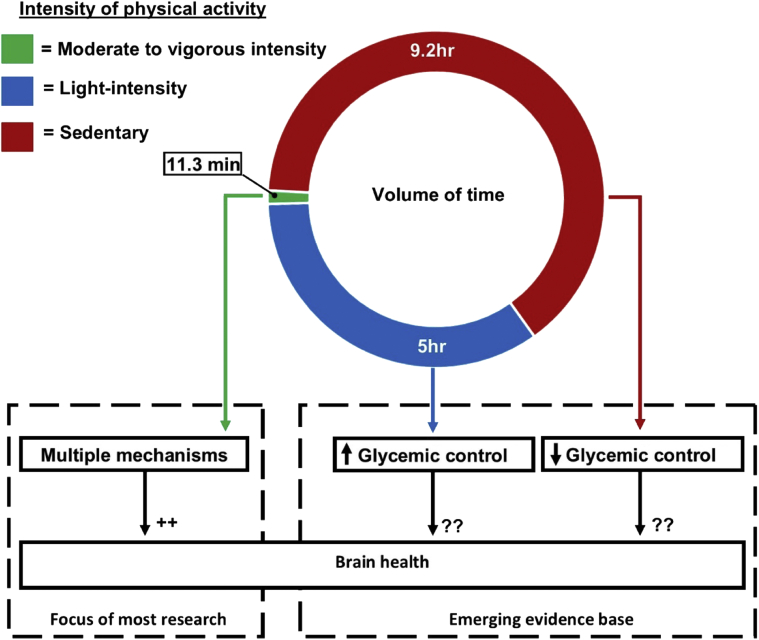
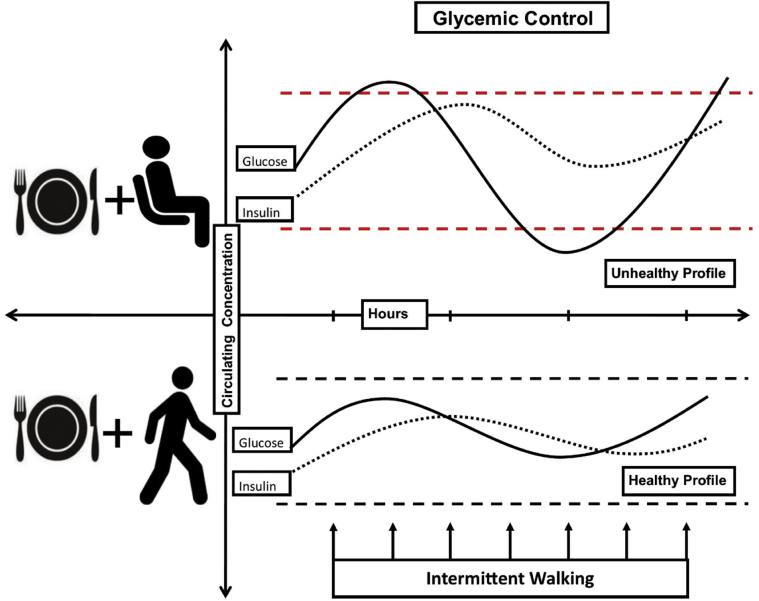
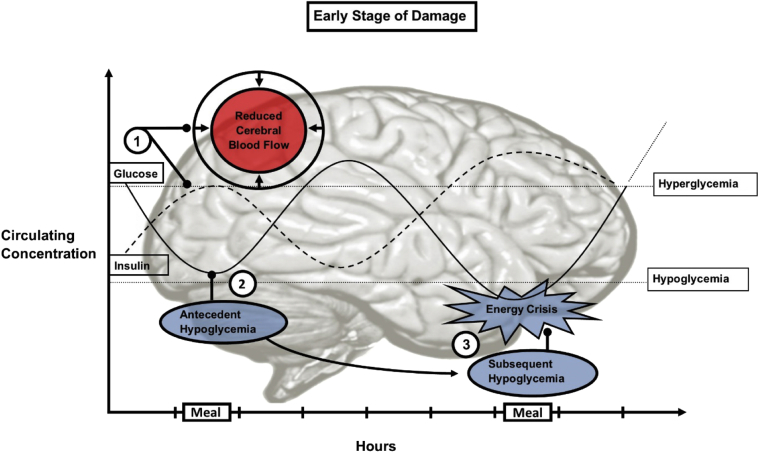
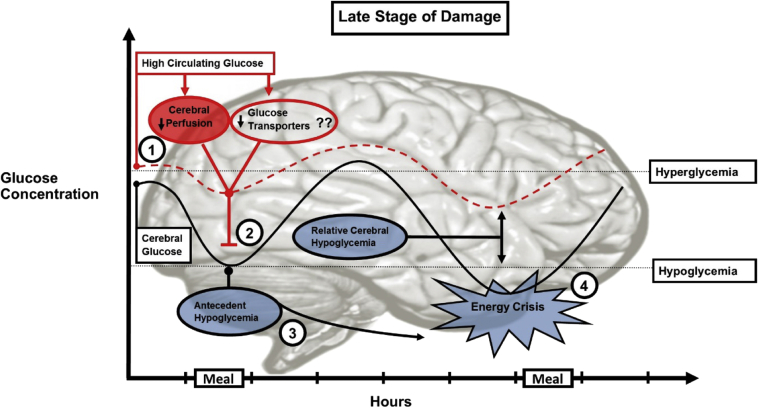
Cognitive decline leading to dementia represents a global health burden. In the absence of targeted pharmacotherapy, lifestyle approaches remain the best option for slowing the onset of dementia. However, older adults spend very little time doing moderate to vigorous exercise and spend a majority of time in sedentary behavior. Sedentary behavior has been linked to poor glycemic control and increased risk of all-cause mortality. Here, we explore a potential link between sedentary behavior and brain health. We highlight the role of glycemic control in maintaining brain function and suggest that reducing and replacing sedentary behavior with intermittent light-intensity physical activity may protect against cognitive decline by reducing glycemic variability. Given that older adults find it difficult to achieve current exercise recommendations, this may be an additional practical strategy. However, more research is needed to understand the impact of poor glycemic control on brain function and whether practical interventions aimed at reducing and replacing sedentary behavior with intermittent light intensity physical activity can help slow cognitive decline.
导致痴呆症的认知能力下降是一项全球性的健康负担。在缺乏针对性药物治疗的情况下,生活方式干预仍然是延缓痴呆症发病的最佳选择。然而,老年人进行中度至剧烈运动的时间很少,大部分时间都处于久坐状态。久坐行为与血糖控制不佳以及全因死亡率增加有关。在此,我们探讨久坐行为与大脑健康之间的潜在联系。我们强调血糖控制在维持大脑功能中的作用,并建议通过减少久坐行为并用间歇性轻度体育活动取而代之,以降低血糖变异性,从而预防认知能力下降。鉴于老年人难以达到目前的运动建议,这可能是一项额外的实用策略。然而,需要更多的研究来了解血糖控制不佳对大脑功能的影响,以及旨在减少久坐行为并用间歇性轻度体育活动取而代之的实际干预措施是否有助于减缓认知能力下降。