Hierro-Bujalance Carmen, Infante-Garcia Carmen, Sanchez-Sotano Daniel, Del Marco Angel, Casado-Revuelta Ana, Mengual-Gonzalez Carmen Maria, Lucena-Porras Carmen, Bernal-Martin Marcos, Benavente-Fernandez Isabel, Lubian-Lopez Simon, Garcia-Alloza Monica
Division of Physiology, School of Medicine, Universidadde Cádiz, Cádiz, Spain.
Instituto de Investigacion e Innovacion en Ciencias Biomedicas de la Provincia de Cádiz (INiBICA), Cádiz, Spain.
Front Cell Dev Biol. 2020 Sep 16;8:571258. doi: 10.3389/fcell.2020.571258. eCollection 2020.
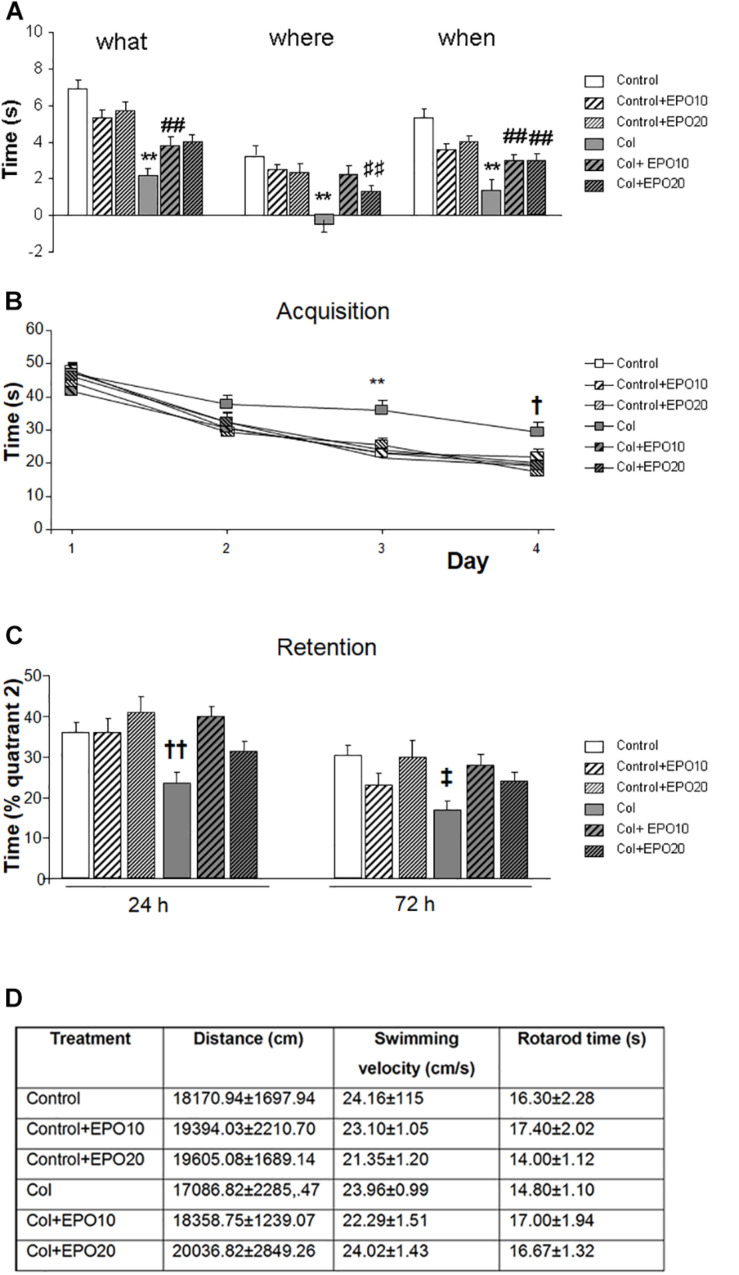
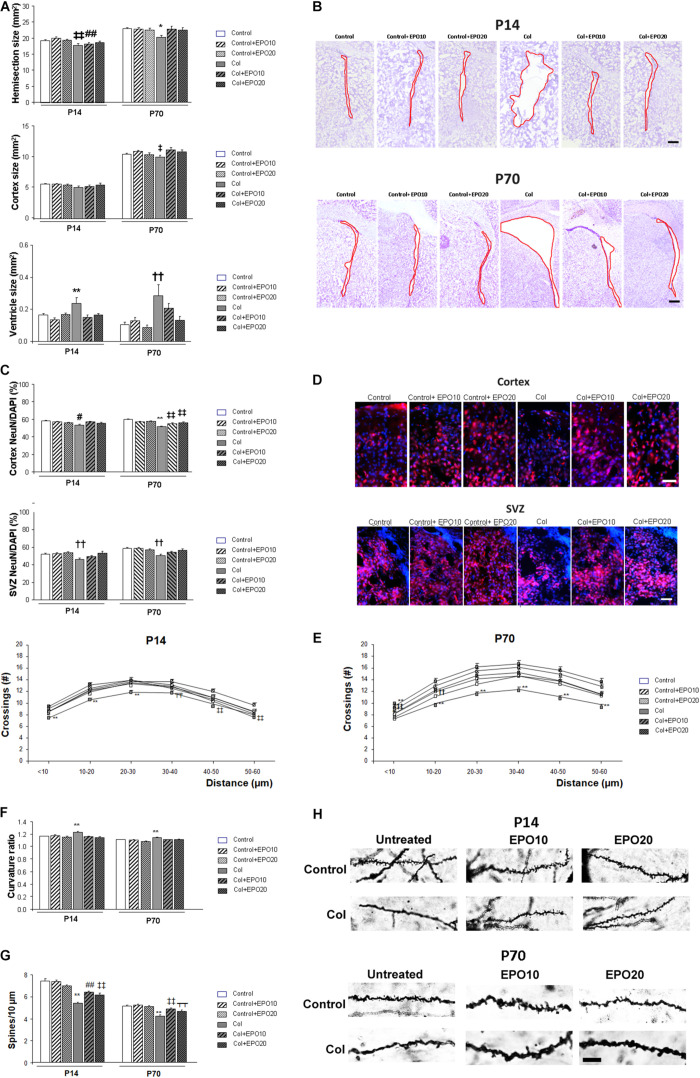
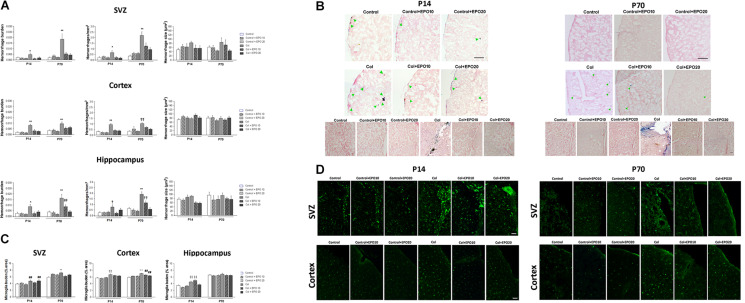
The germinal matrix-intraventricular hemorrhage (GM-IVH) is one of the most devastating complications of prematurity. The short- and long-term neurodevelopmental consequences after severe GM-IVH are a major concern for neonatologists. These kids are at high risk of psychomotor alterations and cerebral palsy; however, therapeutic approaches are limited. Erythropoietin (EPO) has been previously used to treat several central nervous system complications due to its role in angiogenesis, neurogenesis and as growth factor. In addition, EPO is regularly used to reduce the number of transfusions in the preterm infant. Moreover, EPO crosses the blood-brain barrier and EPO receptors are expressed in the human brain throughout development. To analyze the role of EPO in the GM-IVH, we have administered intraventricular collagenase (Col) to P7 mice, as a model of GM-IVH of the preterm infant. After EPO treatment, we have characterized our animals in the short (14 days) and the long (70 days) term. In our hands, EPO treatment significantly limited brain atrophy and ventricle enlargement. EPO also restored neuronal density and ameliorated dendritic spine loss. Likewise, inflammation and small vessel bleeding were also reduced, resulting in the preservation of learning and memory abilities. Moreover, plasma gelsolin levels, as a feasible peripheral marker of GM-IVH-induced damage, recovered after EPO treatment. Altogether, our data support the positive effect of EPO treatment in our preclinical model of GM-IVH, both in the short and the long term.
生发基质-脑室内出血(GM-IVH)是早产最严重的并发症之一。严重GM-IVH后的短期和长期神经发育后果是新生儿科医生主要关注的问题。这些儿童有发生精神运动改变和脑瘫的高风险;然而,治疗方法有限。促红细胞生成素(EPO)先前已被用于治疗几种中枢神经系统并发症,因为它在血管生成、神经发生以及作为生长因子方面发挥作用。此外,EPO经常用于减少早产儿的输血次数。而且,EPO可穿过血脑屏障,并且在人类大脑发育过程中均有EPO受体表达。为了分析EPO在GM-IVH中的作用,我们给P7小鼠脑室内注射胶原酶(Col),作为早产儿GM-IVH的模型。在EPO治疗后,我们对动物进行了短期(14天)和长期(70天)的特征分析。在我们的研究中,EPO治疗显著限制了脑萎缩和脑室扩大。EPO还恢复了神经元密度并改善了树突棘丢失。同样,炎症和小血管出血也减少了,从而保留了学习和记忆能力。此外,作为GM-IVH诱导损伤的可行外周标志物,血浆凝溶胶蛋白水平在EPO治疗后恢复。总之,我们的数据支持EPO治疗在我们的GM-IVH临床前模型中的短期和长期积极作用。