H. Milton Stewart School of Industrial and Systems Engineering, Georgia Institute of Technology, Atlanta, Georgia, United States of America.
Department of Environmental Health, Rollins School of Public Health, Emory University, Atlanta, Georgia, United States of America.
PLoS One. 2020 Oct 12;15(10):e0239798. doi: 10.1371/journal.pone.0239798. eCollection 2020.
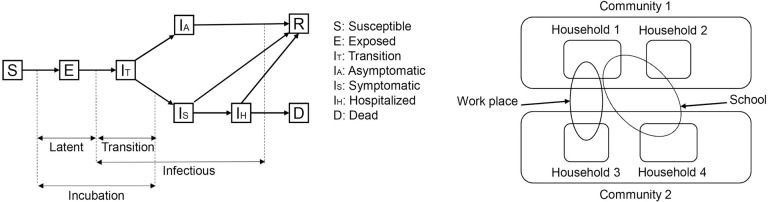
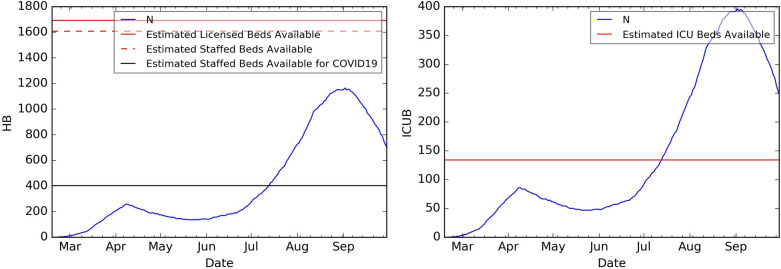
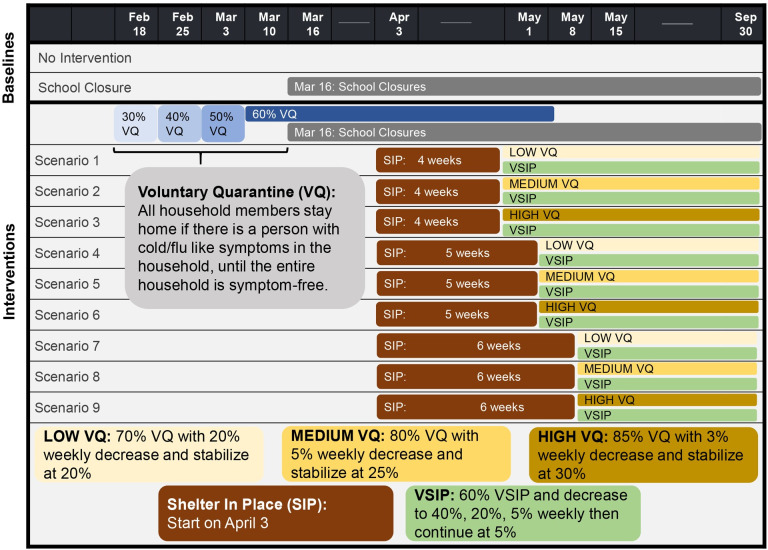
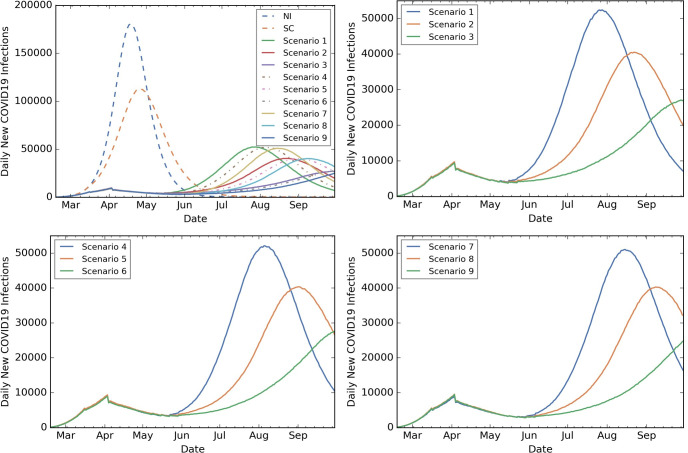
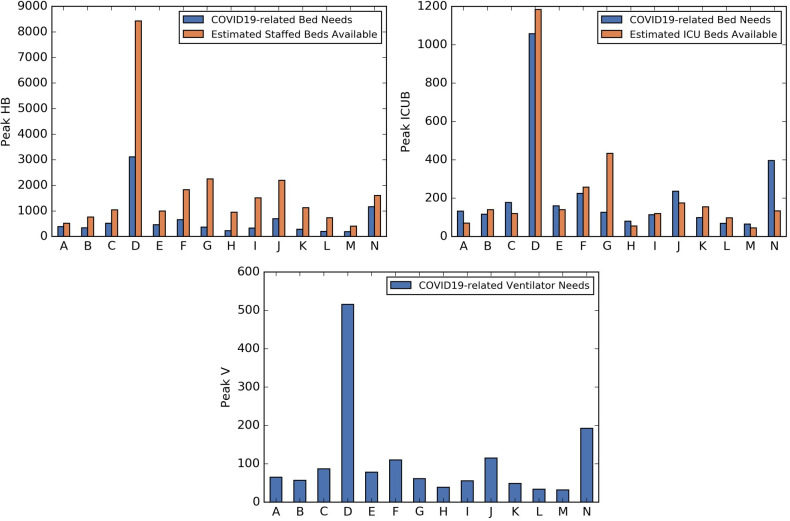
As the spread of COVID19 in the US continues to grow, local and state officials face difficult decisions about when and how to transition to a "new normal." The goal of this study is to project the number of COVID19 infections and resulting severe outcomes, and the need for hospital capacity under social distancing, particularly, shelter-in-place and voluntary quarantine for the State of Georgia. We developed an agent-based simulation model to project the infection spread. The model utilizes COVID19-specific parameters and data from Georgia on population interactions and demographics. The simulation study covered a seven and a half-month period, testing different social distancing scenarios, including baselines (no-intervention or school closure only) and combinations of shelter-in-place and voluntary quarantine with different timelines and compliance levels. The following outcomes are compared at the state and community levels: the number and percentage of cumulative and daily new symptomatic and asymptomatic infections, hospitalizations, and deaths; COVID19-related demand for hospital beds, ICU beds, and ventilators. The results suggest that shelter-in-place followed by voluntary quarantine reduced peak infections from approximately 180K under no intervention and 113K under school closure, respectively, to below 53K, and delayed the peak from April to July or later. Increasing shelter-in-place duration from four to five weeks yielded 2-9% and 3-11% decrease in cumulative infection and deaths, respectively. Regardless of the shelter-in-place duration, increasing voluntary quarantine compliance decreased daily new infections from almost 53K to 25K, and decreased cumulative infections by about 50%. The cumulative number of deaths ranged from 6,660 to 19,430 under different scenarios. Peak infection date varied across scenarios and counties; on average, increasing shelter-in-place duration delayed the peak day by 6 days. Overall, shelter-in-place followed by voluntary quarantine substantially reduced COVID19 infections, healthcare resource needs, and severe outcomes.
随着 COVID19 在美国的传播继续扩大,地方和州官员在何时以及如何过渡到“新常态”方面面临艰难的决策。本研究的目的是预测 COVID19 感染人数和由此产生的严重后果,以及在保持社交距离的情况下,特别是在乔治亚州实行就地避难和自愿隔离时,对医院容量的需求。我们开发了一个基于代理的模拟模型来预测感染的传播。该模型利用 COVID19 特定的参数和来自乔治亚州的人口互动和人口统计学数据。模拟研究涵盖了七个半月的时间,测试了不同的社会隔离场景,包括基线(无干预或仅关闭学校)以及不同时间表和合规水平的就地避难和自愿隔离的组合。在州和社区层面比较以下结果:累积和每日新的有症状和无症状感染、住院和死亡的数量和百分比;与 COVID19 相关的对医院床位、ICU 床位和呼吸机的需求。结果表明,就地避难所随后是自愿隔离,将无干预情况下约 18 万和关闭学校情况下约 11.3 万的峰值感染减少到 5.3 万以下,并将峰值从 4 月推迟到 7 月或更晚。将就地避难所的持续时间从四周延长到五周,将累积感染和死亡人数分别减少 2-9%和 3-11%。无论就地避难所的持续时间如何,增加自愿隔离的遵守率可将每日新增感染人数从近 5.3 万减少到 2.5 万,并将累积感染人数减少约 50%。不同情景下的累积死亡人数从 6660 人到 19430 人不等。感染高峰期因情景和县而异;平均而言,延长就地避难所持续时间会将高峰期推迟 6 天。总体而言,就地避难所随后是自愿隔离,大大减少了 COVID19 的感染、医疗资源需求和严重后果。