Azrieli Faculty of Medicine, Bar-Ilan University, Safed, Israel.
Laboratory of Integrative Physiology, MIGAL - Galilee Research Institute, Kiryat Shmona, Israel.
Genome Med. 2020 Oct 12;12(1):87. doi: 10.1186/s13073-020-00784-9.
During aging, there is a physiological decline, an increase of morbidity and mortality, and a natural change in the gut microbiome. In this study, we investigated the influence of the gut microbiome on different metabolic parameters in adult and aged mice.
Fecal and blood samples from adult (n = 42, 100-300 days) and aging (n = 32, 550-750 days) mice were collected. Microbiome analysis was done using QIIME2. Mouse weight and body composition were measured using NMR, and insulin and leptin levels in the blood were measured with Mouse Adipokine Magnetic Bead Panel kit. Fecal microbiota transplantation experiments from adult and aged mice into young germ-free mice were carried out in order to examine the effect of the gut microbiome of adult and aging mice on weight, body composition, insulin, and leptin.
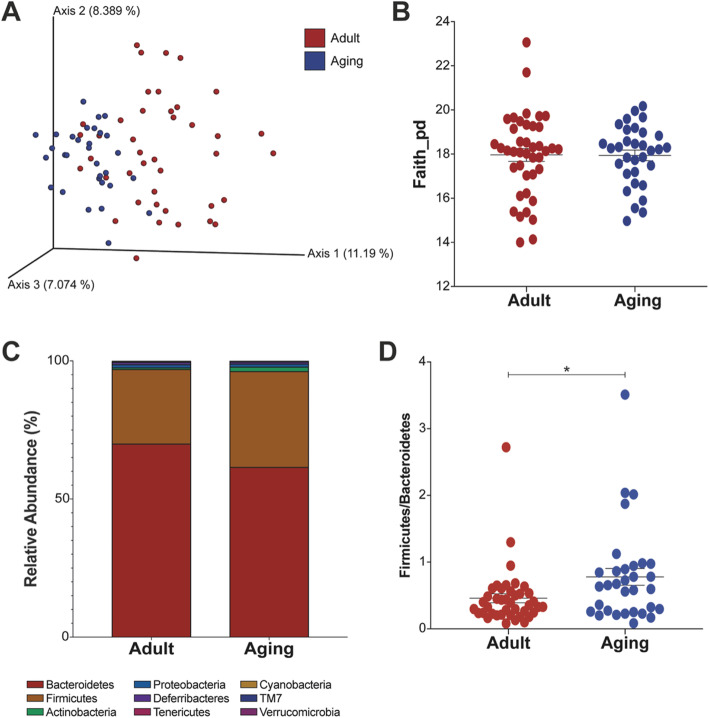
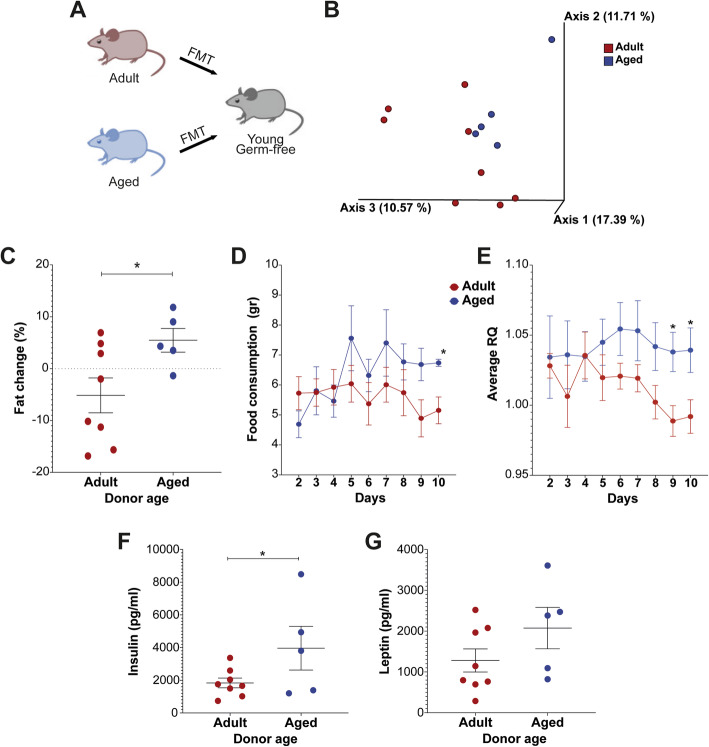
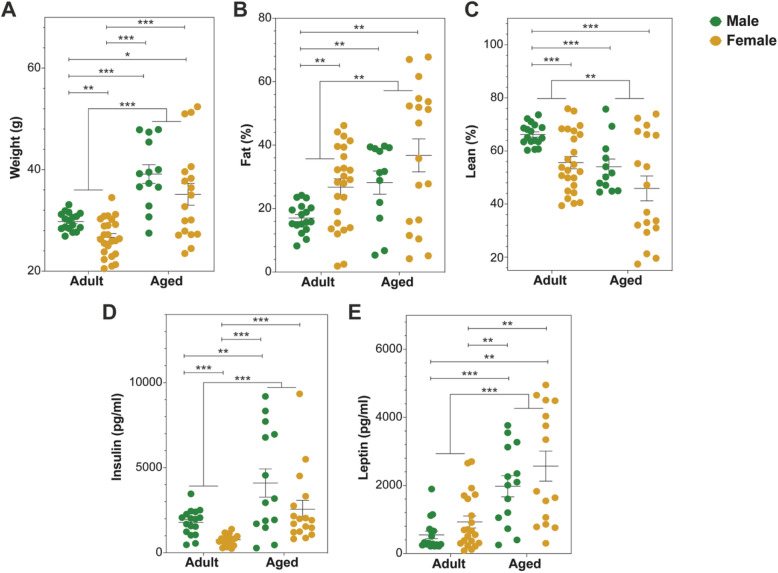
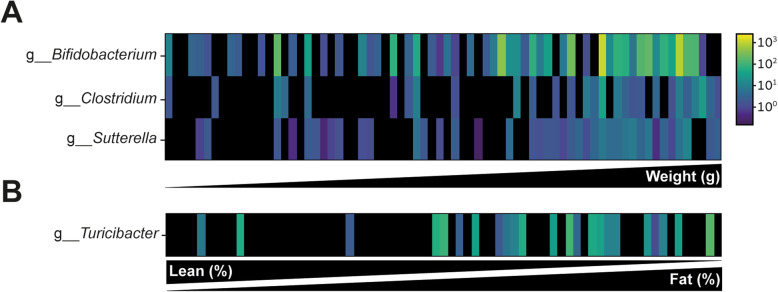
We demonstrate that the microbiomes from adult and aged mice are distinguishable. We also report changes in metabolic parameters as we observed significantly higher weight and fat mass and low lean mass in aged compared to adult mice along with high insulin and leptin levels in the blood. The transplanted gut microbiome from aged mice transferred part of the phenotypes seen in aged mice. Fat body mass and insulin levels were higher in the mice who received feces from aged mice than mice receiving feces from adult mice. In addition, they consumed more food and had a higher respiratory quotient compared to mice receiving adult feces.
We conclude that aged mice have a gut microbiota with obesogenic characteristics. In addition, the gut bacterial population itself is sufficient to induce some of the manifestations of obesity.
随着衰老,生理机能下降,发病率和死亡率上升,肠道微生物组也发生自然改变。本研究旨在探讨肠道微生物组对成年和老年小鼠不同代谢参数的影响。
收集成年(n=42,100-300 天)和衰老(n=32,550-750 天)小鼠的粪便和血液样本。使用 QIIME2 进行微生物组分析。使用 NMR 测量小鼠体重和体成分,使用 Mouse Adipokine Magnetic Bead Panel kit 测量血液中的胰岛素和瘦素水平。为了研究成年和老年小鼠肠道微生物组对体重、体成分、胰岛素和瘦素的影响,我们进行了来自成年和老年小鼠的粪便微生物群移植实验,将其移植到年轻无菌小鼠体内。
我们证明了成年和老年小鼠的微生物组是可区分的。我们还报告了代谢参数的变化,与成年小鼠相比,老年小鼠的体重和脂肪量显著增加,瘦体量较低,同时血液中的胰岛素和瘦素水平也较高。来自老年小鼠的移植肠道微生物组传递了老年小鼠部分表型。与接受成年小鼠粪便的小鼠相比,接受老年小鼠粪便的小鼠体脂肪量和胰岛素水平更高。此外,与接受成年粪便的小鼠相比,它们消耗的食物更多,呼吸商更高。
我们得出结论,老年小鼠的肠道微生物组具有致肥胖特征。此外,肠道细菌群体本身足以诱导部分肥胖表现。