Department of Emergency Medicine, Chang Gung Memorial Hospital and Chang Gung University, No. 5, Fuxing St., Guishan Dist., Taoyuan City 333, Taiwan (R.O.C.); Institute of health policy and management, National, Taiwan University, Taiwan (R.O.C.).
Department of Emergency Medicine, Chang Gung Memorial Hospital and Chang Gung University, No. 5, Fuxing St., Guishan Dist., Taoyuan City 333, Taiwan (R.O.C.).
Am J Emerg Med. 2021 Aug;46:303-309. doi: 10.1016/j.ajem.2020.07.084. Epub 2020 Aug 5.
During a novel virus pandemic, predicting emergency department (ED) volume is crucial for arranging the limited medical resources of hospitals for balancing the daily patient- and epidemic-related tasks in EDs. The goal of the current study was to detect specific patterns of change in ED volume and severity during a pandemic which would help to arrange medical staff and utilize facilities and resources in EDs in advance in the event of a future pandemic.
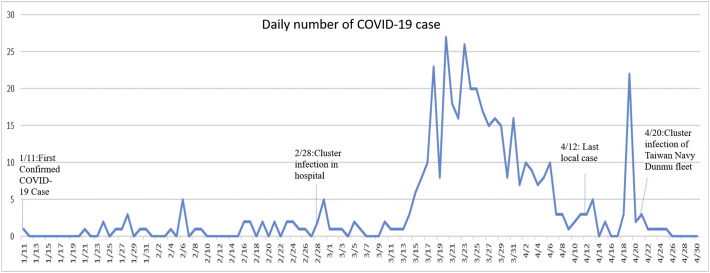
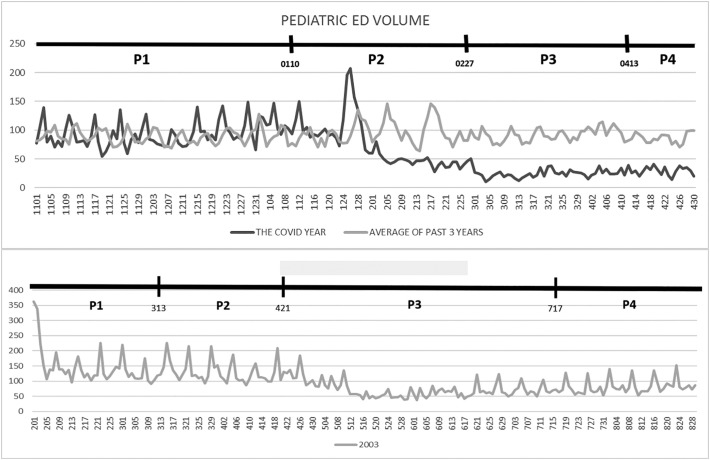
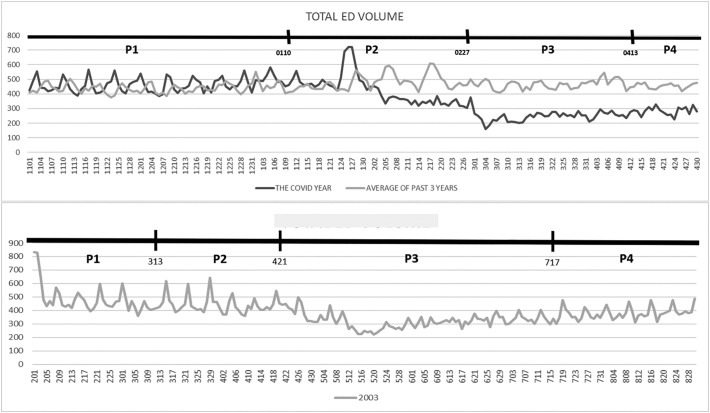
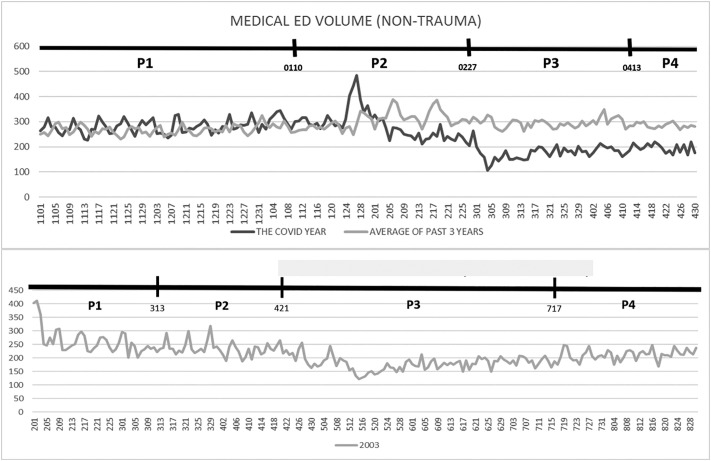
This was a retrospective study of the patients who visited our ED between November 1, 2019 and April 30, 2020. We evaluated the change in ED patient volume and complexity of patients in our medical record system. Patient volume and severity during various periods were identified and compared with data from the past 3 years and the period that SARS occurred.
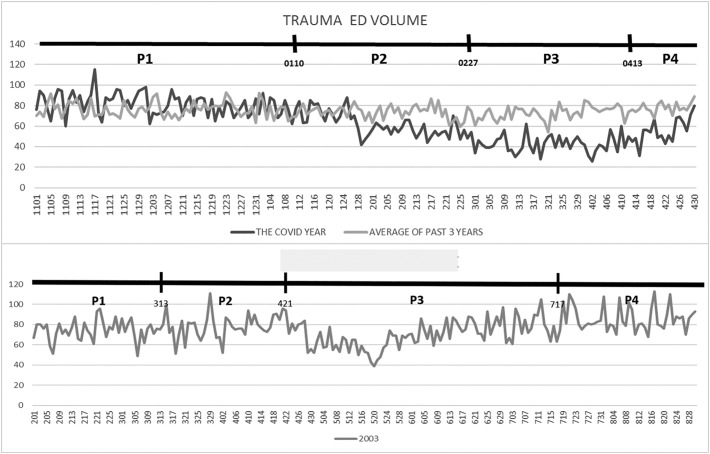
A reduction in ED volume was evident. The reduction began during the early epidemic period and increased rapidly during the peak period of the epidemic with the reduction continuing during the late epidemic period. No significant difference existed in the percentages of triage levels 1 and 2 between the periods. The admission rate, length of stay in the ED, and average number of patients with out-of-hospital cardiac arrest increased during the epidemic periods.
A significant reduction in ED volume during the COVID-19 pandemic was noted and a predictable pattern was found. This specific change in pattern in the ED volume may be useful for performing adjustments in EDs in the future during a novel virus pandemic. The severity of patients visiting the ED during epidemic periods was inconclusive.
在新型病毒大流行期间,预测急诊科(ED)的工作量对于安排医院有限的医疗资源至关重要,以平衡急诊科日常与患者和疫情相关的任务。本研究的目的是检测 ED 量和严重程度在大流行期间的特定变化模式,以便在未来发生大流行时提前安排医务人员并利用 ED 中的设施和资源。
这是一项回顾性研究,研究对象为 2019 年 11 月 1 日至 2020 年 4 月 30 日期间来我院急诊科就诊的患者。我们评估了我们的病历系统中 ED 患者数量和患者复杂性的变化。确定了各个时期的患者数量和严重程度,并与过去 3 年和 SARS 期间的数据进行了比较。
ED 量明显减少。减少始于疫情早期,在疫情高峰期迅速增加,并在疫情后期持续减少。各期 1 级和 2 级分诊比例无显著差异。住院率、ED 停留时间和院外心脏骤停患者平均数在疫情期间增加。
在 COVID-19 大流行期间,ED 量显著减少,并发现了可预测的模式。ED 量这种特定的变化模式可能有助于在未来新型病毒大流行期间对 ED 进行调整。疫情期间就诊患者的严重程度尚无定论。