Department of Statistics, Iowa State University, Ames, IA, United States.
Department of Mathematics, Iowa State University, Ames, IA, United States.
PLoS Comput Biol. 2020 Oct 15;16(10):e1008388. doi: 10.1371/journal.pcbi.1008388. eCollection 2020 Oct.
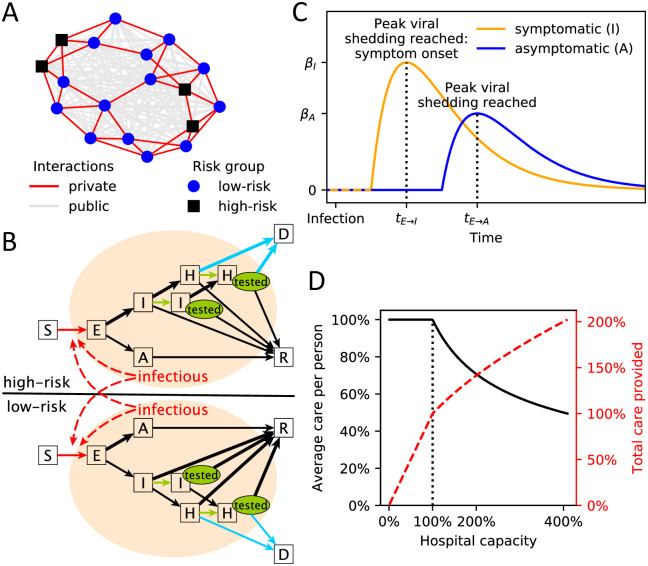
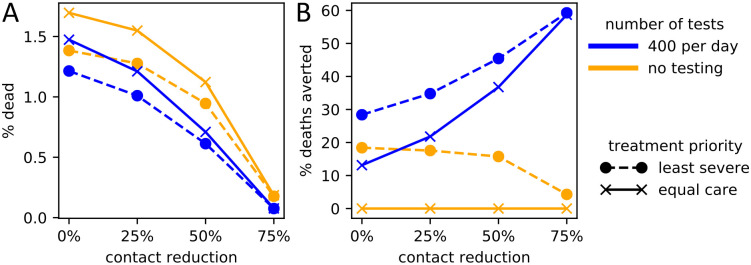
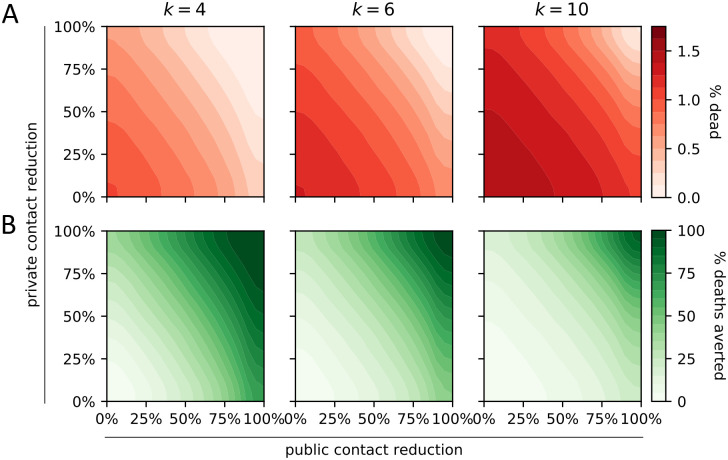
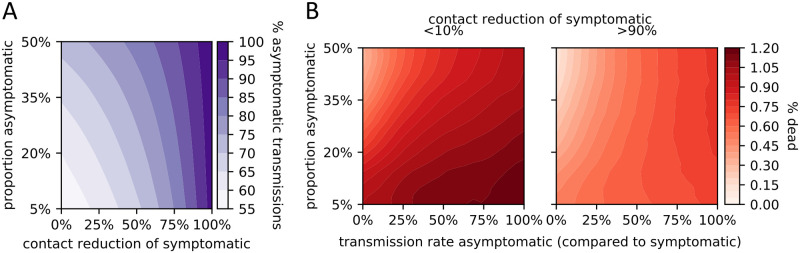
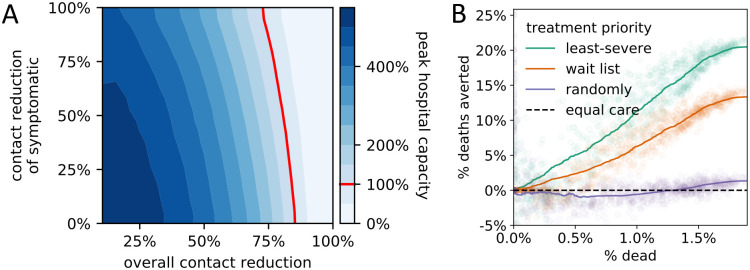
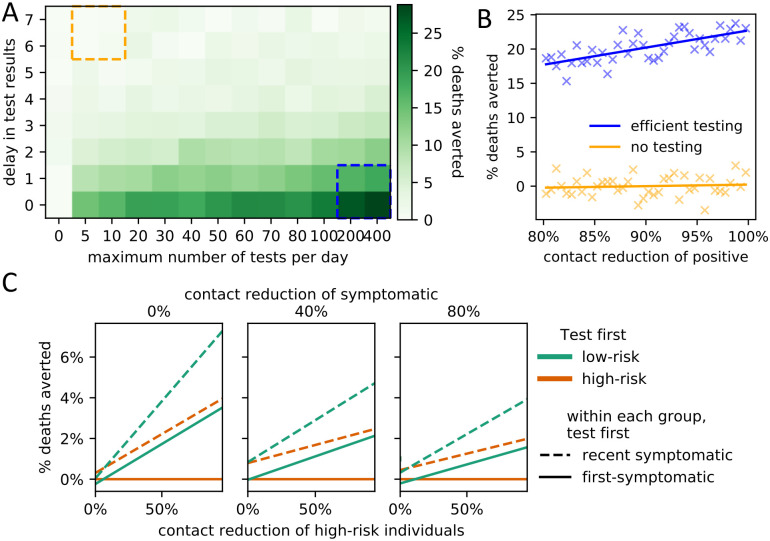
A stochastic compartmental network model of SARS-CoV-2 spread explores the simultaneous effects of policy choices in three domains: social distancing, hospital triaging, and testing. Considering policy domains together provides insight into how different policy decisions interact. The model incorporates important characteristics of COVID-19, the disease caused by SARS-CoV-2, such as heterogeneous risk factors and asymptomatic transmission, and enables a reliable qualitative comparison of policy choices despite the current uncertainty in key virus and disease parameters. Results suggest possible refinements to current policies, including emphasizing the need to reduce random encounters more than personal contacts, and testing low-risk symptomatic individuals before high-risk symptomatic individuals. The strength of social distancing of symptomatic individuals affects the degree to which asymptomatic cases drive the epidemic as well as the level of population-wide contact reduction needed to keep hospitals below capacity. The relative importance of testing and triaging also depends on the overall level of social distancing.
SARS-CoV-2 传播的随机隔室网络模型探讨了在三个领域(社交距离、医院分诊和检测)同时实施政策选择的效果。综合考虑政策领域可以深入了解不同政策决策的相互作用。该模型包含了由 SARS-CoV-2 引起的 COVID-19 疾病的重要特征,例如异质风险因素和无症状传播,并使我们能够在当前关键病毒和疾病参数不确定的情况下,对政策选择进行可靠的定性比较。结果表明,可能需要对现行政策进行改进,包括强调需要减少随机接触而不是个人接触,以及在高风险有症状个体之前对低风险有症状个体进行检测。有症状个体的社交距离强度会影响无症状病例对疫情的推动程度,以及保持医院容量不超负荷所需的人群接触减少程度。检测和分诊的相对重要性也取决于总体社交距离水平。