Miralles Oriol, Sanchez-Rodriguez Dolores, Marco Esther, Annweiler Cédric, Baztan Ainhoa, Betancor Évora, Cambra Alicia, Cesari Matteo, Fontecha Benito J, Gąsowski Jerzy, Gillain Sophie, Hope Suzy, Phillips Katie, Piotrowicz Karolina, Piro Niccolò, Sacco Guillaume, Saporiti Edoardo, Surquin Murielle, Vall-Llosera Estel
Geriatrics and Palliative Care Department, Hospital General de L'Hospitalet de Llobregat-Consorci Sanitari Integral, L'Hospitalet de Llobregat, Av. Josep Molins, 29 L'Hospitalet de Llobregat, 08906, Barcelona, Spain.
Clinical Research Unit, CHU Brugmann, Brussels, Belgium.
Eur Geriatr Med. 2021 Feb;12(1):193-204. doi: 10.1007/s41999-020-00415-x. Epub 2020 Oct 15.
The United Nations (UN) has published a Policy Brief on the impact of the Coronavirus Disease 2019 (COVID-19) that identifies policies and responses to protect older adults. Our objective was to summarize actions, health policies and clinical guidelines adopted by six European countries (Belgium, France, Italy, Poland, Spain and United Kingdom) during the pandemic, and to assess the impact of national policies on reducing adverse effects of the COVID-19 pandemic in older populations.
Reports by geriatricians on the measures and actions undertaken by governmental institutions in each country between March and July 2020, as well as the role of primary care during the pandemic, covered three areas: (a) general health strategies related to the pandemic; (b) impact of COVID-19 on health inequity; and (c) initiatives and challenges for the COVID-19 pandemic and beyond.
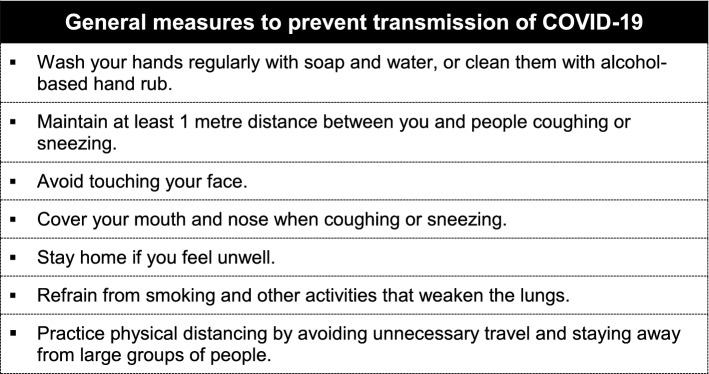
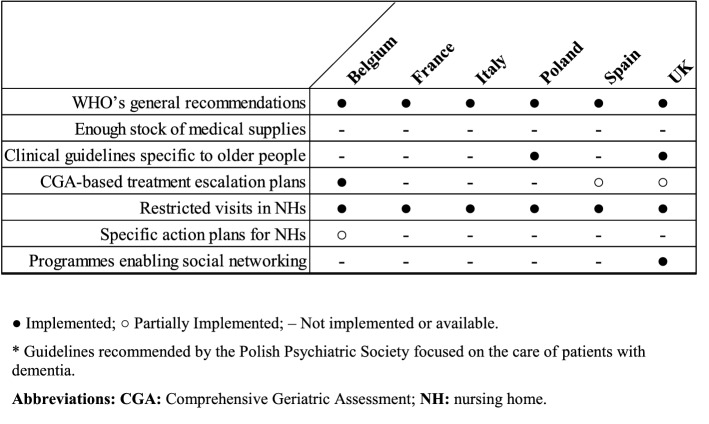
In the six countries, COVID-19 mortality in nursing homes ranged from 26 to 66%. Although all countries endorsed the World Health Organization general recommendations, the reports identified the lack of harmonized European guidelines and policies for nursing homes, with competencies transferred to national (or regional) governments. All countries restricted visits in nursing homes, but no specific action plans were provided. The role of primary care was limited by the centralization of the crisis in hospital settings.
The older population has been greatly affected by COVID-19 and by the policies initiated to control its spread. The right to health and dignity are transgenerational; chronological age should not be the sole criterion in policy decisions.
联合国发布了一份关于2019冠状病毒病(COVID-19)影响的政策简报,其中确定了保护老年人的政策和应对措施。我们的目标是总结六个欧洲国家(比利时、法国、意大利、波兰、西班牙和英国)在疫情期间采取的行动、卫生政策和临床指南,并评估国家政策对减少COVID-19大流行对老年人群不良影响的作用。
老年医学专家关于2020年3月至7月期间各国政府机构采取的措施和行动以及疫情期间初级保健作用的报告涵盖三个领域:(a)与疫情相关的总体卫生战略;(b)COVID-19对卫生公平性的影响;(c)COVID-19大流行及之后的举措和挑战。
在这六个国家,养老院中COVID-19的死亡率在26%至66%之间。尽管所有国家都认可世界卫生组织的总体建议,但报告指出,养老院缺乏统一的欧洲指南和政策,相关权限已下放到国家(或地区)政府。所有国家都限制了养老院的探访,但未提供具体行动计划。初级保健的作用因危机集中在医院环境中而受到限制。
老年人群受到COVID-19及其为控制传播而启动的政策的极大影响。健康和尊严权是跨代的;实际年龄不应成为政策决策的唯一标准。