Division of Life Sciences and Applied Life Science (BK 21plus), College of Natural Science, Gyeongsang National University, Jinju, 52828, Republic of Korea.
Department of Biochemistry, Abdul Wali Khan University Mardan, Mardan, Khyber Pakhtunkhwa, 23200, Pakistan.
J Neuroinflammation. 2020 Oct 15;17(1):303. doi: 10.1186/s12974-020-01989-w.
Glycine is the smallest nonessential amino acid and has previously unrecognized neurotherapeutic effects. In this study, we examined the mechanism underlying the neuroprotective effect of glycine (Gly) against neuroapoptosis, neuroinflammation, synaptic dysfunction, and memory impairment resulting from D-galactose-induced elevation of reactive oxygen species (ROS) during the onset of neurodegeneration in the brains of C57BL/6N mice.
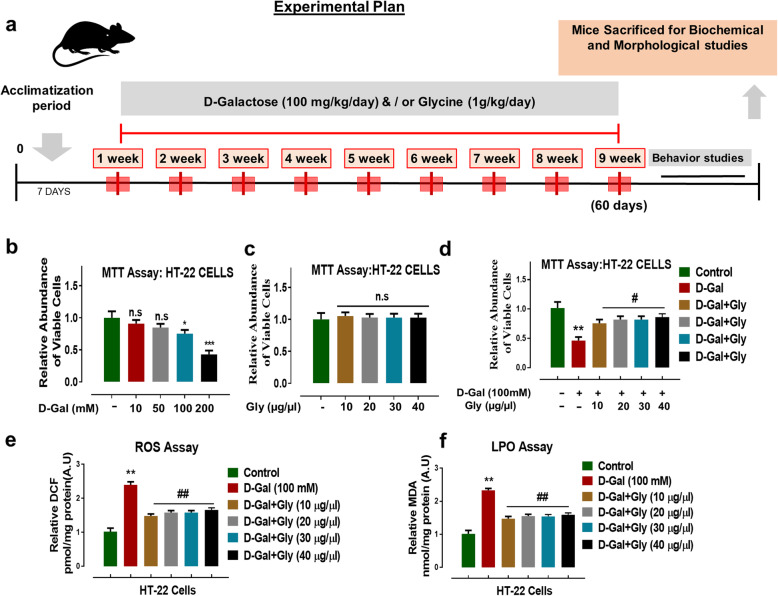
After in vivo administration of D-galactose (D-gal; 100 mg/kg/day; intraperitoneally (i/p); for 60 days) alone or in combination with glycine (1 g/kg/day in saline solution; subcutaneously; for 60 days), all of the mice were sacrificed for further biochemical (ROS/lipid peroxidation (LPO) assay, Western blotting, and immunohistochemistry) after behavioral analyses. An in vitro study, in which mouse hippocampal neuronal HT22 cells were treated with or without a JNK-specific inhibitor (SP600125), and molecular docking analysis were used to confirm the underlying molecular mechanism and explore the related signaling pathway prior to molecular and histological analyses.
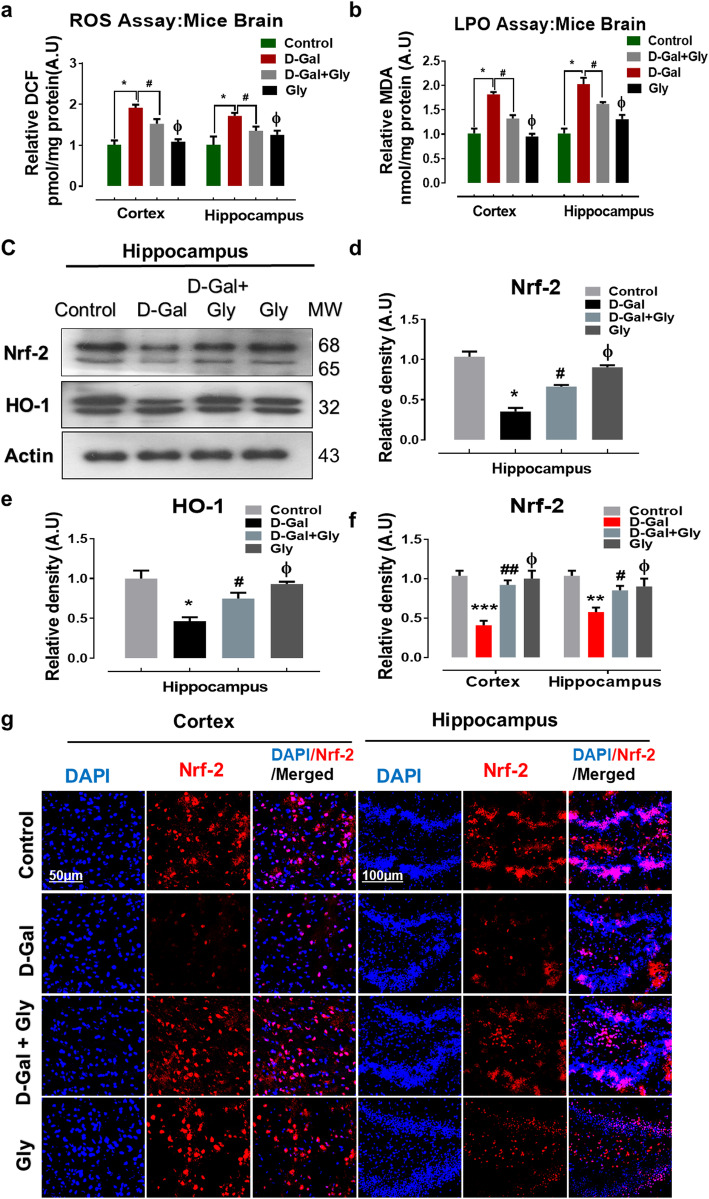
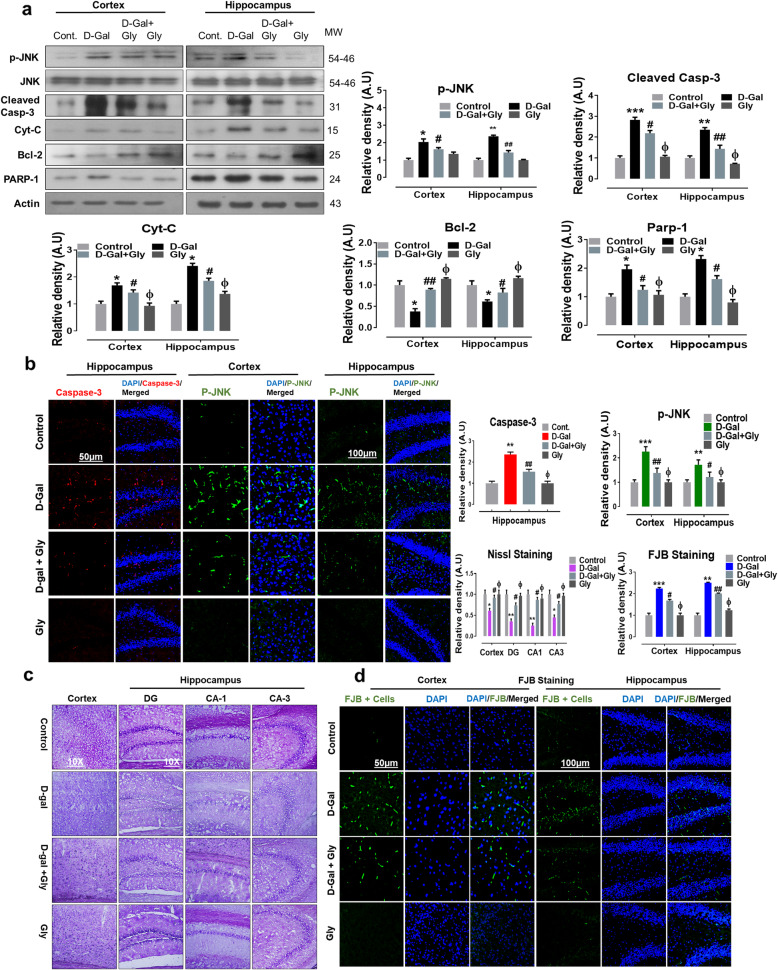
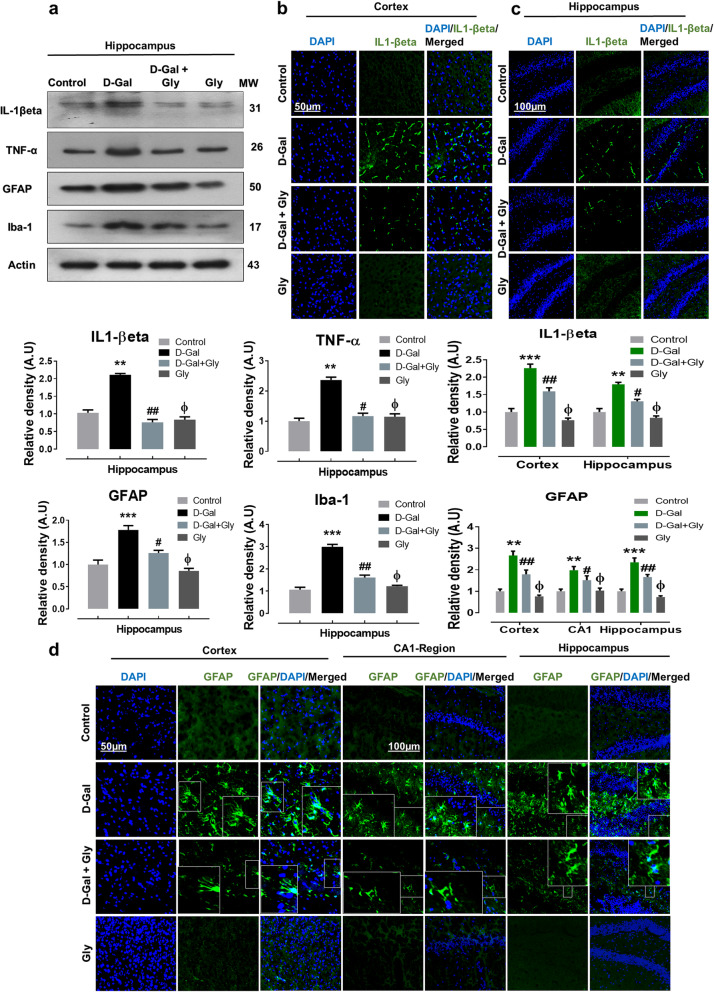
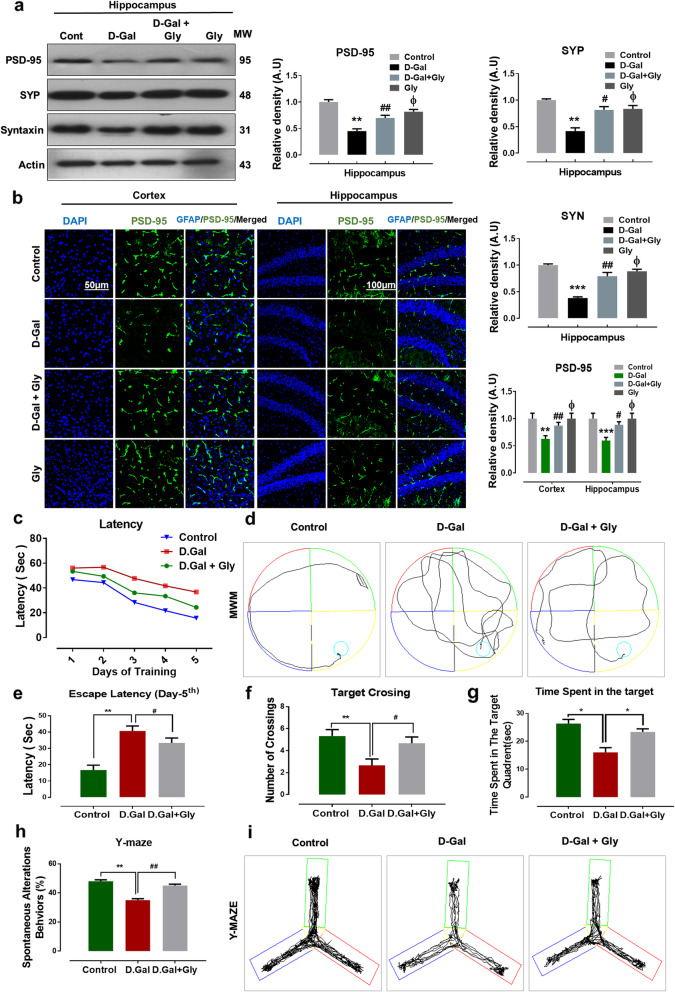
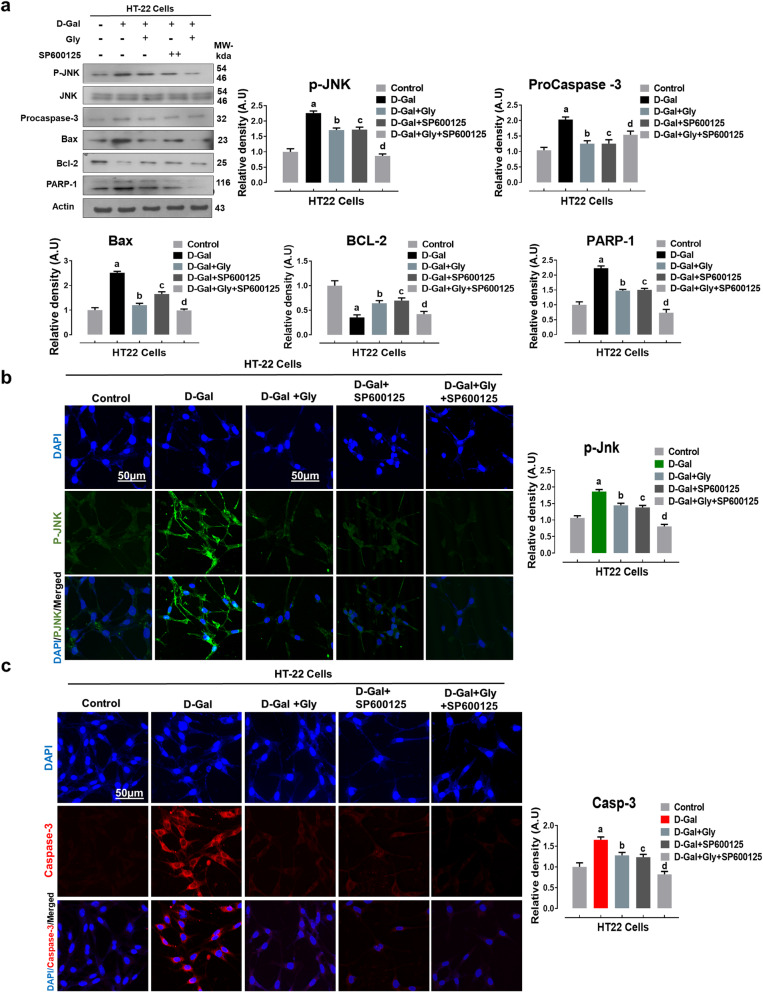
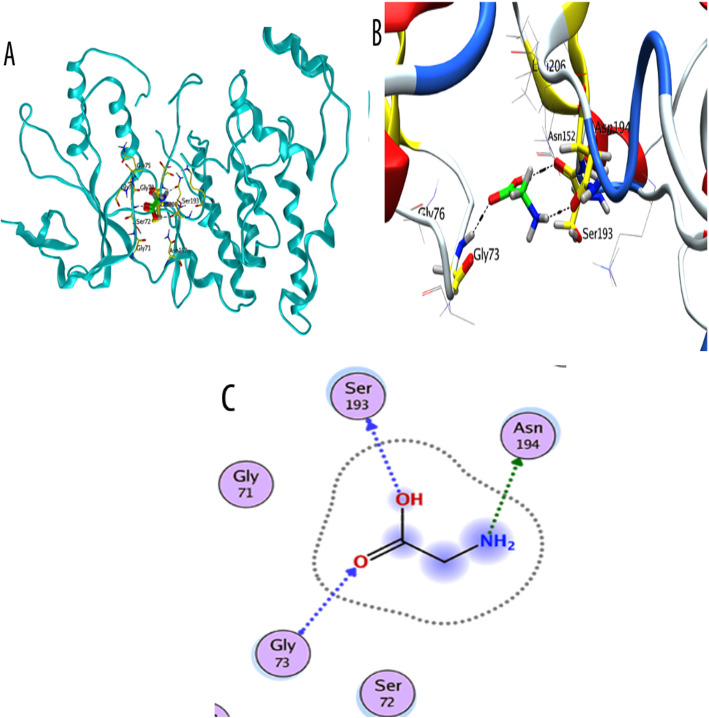
Our findings indicated that glycine (an amino acid) inhibited D-gal-induced oxidative stress and significantly upregulated the expression and immunoreactivity of antioxidant proteins (Nrf2 and HO-1) that had been suppressed in the mouse brain. Both the in vitro and in vivo results indicated that D-gal induced oxidative stress-mediated neurodegeneration primarily by upregulating phospho-c-Jun N-terminal kinase (p-JNK) levels. However, D-gal + Gly cotreatment reversed the neurotoxic effects of D-gal by downregulating p-JNK levels, which had been elevated by D-gal. We also found that Gly reversed D-gal-induced neuroapoptosis by significantly reducing the protein expression levels of proapoptotic markers (Bax, cytochrome c, cleaved caspase-3, and cleaved PARP-1) and increasing the protein expression level of the antiapoptotic protein Bcl-2. Both the molecular docking approach and the in vitro study (in which the neuronal HT22 cells were treated with or without a p-JNK-specific inhibitor (SP600125)) further verified our in vivo findings that Gly bound to the p-JNK protein and inhibited its function and the JNK-mediated apoptotic pathway in the mouse brain and HT22 cells. Moreover, the addition of Gly alleviated D-gal-mediated neuroinflammation by inhibiting gliosis via attenuation of astrocytosis (GFAP) and microgliosis (Iba-1) in addition to reducing the protein expression levels of various inflammatory cytokines (IL-1βeta and TNFα). Finally, the addition of Gly reversed D-gal-induced synaptic dysfunction by upregulating the expression of memory-related presynaptic protein markers (synaptophysin (SYP), syntaxin (Syn), and a postsynaptic density protein (PSD95)) and markedly improved behavioral measures of cognitive deficits in D-gal-treated mice.
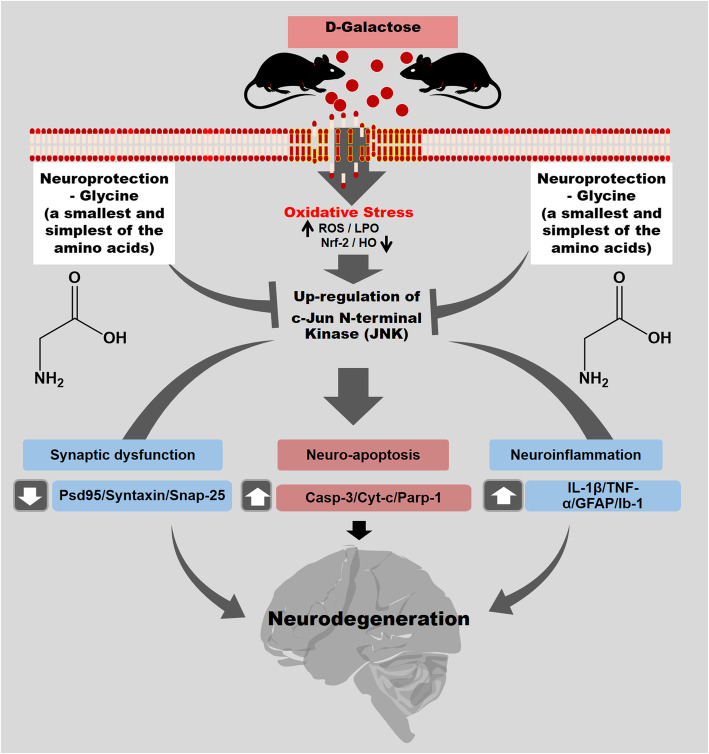
Our findings demonstrate that Gly-mediated deactivation of the JNK signaling pathway underlies the neuroprotective effect of Gly, which reverses D-gal-induced oxidative stress, apoptotic neurodegeneration, neuroinflammation, synaptic dysfunction, and memory impairment. Therefore, we suggest that Gly (an amino acid) is a safe and promising neurotherapeutic candidate that might be used for age-related neurodegenerative diseases.
甘氨酸是最小的非必需氨基酸,具有以前未被认识到的神经治疗作用。在这项研究中,我们研究了甘氨酸(Gly)对神经凋亡、神经炎症、突触功能障碍和记忆损伤的神经保护作用的机制,这些损伤是由 D-半乳糖诱导的活性氧(ROS)升高引起的,在 C57BL/6N 小鼠大脑神经退行性变的开始时。
在体内给予 D-半乳糖(D-gal;100mg/kg/天;腹腔内(i/p);60 天)单独或与甘氨酸(1g/kg/天生理盐水;皮下;60 天)联合给药后,所有小鼠均进行进一步的生化(ROS/脂质过氧化(LPO)测定、Western blot 和免疫组织化学)分析,然后进行行为分析。在体外研究中,用或不用 JNK 特异性抑制剂(SP600125)处理小鼠海马神经元 HT22 细胞,并进行分子对接分析,以确认潜在的分子机制,并在进行分子和组织学分析之前探索相关的信号通路。
我们的研究结果表明,甘氨酸(一种氨基酸)抑制 D-gal 诱导的氧化应激,并显著上调抗氧化蛋白(Nrf2 和 HO-1)的表达和免疫反应性,这些蛋白在小鼠脑中受到抑制。体内和体外的结果均表明,D-gal 通过上调磷酸化 c-Jun N 末端激酶(p-JNK)水平诱导氧化应激介导的神经退行性变。然而,D-gal+Gly 共同处理通过下调 D-gal 升高的 p-JNK 水平逆转 D-gal 的神经毒性作用。我们还发现,甘氨酸通过显著降低促凋亡标志物(Bax、细胞色素 c、裂解 caspase-3 和裂解 PARP-1)的蛋白表达水平和增加抗凋亡蛋白 Bcl-2 的蛋白表达水平,逆转 D-gal 诱导的神经细胞凋亡。分子对接方法和体外研究(HT22 细胞用或不用 p-JNK 特异性抑制剂(SP600125)处理)进一步证实了我们的体内发现,即甘氨酸与 p-JNK 蛋白结合并抑制其功能和 JNK 介导的凋亡途径在小鼠大脑和 HT22 细胞中。此外,甘氨酸通过减轻星形胶质细胞(GFAP)和小胶质细胞(Iba-1)的神经炎症来缓解 D-gal 介导的神经炎症,除了降低各种炎症细胞因子(IL-1βeta 和 TNFα)的蛋白表达水平。最后,甘氨酸通过上调与记忆相关的突触前蛋白标志物(突触小泡蛋白(SYP)、突触素(Syn)和突触后密度蛋白(PSD95))的表达,逆转 D-gal 诱导的突触功能障碍,并显著改善 D-gal 处理小鼠的认知缺陷的行为测量。
我们的研究结果表明,甘氨酸介导的 JNK 信号通路失活是甘氨酸神经保护作用的基础,它逆转了 D-gal 诱导的氧化应激、凋亡性神经退行性变、神经炎症、突触功能障碍和记忆损伤。因此,我们建议甘氨酸(一种氨基酸)是一种安全且有前途的神经治疗候选物,可用于与年龄相关的神经退行性疾病。