Division of Life Science and Applied Life Science (BK 21), College of Natural Sciences, Gyeongsang National University, Jinju 52828, Republic of Korea.
Oxid Med Cell Longev. 2019 Nov 7;2019:7860650. doi: 10.1155/2019/7860650. eCollection 2019.
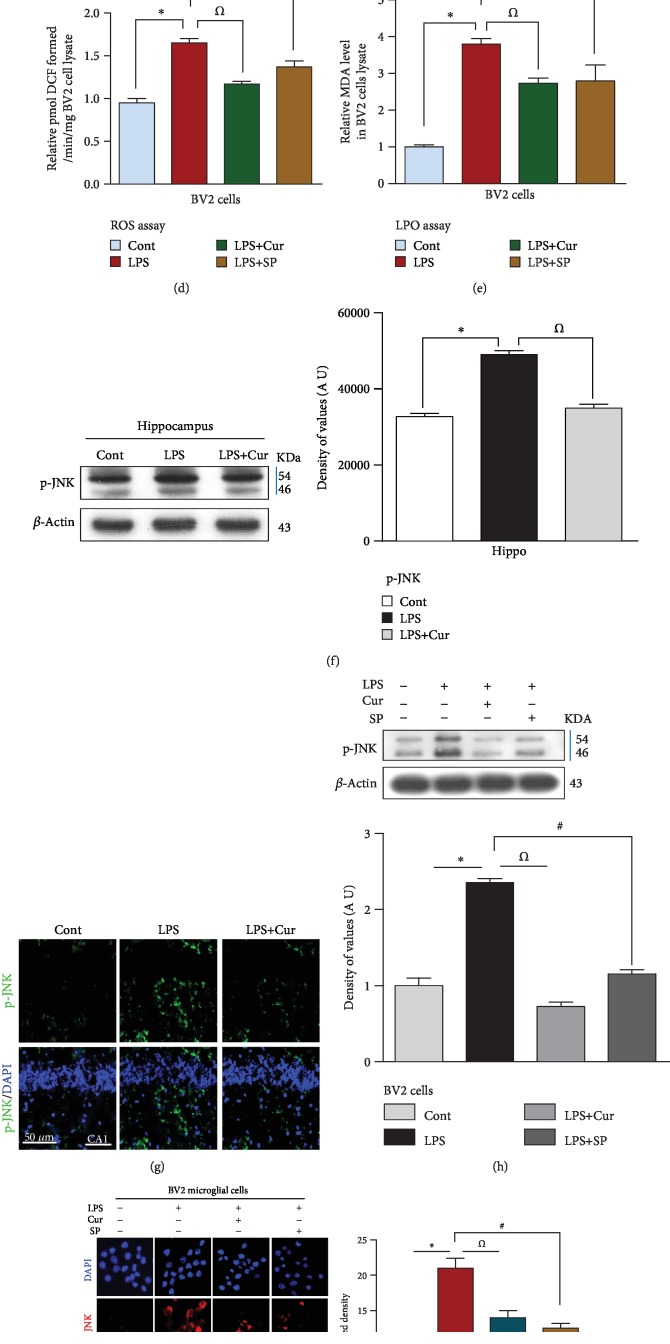
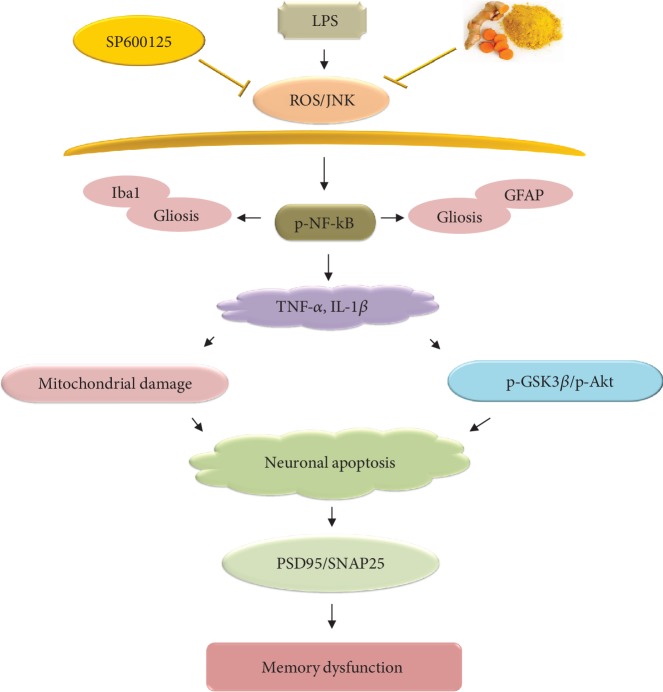
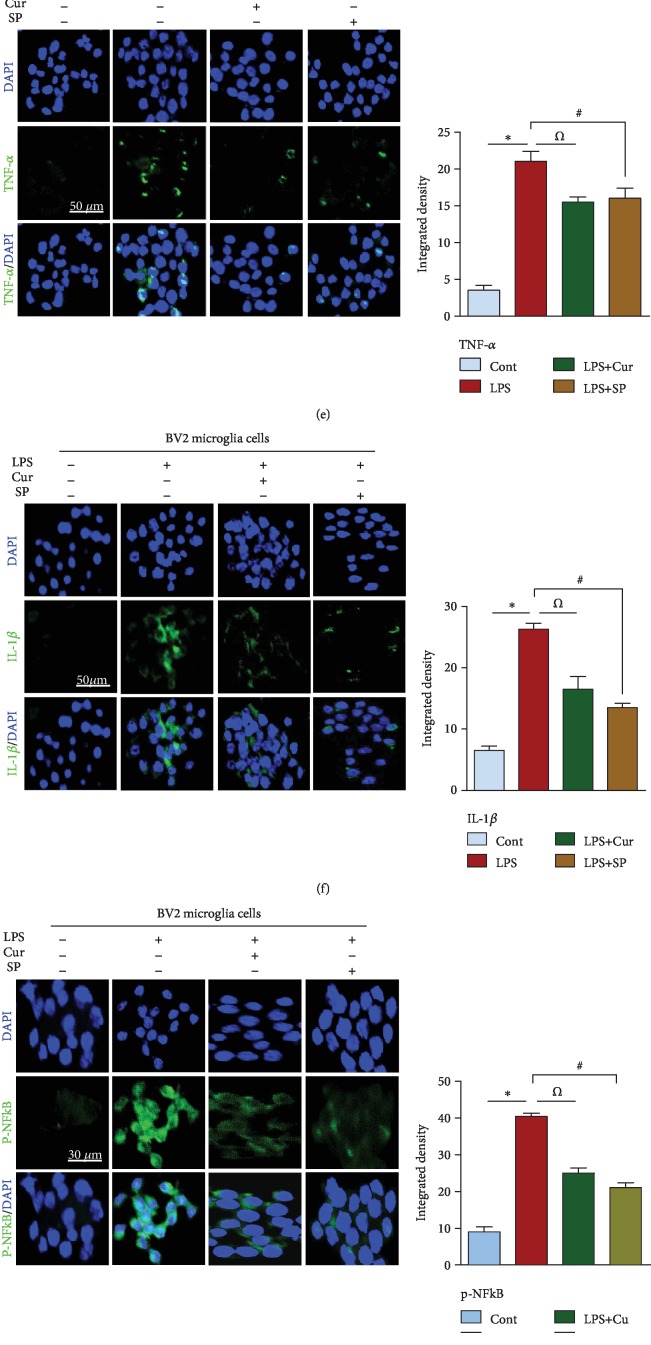
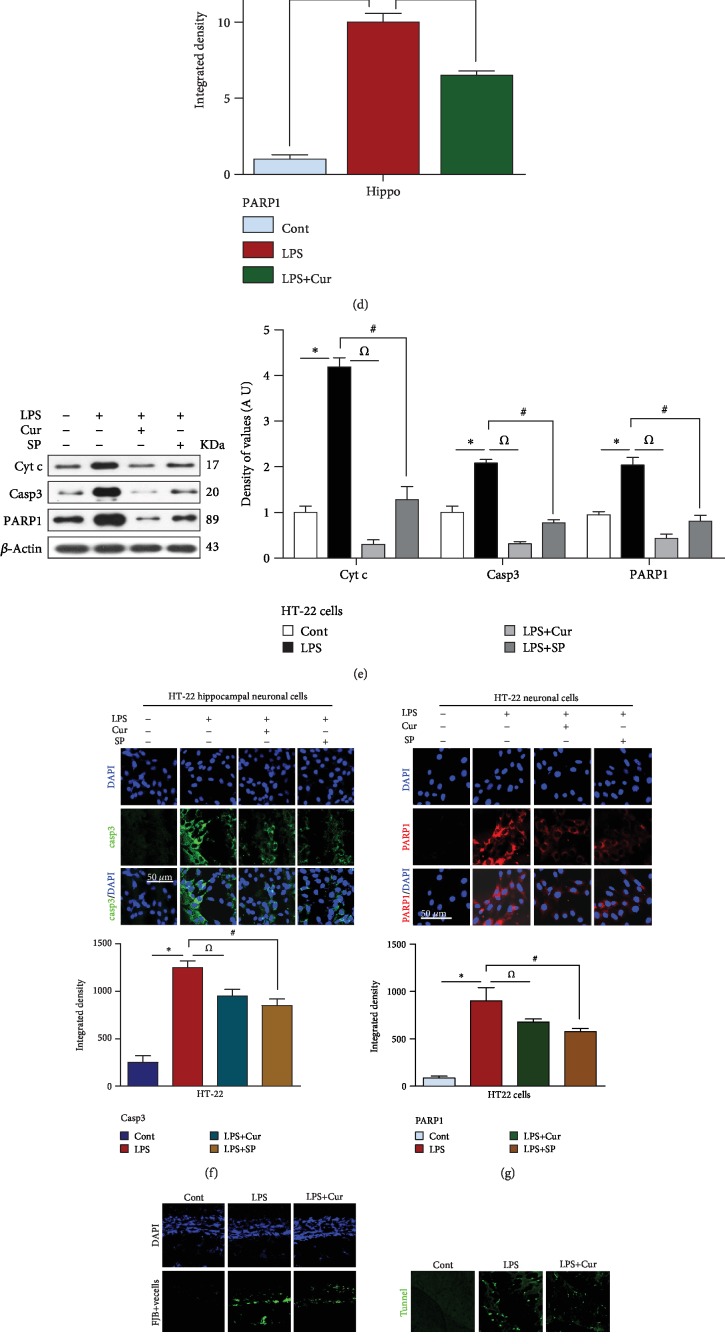
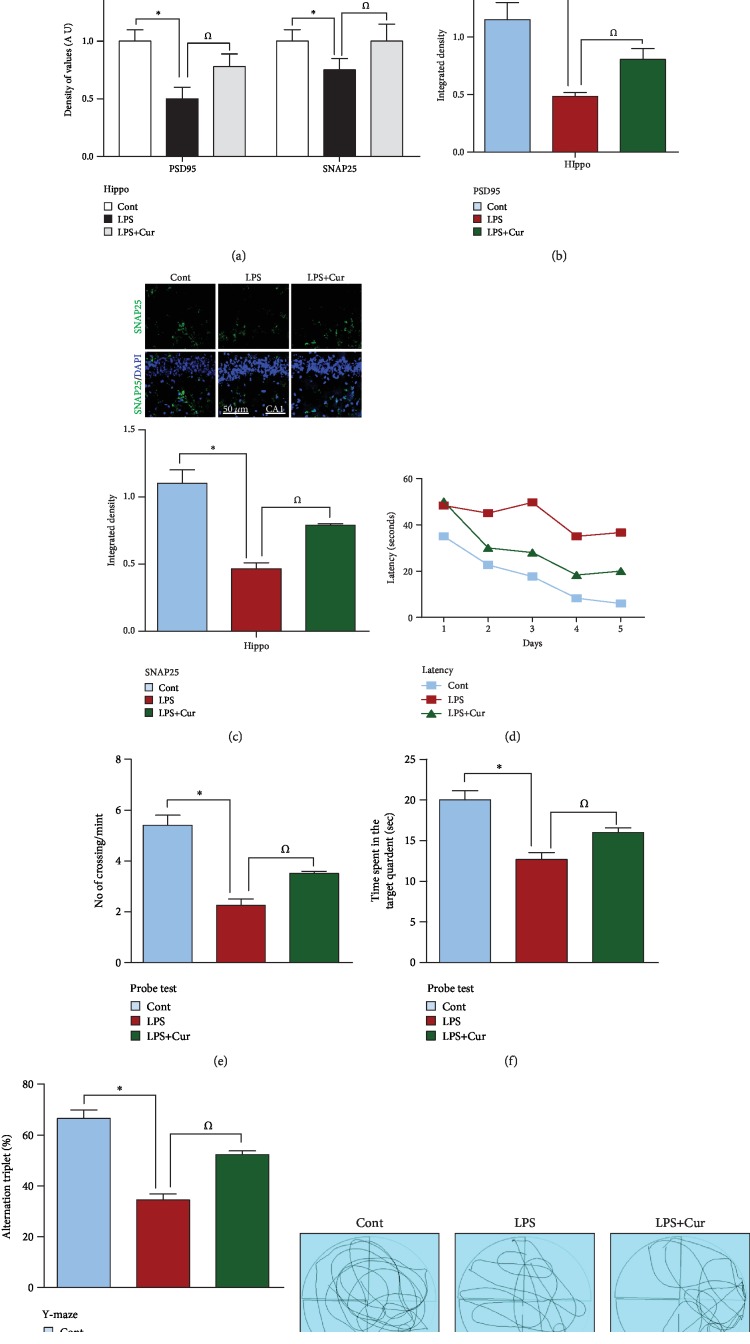
Curcumin is a natural polyphenolic compound widely known to have antioxidant, anti-inflammatory, and antiapoptotic properties. In the present study, we explored the neuroprotective effect of curcumin against lipopolysaccharide- (LPS-) induced reactive oxygen species- (ROS-) mediated neuroinflammation, neurodegeneration, and memory deficits in the adult rat hippocampus via regulation of the JNK/NF-B/Akt signaling pathway. Adult rats were treated intraperitoneally with LPS at a dose of 250 g/kg for 7 days and curcumin at a dose of 300 mg/kg for 14 days. After 14 days, the rats were sacrificed, and western blotting and ROS and lipid peroxidation assays were performed. For immunohistochemistry and confocal microscopy, the rats were perfused transcardially with 4% paraformaldehyde. In order to verify the JNK-dependent neuroprotective effect of curcumin and to confirm the in vivo results, HT-22 neuronal and BV2 microglial cells were exposed to LPS at a dose of 1 g/ml, curcumin 100 g/ml, and SP600125 (a specific JNK inhibitor) 20 M. Our immunohistochemical, immunofluorescence, and biochemical results revealed that curcumin inhibited LPS-induced oxidative stress by reducing malondialdehyde and 2,7-dichlorofluorescein levels and ameliorating neuroinflammation and neuronal cell death via regulation of the JNK/NF-B/Akt signaling pathway both in vivo (adult rat hippocampus) and in vitro (HT-22/BV2 cell lines). Moreover, curcumin markedly improved LPS-induced memory impairment in the Morris water maze and Y-maze tasks. Taken together, our results suggest that curcumin may be a potential preventive and therapeutic candidate for LPS-induced ROS-mediated neurotoxicity and memory deficits in an adult rat model.
姜黄素是一种天然多酚化合物,具有抗氧化、抗炎和抗细胞凋亡作用。在本研究中,我们通过调节 JNK/NF-B/Akt 信号通路,探讨了姜黄素对脂多糖(LPS)诱导的活性氧(ROS)介导的神经炎症、神经退行性变和成年大鼠海马记忆缺陷的神经保护作用。成年大鼠腹腔内注射 LPS(250μg/kg)7 天,姜黄素(300mg/kg)14 天。14 天后处死大鼠,进行 Western blot 和 ROS 及脂质过氧化测定。免疫组织化学和共聚焦显微镜检查,大鼠经心脏灌注 4%多聚甲醛。为了验证姜黄素的 JNK 依赖性神经保护作用,并确认体内结果,将 HT-22 神经元和 BV2 小胶质细胞暴露于 LPS(1μg/ml)、姜黄素(100μg/ml)和 SP600125(一种特异性 JNK 抑制剂)(20μM)。我们的免疫组织化学、免疫荧光和生化结果表明,姜黄素通过降低丙二醛和 2,7-二氯荧光素水平抑制 LPS 诱导的氧化应激,并通过调节 JNK/NF-B/Akt 信号通路改善神经炎症和神经元细胞死亡,无论是在体内(成年大鼠海马)还是在体外(HT-22/BV2 细胞系)。此外,姜黄素显著改善了 LPS 诱导的 Morris 水迷宫和 Y 迷宫任务中的记忆障碍。总之,我们的研究结果表明,姜黄素可能是 LPS 诱导的 ROS 介导的神经毒性和成年大鼠模型记忆缺陷的潜在预防和治疗候选药物。