Bioinformatics Program, Boston University, Boston, MA, USA.
Department of Medicine (Biomedical Genetics), Boston University Chobanian & Avedisian School of Medicine, Boston, MA, USA.
Alzheimers Res Ther. 2024 Oct 23;16(1):234. doi: 10.1186/s13195-024-01601-w.
Blood-derived mitochondrial DNA copy number (mtDNA-CN) is a proxy measurement of mitochondrial function in the peripheral and central systems. Abnormal mtDNA-CN not only indicates impaired mtDNA replication and transcription machinery but also dysregulated biological processes such as energy and lipid metabolism. However, the relationship between mtDNA-CN and Alzheimer disease (AD) is unclear.
We performed two-sample Mendelian randomization (MR) using publicly available summary statistics from GWAS for mtDNA-CN and AD to investigate the causal relationship between mtDNA-CN and AD. We estimated mtDNA-CN using whole-genome sequence data from blood and brain samples of 13,799 individuals from the Alzheimer's Disease Sequencing Project. Linear and Cox proportional hazards models adjusting for age, sex, and study phase were used to assess the association of mtDNA-CN with AD. The association of AD biomarkers and serum metabolites with mtDNA-CN in blood was evaluated in Alzheimer's Disease Neuroimaging Initiative using linear regression. We conducted a causal mediation analysis to test the natural indirect effects of mtDNA-CN change on AD risk through the significantly associated biomarkers and metabolites.
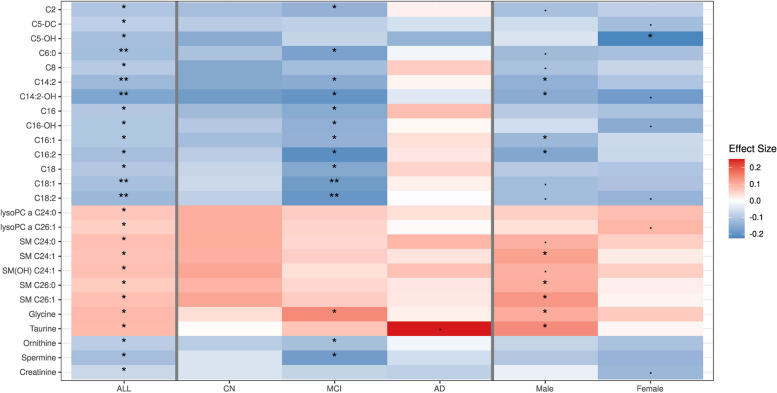
MR analysis suggested a causal relationship between decreased blood-derived mtDNA-CN and increased risk of AD (OR = 0.68; P = 0.013). Survival analysis showed that decreased mtDNA-CN was significantly associated with higher risk of conversion from mild cognitive impairment to AD (HR = 0.80; P = 0.002). We also identified significant associations of mtDNA-CN with brain FDG-PET (β = 0.103; P = 0.022), amyloid-PET (β = 0.117; P = 0.034), CSF amyloid-β (Aβ) 42/40 (β=-0.124; P = 0.017), CSF t-Tau (β = 0.128; P = 0.015), p-Tau (β = 0.140; P = 0.008), and plasma NFL (β=-0.124; P = 0.004) in females. Several lipid species, amino acids, biogenic amines in serum were also significantly associated with mtDNA-CN. Causal mediation analyses showed that about a third of the effect of mtDNA-CN on AD risk was mediated by plasma NFL (P = 0.009), and this effect was more significant in females (P < 0.005).
Our study indicates that mtDNA-CN measured in blood is predictive of AD and is associated with AD biomarkers including plasma NFL particularly in females. Further, we illustrate that decreased mtDNA-CN possibly increases AD risk through dysregulation of mitochondrial lipid metabolism and inflammation.
血液中的线粒体 DNA 拷贝数 (mtDNA-CN) 是外周和中枢系统中线粒体功能的替代测量指标。mtDNA-CN 的异常不仅表明线粒体 DNA 复制和转录机制受损,还表明能量和脂质代谢等生物过程失调。然而,mtDNA-CN 与阿尔茨海默病 (AD) 之间的关系尚不清楚。
我们使用来自全基因组关联研究 (GWAS) 的公开可用的 mtDNA-CN 和 AD 的两样本 Mendelian 随机化 (MR) 来研究 mtDNA-CN 与 AD 之间的因果关系。我们使用来自 13799 名来自阿尔茨海默病测序计划的个体的血液和大脑样本中的全基因组序列数据来估计 mtDNA-CN。使用线性和 Cox 比例风险模型调整年龄、性别和研究阶段来评估 mtDNA-CN 与 AD 的关联。使用线性回归评估 AD 生物标志物和血清代谢物与血液中 mtDNA-CN 的关联。我们进行了因果中介分析,以测试通过与 AD 显著相关的生物标志物和代谢物,mtDNA-CN 变化对 AD 风险的自然间接影响。
MR 分析表明,血液中 mtDNA-CN 的降低与 AD 风险的增加之间存在因果关系(OR=0.68;P=0.013)。生存分析表明,mtDNA-CN 的降低与从轻度认知障碍到 AD 的转化风险显著增加相关(HR=0.80;P=0.002)。我们还发现 mtDNA-CN 与大脑 FDG-PET(β=0.103;P=0.022)、淀粉样蛋白-PET(β=0.117;P=0.034)、CSF 淀粉样蛋白-β (Aβ) 42/40(β=-0.124;P=0.017)、CSF t-Tau(β=0.128;P=0.015)、p-Tau(β=0.140;P=0.008)和血浆 NFL(β=-0.124;P=0.004)之间存在显著关联在女性中。血清中的几种脂质种类、氨基酸和生物胺也与 mtDNA-CN 显著相关。因果中介分析表明,mtDNA-CN 对 AD 风险的影响约有三分之一是通过血浆 NFL 介导的(P=0.009),并且这种影响在女性中更为显著(P<0.005)。
我们的研究表明,血液中测量的 mtDNA-CN 可预测 AD,并且与包括血浆 NFL 在内的 AD 生物标志物相关,特别是在女性中。此外,我们表明 mtDNA-CN 的降低可能通过调节线粒体脂质代谢和炎症增加 AD 风险。