• 文献检索
  • 文档翻译
  • 深度研究
  • 学术资讯
  • Suppr Zotero 插件Zotero 插件
  • 邀请有礼
  • 套餐&价格
  • 历史记录
应用&插件
Suppr Zotero 插件Zotero 插件浏览器插件Mac 客户端Windows 客户端微信小程序
定价
高级版会员购买积分包购买API积分包
服务
文献检索文档翻译深度研究API 文档MCP 服务
关于我们
关于 Suppr公司介绍联系我们用户协议隐私条款
关注我们

Suppr 超能文献

核心技术专利:CN118964589B侵权必究
粤ICP备2023148730 号-1Suppr @ 2026

文献检索

告别复杂PubMed语法,用中文像聊天一样搜索,搜遍4000万医学文献。AI智能推荐,让科研检索更轻松。

立即免费搜索

文件翻译

保留排版,准确专业,支持PDF/Word/PPT等文件格式,支持 12+语言互译。

免费翻译文档

深度研究

AI帮你快速写综述,25分钟生成高质量综述,智能提取关键信息,辅助科研写作。

立即免费体验

厌恶型巴甫洛夫-工具性条件反射转移的潜在动机因素。

Motivational factors underlying aversive Pavlovian-instrumental transfer.

机构信息

Department of Psychology, University of Evansville, Evansville, Indiana 47722, USA.

Behavioral and Neural Sciences Graduate Program, Rutgers University-Newark, Newark, New Jersey 07102, USA.

出版信息

Learn Mem. 2020 Oct 15;27(11):477-482. doi: 10.1101/lm.052316.120. Print 2020 Nov.

DOI:10.1101/lm.052316.120
PMID:33060285
原文链接:https://pmc.ncbi.nlm.nih.gov/articles/PMC7571266/
Abstract

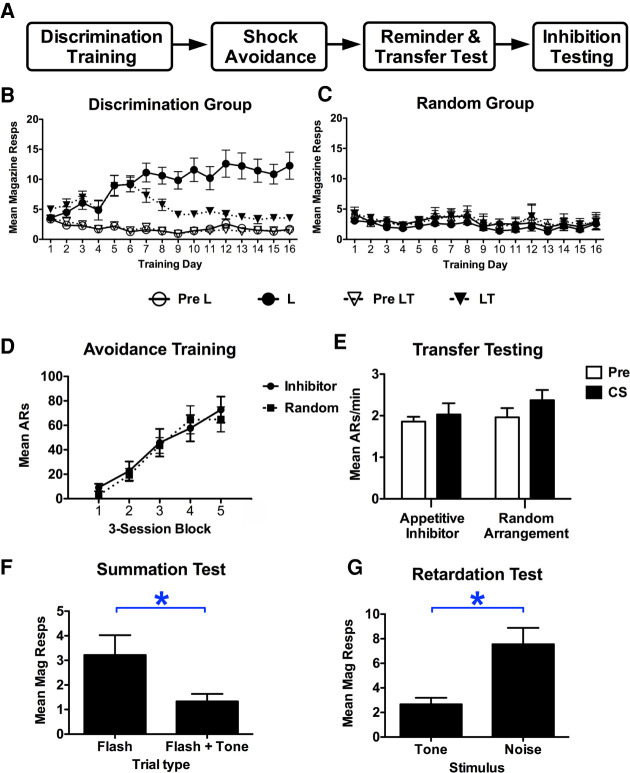
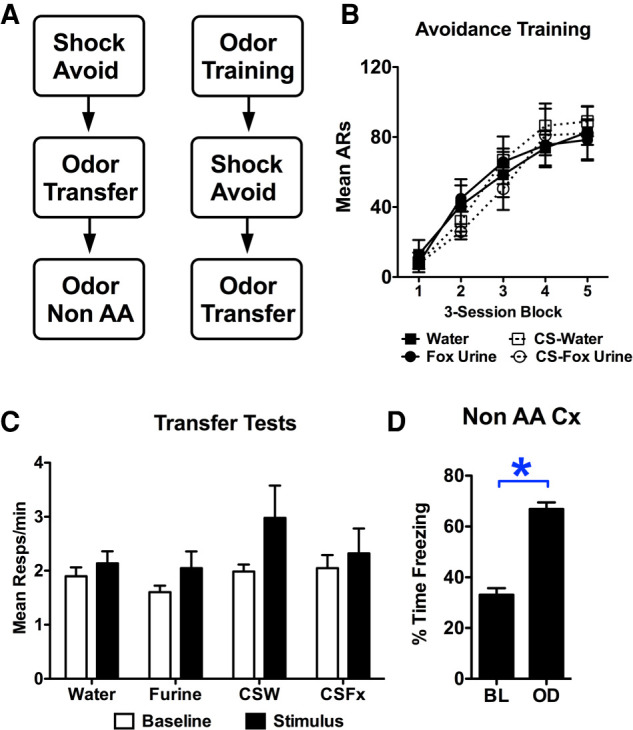
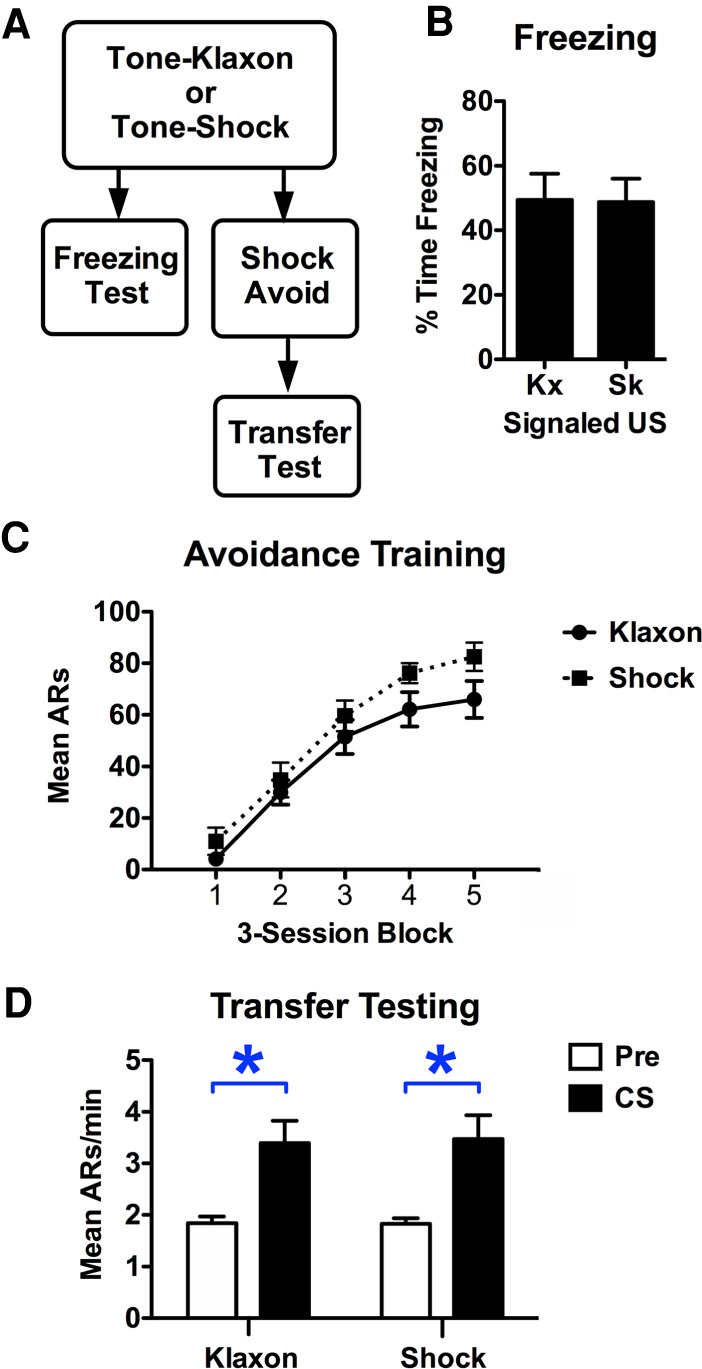
While interest in active avoidance has recently been resurgent, many concerns relating to the nature of this form of learning remain unresolved. By separating stimulus and response acquisition, aversive Pavlovian-instrumental transfer can be used to measure the effect of avoidance learning on threat processing with more control than typical avoidance procedures. However, the motivational substrates that contribute to the aversive transfer effect have not been thoroughly examined. In three studies using rodents, the impact of a variety of aversive signals on shock-avoidance responding (i.e., two-way shuttling) was evaluated. Fox urine, as well as a tone paired with the delivery of the predator odor were insufficient modulatory stimuli for the avoidance response. Similarly, a signal for the absence of food did not generate appropriate aversive motivation to enhance shuttling. Only conditioned Pavlovian stimuli that had been paired with unconditioned threats were capable of augmenting shock-avoidance responding. This was true whether the signaled outcome was the same (e.g., shock) or different (e.g., klaxon) from the avoidance outcome (i.e., shock). These findings help to characterize the aversive transfer effect and provide a more thorough analysis of its generalization to warning signals for different kinds of threats. This feature of aversive motivation has not been demonstrated using conventional avoidance procedures and could be potentially useful for applying avoidance in treatment settings.

摘要

虽然主动回避的研究兴趣最近再次兴起,但与这种学习形式的性质相关的许多问题仍然没有得到解决。通过分离刺激和反应的获取,厌恶的条件-非条件刺激转移可以用于测量回避学习对威胁处理的影响,比典型的回避程序具有更多的控制。然而,导致厌恶转移效应的动机基质尚未得到彻底研究。在三项使用啮齿动物的研究中,评估了各种厌恶信号对电击回避反应(即双向穿梭)的影响。狐狸尿液以及与捕食者气味同时出现的音调不足以作为回避反应的调节刺激。同样,食物缺失的信号也不会产生适当的厌恶动机来增强穿梭反应。只有与非条件威胁配对的条件化的巴甫洛夫刺激才能增强电击回避反应。无论信号的结果与回避的结果(例如,电击)是否相同(例如,警笛),情况都是如此。这些发现有助于描述厌恶转移效应,并对其在不同类型威胁的警告信号中的推广进行更全面的分析。厌恶动机的这一特征尚未通过传统的回避程序得到证明,在回避治疗中可能具有潜在的应用价值。
https://cdn.ncbi.nlm.nih.gov/pmc/blobs/1091/7571266/6f25c42f7ac3/LM052316Cam_F3.jpg
https://cdn.ncbi.nlm.nih.gov/pmc/blobs/1091/7571266/2f6804d93726/LM052316Cam_F1.jpg
https://cdn.ncbi.nlm.nih.gov/pmc/blobs/1091/7571266/9b10c7e03a30/LM052316Cam_F2.jpg
https://cdn.ncbi.nlm.nih.gov/pmc/blobs/1091/7571266/6f25c42f7ac3/LM052316Cam_F3.jpg
https://cdn.ncbi.nlm.nih.gov/pmc/blobs/1091/7571266/2f6804d93726/LM052316Cam_F1.jpg
https://cdn.ncbi.nlm.nih.gov/pmc/blobs/1091/7571266/9b10c7e03a30/LM052316Cam_F2.jpg
https://cdn.ncbi.nlm.nih.gov/pmc/blobs/1091/7571266/6f25c42f7ac3/LM052316Cam_F3.jpg

相似文献

1
Motivational factors underlying aversive Pavlovian-instrumental transfer.厌恶型巴甫洛夫-工具性条件反射转移的潜在动机因素。
Learn Mem. 2020 Oct 15;27(11):477-482. doi: 10.1101/lm.052316.120. Print 2020 Nov.
2
The lesser evil: Pavlovian-instrumental transfer & aversive motivation.较小的恶:巴甫洛夫-工具性转移与厌恶性动机。
Behav Brain Res. 2021 Aug 27;412:113431. doi: 10.1016/j.bbr.2021.113431. Epub 2021 Jun 24.
3
Lesions of lateral or central amygdala abolish aversive Pavlovian-to-instrumental transfer in rats.大鼠外侧或中央杏仁核的损伤会消除厌恶性巴甫洛夫式到工具性的转换。
Front Behav Neurosci. 2014 May 7;8:161. doi: 10.3389/fnbeh.2014.00161. eCollection 2014.
4
Chemogenetic Inhibition Reveals That Processing Relative But Not Absolute Threat Requires Basal Amygdala.化学生物遗传抑制揭示基底杏仁核参与相对而非绝对威胁的加工过程。
J Neurosci. 2019 Oct 23;39(43):8510-8516. doi: 10.1523/JNEUROSCI.2530-18.2019. Epub 2019 Sep 6.
5
Medial amygdala lesions selectively block aversive pavlovian-instrumental transfer in rats.内侧杏仁核损伤会选择性地阻断大鼠的厌恶性巴甫洛夫式-工具性转换。
Front Behav Neurosci. 2014 Sep 18;8:329. doi: 10.3389/fnbeh.2014.00329. eCollection 2014.
6
Pavlovian Extinction and Recovery Effects in Aversive Pavlovian to Instrumental Transfer.厌恶的巴甫洛夫式到工具性转移中的巴甫洛夫式消退和恢复效应
Front Behav Neurosci. 2017 Sep 25;11:179. doi: 10.3389/fnbeh.2017.00179. eCollection 2017.
7
General and Specific Aversive Modulation of Active Avoidance Require Central Amygdala.主动回避的一般和特定厌恶调节需要中央杏仁核。
Front Behav Neurosci. 2022 Jun 20;16:879168. doi: 10.3389/fnbeh.2022.879168. eCollection 2022.
8
Conditioned suppression of an avoidance response by a stimulus paired with food.通过与食物配对的刺激对回避反应进行条件性抑制。
J Exp Anal Behav. 1972 Mar;17(2):277-85. doi: 10.1901/jeab.1972.17-277.
9
Motivational state controls the prediction error in Pavlovian appetitive-aversive interactions.动机状态控制着巴甫洛夫式的食欲-厌恶交互作用中的预测误差。
Neurobiol Learn Mem. 2018 Jan;147:18-25. doi: 10.1016/j.nlm.2017.11.006. Epub 2017 Nov 16.
10
Pavlovian-to-instrumental transfer after human threat conditioning.人类威胁条件作用后的巴甫洛夫到工具性转移。
Learn Mem. 2019 Apr 19;26(5):167-175. doi: 10.1101/lm.049338.119. Print 2019 May.

引用本文的文献

1
Measuring maladaptive avoidance: from animal models to clinical anxiety.测量适应不良回避:从动物模型到临床焦虑。
Neuropsychopharmacology. 2022 Apr;47(5):978-986. doi: 10.1038/s41386-021-01263-4. Epub 2022 Jan 15.
2
Aversive motivation and cognitive control.厌恶动机与认知控制。
Neurosci Biobehav Rev. 2022 Feb;133:104493. doi: 10.1016/j.neubiorev.2021.12.016. Epub 2021 Dec 12.

本文引用的文献

1
Fear in the context of pain: Lessons learned from 100 years of fear conditioning research.疼痛背景下的恐惧:从 100 年的恐惧条件反射研究中得到的教训。
Behav Res Ther. 2020 Aug;131:103635. doi: 10.1016/j.brat.2020.103635. Epub 2020 Apr 30.
2
Exposure Therapy for Post-Traumatic Stress Disorder: Factors of Limited Success and Possible Alternative Treatment.创伤后应激障碍的暴露疗法:成功受限的因素及可能的替代治疗方法
Brain Sci. 2020 Mar 13;10(3):167. doi: 10.3390/brainsci10030167.
3
Chemogenetic Inhibition Reveals That Processing Relative But Not Absolute Threat Requires Basal Amygdala.
化学生物遗传抑制揭示基底杏仁核参与相对而非绝对威胁的加工过程。
J Neurosci. 2019 Oct 23;39(43):8510-8516. doi: 10.1523/JNEUROSCI.2530-18.2019. Epub 2019 Sep 6.
4
Avoidance Problems Reconsidered.对回避问题的重新思考。
Curr Opin Behav Sci. 2019 Apr;26:9-17. doi: 10.1016/j.cobeha.2018.09.002. Epub 2018 Sep 21.
5
Fear paradigms: The times they are a-changin'.恐惧范式:时代正在改变。
Curr Opin Behav Sci. 2018 Dec;24:38-43. doi: 10.1016/j.cobeha.2018.02.007. Epub 2018 Mar 4.
6
Amygdala Inhibitory Circuits Regulate Associative Fear Conditioning.杏仁核抑制性回路调节联想性恐惧条件反射。
Biol Psychiatry. 2018 May 15;83(10):800-809. doi: 10.1016/j.biopsych.2017.10.006. Epub 2017 Oct 14.
7
Noradrenergic Regulation of Central Amygdala in Aversive Pavlovian-to-Instrumental Transfer.去甲肾上腺素对厌恶条件化到工具性转移的中杏仁核的调节作用。
eNeuro. 2017 Oct 24;4(5). doi: 10.1523/ENEURO.0224-17.2017. eCollection 2017 Sep-Oct.
8
Pavlovian Extinction and Recovery Effects in Aversive Pavlovian to Instrumental Transfer.厌恶的巴甫洛夫式到工具性转移中的巴甫洛夫式消退和恢复效应
Front Behav Neurosci. 2017 Sep 25;11:179. doi: 10.3389/fnbeh.2017.00179. eCollection 2017.
9
Agency and the Calibration of Motivated Behavior.能动性与动机行为的调节
Trends Cogn Sci. 2017 Oct;21(10):725-735. doi: 10.1016/j.tics.2017.06.008. Epub 2017 Jul 7.
10
Triggering Avoidance: Dissociable Influences of Aversive Pavlovian Conditioned Stimuli on Human Instrumental Behavior.触发回避:厌恶性巴甫洛夫条件刺激对人类工具性行为的可分离影响。
Front Behav Neurosci. 2017 Apr 12;11:63. doi: 10.3389/fnbeh.2017.00063. eCollection 2017.