Zhang Piaopiao, Wang Jie, Hu Hangbin, Zhang Sheng, Wei Juying, Yang Qing, Qu Tingting
State Key Laboratory for Diagnosis and Treatment of Infectious Diseases, The First Affiliated Hospital, Zhejiang University School of Medicine, Hangzhou, Zhejiang, People's Republic of China.
Respiratory Department, The First Affiliated Hospital, Zhejiang University School of Medicine, Hangzhou, Zhejiang, People's Republic of China.
Infect Drug Resist. 2020 Sep 22;13:3233-3242. doi: 10.2147/IDR.S272217. eCollection 2020.
The aim was to examine the clinical characteristics and risk factors for bloodstream infection (BSI) due to carbapenem-resistant (CRKP) in patients with hematologic malignancies.
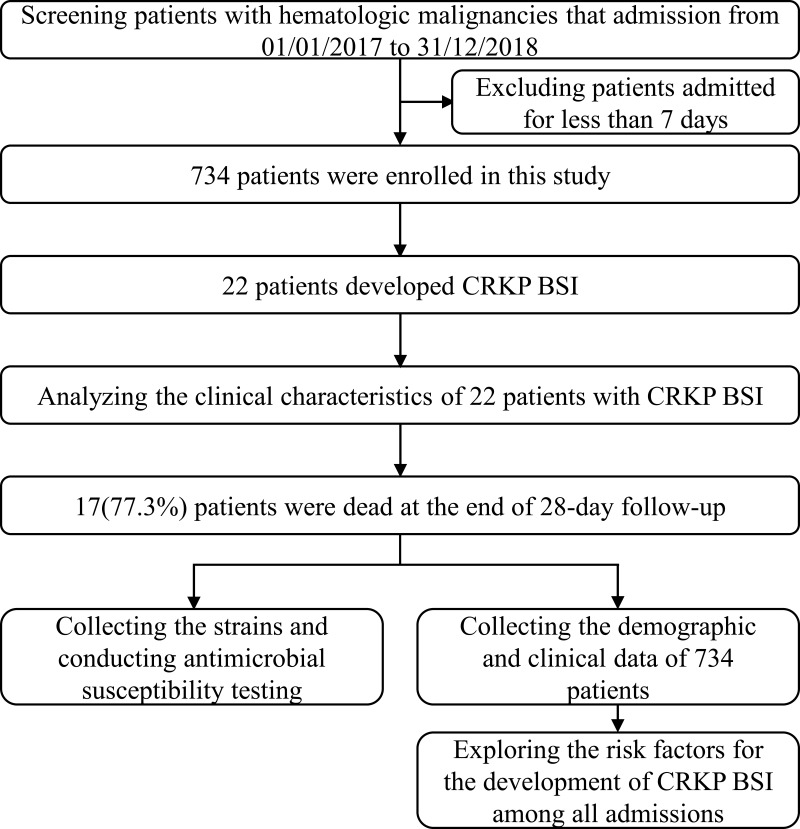
A single-centre, retrospective case-control study representing 734 patients with hematologic malignancies between January 1, 2017, and December 31, 2018, was conducted. Demographic and clinical data were collected from the hospital electronic medical records system.
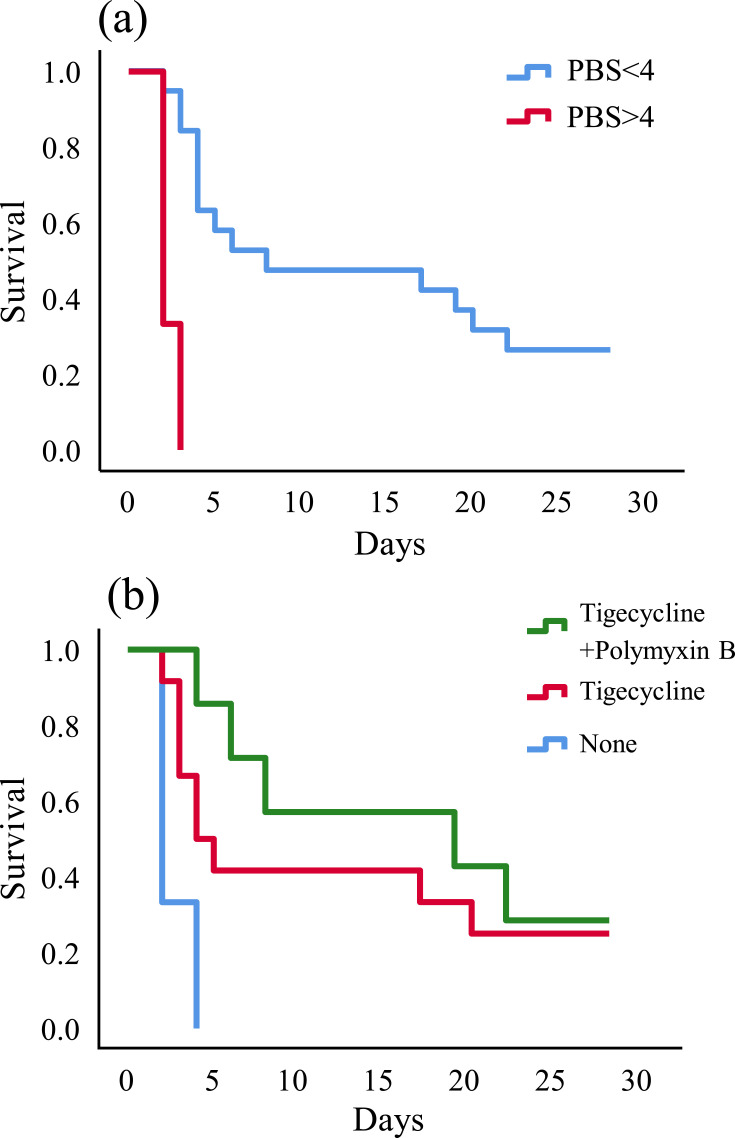
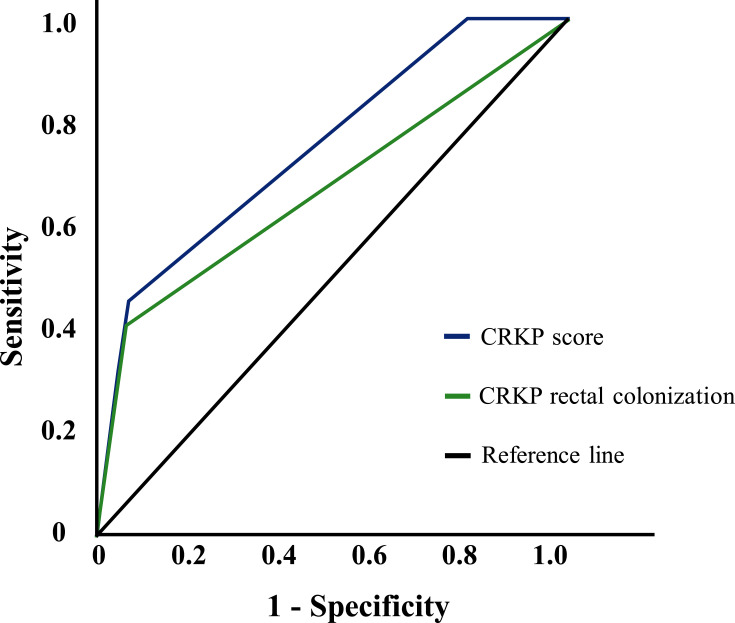
Among the 734 patients with hematologic malignancies, 3% (22/734) of the patients developed CRKP BSI during their hospitalization. Overall 28-day all-cause mortality reached 77.3% (17/22). Patients with Pitt bacteremia score (PBS) >4, pneumonia and septic shock were more frequent in the non-survivors versus the survivors. Compared with the non-survivors in antimicrobial treatment, combination therapy of tigecycline and polymyxin B was more common in the survivors. The independent risk factors associated with CRKP BSI were CRKP rectal colonization (OR, 11.067; CI=4.43-27.644; P<0.001; 3 points), severe neutropenia (OR, 4.095; CI=0.876-19.141; P=0.073; 1 point) and invasive mechanical ventilation (IMV) within the previous 30 days to onset of BSI (OR, 18.444; CI=1.787-190.343; P=0.014; 4 points). The total risk score of ≥5 indicated that the probability of CRKP BSI occurrence was above 48%.
CRKP BSI in patients with hematologic malignancies is associated with high mortality. The risk factor-based prediction model might help clinicians to start prompt effective anti-infective therapy in patients with suspicion of CRKP BSI and improve outcomes.
旨在研究血液系统恶性肿瘤患者耐碳青霉烯类肺炎克雷伯菌(CRKP)所致血流感染(BSI)的临床特征及危险因素。
开展了一项单中心回顾性病例对照研究,纳入了2017年1月1日至2018年12月31日期间的734例血液系统恶性肿瘤患者。从医院电子病历系统收集人口统计学和临床数据。
在734例血液系统恶性肿瘤患者中,3%(22/734)的患者在住院期间发生了CRKP BSI。总体28天全因死亡率达77.3%(17/22)。非存活者中 Pitt菌血症评分(PBS)>4、肺炎和感染性休克的发生率高于存活者。与非存活者相比,存活者中更常见替加环素和多粘菌素B联合治疗。与CRKP BSI相关的独立危险因素为CRKP直肠定植(比值比[OR],11.067;可信区间[CI]=4.43 - 27.644;P<0.001;3分)、严重中性粒细胞减少(OR,4.095;CI=0.876 - 19.141;P=0.073;1分)以及在BSI发病前30天内进行有创机械通气(IMV)(OR,18.444;CI=1.787 - 190.343;P=0.014;4分)。总风险评分≥5表明发生CRKP BSI的概率高于48%。
血液系统恶性肿瘤患者的CRKP BSI与高死亡率相关。基于危险因素的预测模型可能有助于临床医生对疑似CRKP BSI的患者尽早开始有效的抗感染治疗并改善预后。