Gao Hang, Zhou Qian, Yang Liu, Zhang Kaili, Ma Yeye, Xu Zi-Qin
Key Laboratory of Resource Biology and Biotechnology in Western China (Ministry of Education), Shaanxi Provincial Key Laboratory of Biotechnology, College of Life Sciences, Northwest University, Xi'an, Shaanxi, People's Republic of China.
Shanghai Omicsspace Biotechnology Co. Ltd., Shanghai, People's Republic of China.
PeerJ. 2020 Sep 30;8:e10047. doi: 10.7717/peerj.10047. eCollection 2020.
Systemic acquired resistance (SAR) is a type of plant defense response that provides a long-lasting resistance to broad-spectrum pathogens in uninfected distal tissues following an initial localized infection. However, little information is available at present on the biological basis of SAR at the molecular level, especially in uninfected distal leaves.
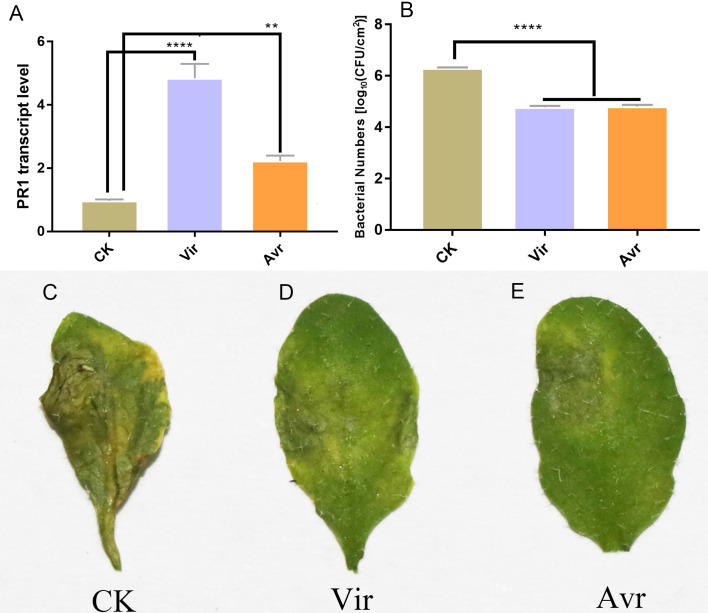
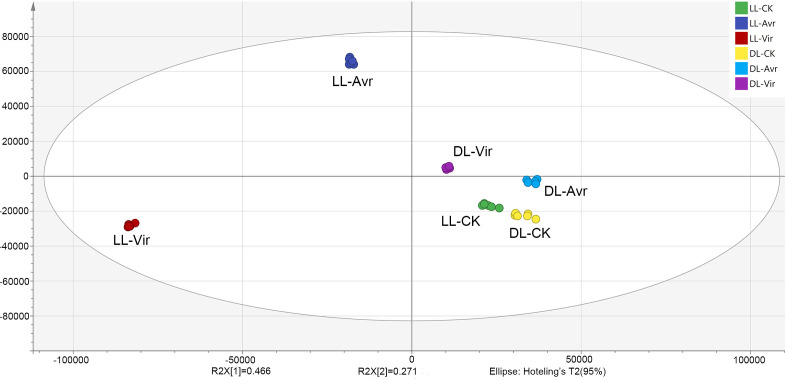
In the present work, we used two SAR-inducing pathogens, avirulent pv. ES4326 harboring () and virulent pv. ES4326 ( ES4326), to induce SAR in Arabidopsis ecotype Col-0. A metabolomics approach based on ultra-high-performance liquid chromatography (UPLC) coupled with mass spectrometry (MS) was used to identify SAR-related metabolites in infected local leaves, and in uninfected distal leaves.
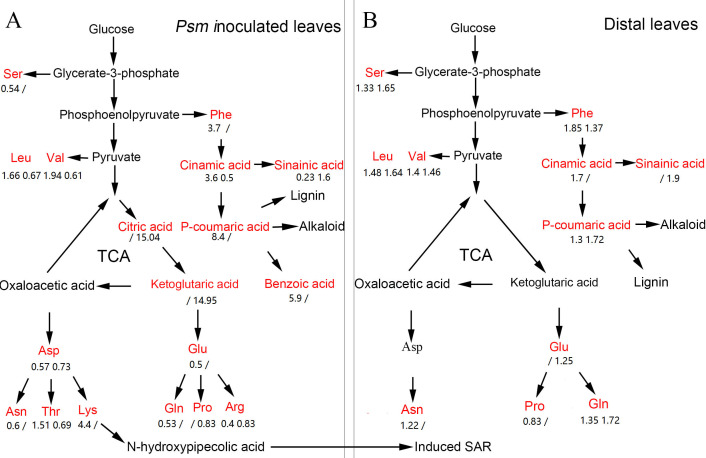
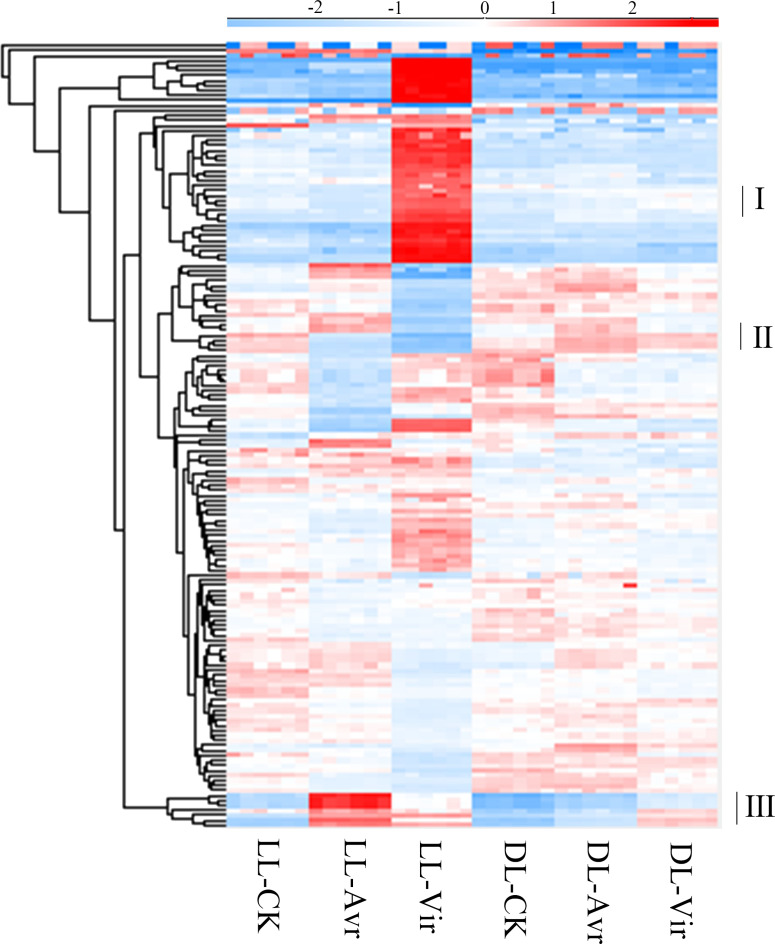
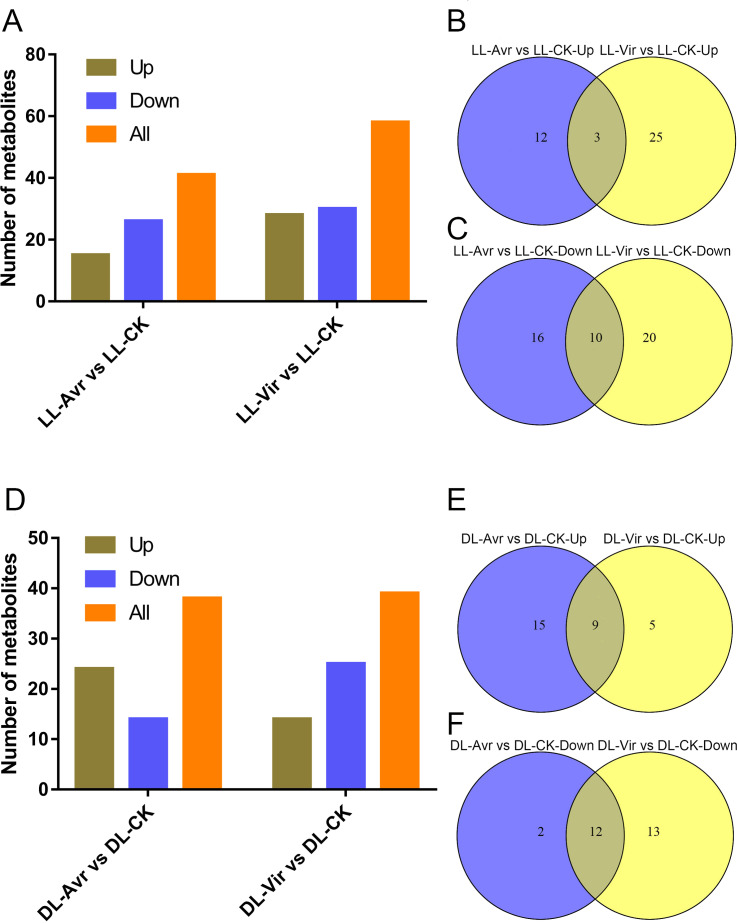
Differentially accumulated metabolites were distinguished by statistical analyses. The results showed that both the primary metabolism and the secondary metabolism were significantly altered in infected local leaves and in uninfected distal leaves, including phenolic compounds, amino acids, nucleotides, organic acids, and many other metabolites.
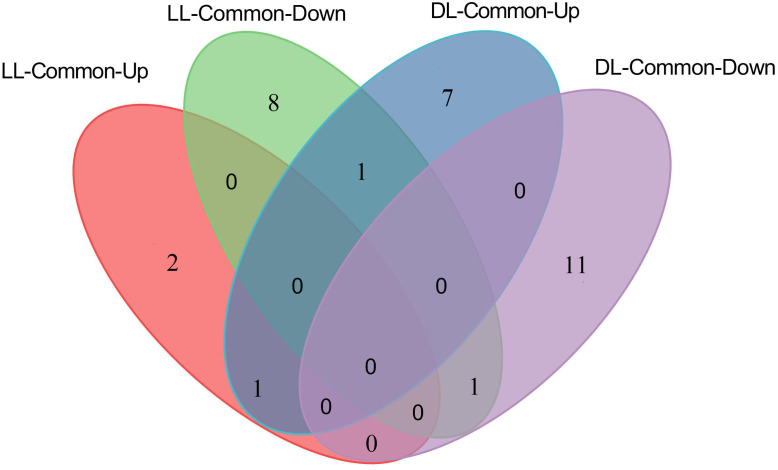
The content of amino acids and phenolic compounds increased in uninfected distal leaves, suggesting their contribution to the establishment of SAR. In addition, 2'-hydroxy-4, 4', 6'-trimethoxychalcone, phenylalanine, and -coumaric acid were identified as potential components which may play important roles both in basic resistance and in SAR. This work provides a reference for understanding of the metabolic mechanism associated with SAR in plants, which will be useful for further investigation of the molecular basis of the systemic immunity.
系统获得性抗性(SAR)是一种植物防御反应,在初始局部感染后,能使未感染的远端组织对广谱病原体产生持久抗性。然而,目前在分子水平上关于SAR生物学基础的信息很少,尤其是在未感染的远端叶片中。
在本研究中,我们使用两种诱导SAR的病原体,携带()的无毒丁香假单胞菌pv. ES4326和有毒丁香假单胞菌pv. ES4326(ES4326),在拟南芥生态型Col-0中诱导SAR。采用基于超高效液相色谱(UPLC)与质谱(MS)联用的代谢组学方法,鉴定感染的局部叶片和未感染的远端叶片中与SAR相关的代谢物。
通过统计分析区分出差异积累的代谢物。结果表明,感染的局部叶片和未感染的远端叶片中的初级代谢和次级代谢均发生了显著变化,包括酚类化合物、氨基酸、核苷酸、有机酸和许多其他代谢物。
未感染的远端叶片中氨基酸和酚类化合物的含量增加,表明它们对SAR的建立有贡献。此外,2'-羟基-4,4',6'-三甲氧基查耳酮、苯丙氨酸和对香豆酸被鉴定为可能在基础抗性和SAR中都起重要作用的潜在成分。这项工作为理解植物中与SAR相关的代谢机制提供了参考,这将有助于进一步研究系统免疫的分子基础。