Faculty of Pharmacy, Applied Science Private University, Amman, 11931, Jordan.
Department of Veterinary Medicine, University of Perugia, via San Costanzo, 4, 06126, Perugia, Italy.
AAPS PharmSciTech. 2020 Oct 15;21(7):286. doi: 10.1208/s12249-020-01818-6.
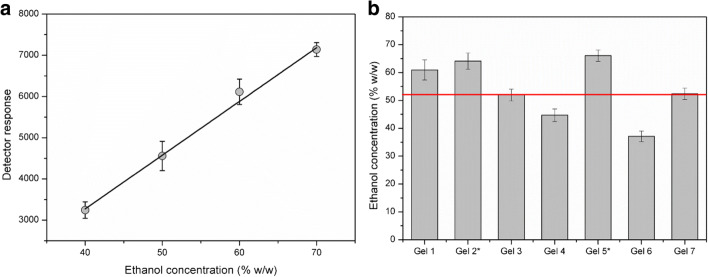
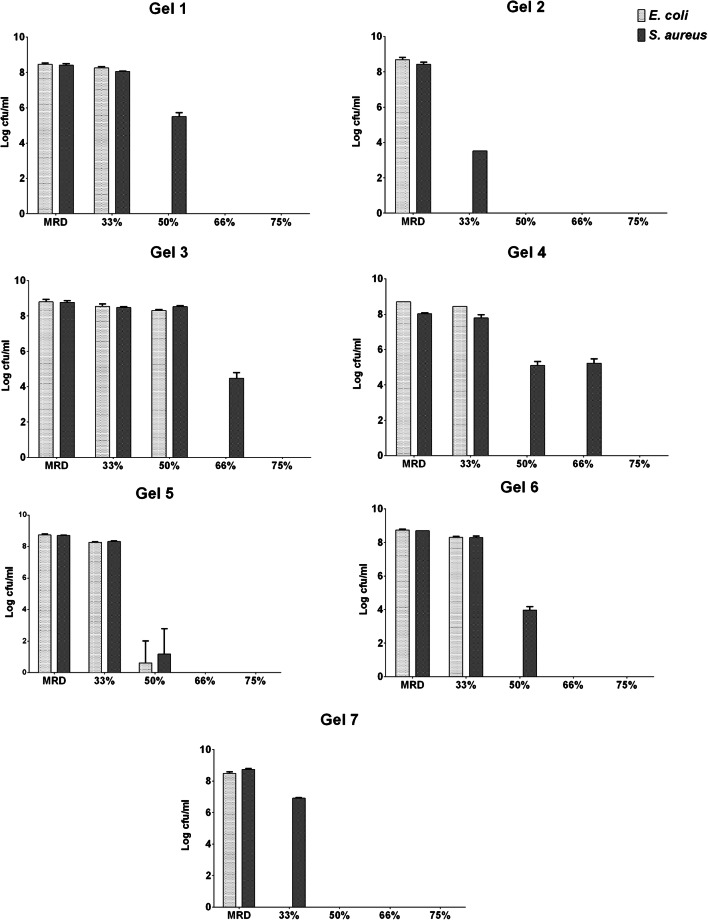
The CoViD-19 pandemic has caused a sudden spike in demand and production of hand sanitisers. Concerns are rising regarding the quality of such products, as the safeguard of consumers is a priority worldwide. We analyse here the ethanolic content of seven off-the-shelf hand sanitiser gels (two biocides and five cosmetics) from the Italian market, using gas chromatography. The WHO recommends that products containing ethanol should have 60-95% (v/v) alcohol. Four of the tested hand gels have ethanolic contents within the recommended range, while three products (all cosmetics) contain < 60% (v/v), i.e. 52.1% (w/w), ethanol. The product with the lowest alcoholic content has 37.1% w/w ethanol. Toxic methanol is not found in any of the hand sanitisers. We show, in addition, that products with the highest ethanolic content have generally greater antibacterial activity. In conclusion, all tested products are complying with the EU regulations, as the three "substandard" products are classified as cosmetics, whose purpose is cleaning and not disinfecting. Nevertheless, if such hand cleaners were inappropriately used as hand disinfectants, they might be ineffective. Thus, consumer safety relays on awareness and ability to distinguish between biocidal and cosmetics hand gels. The obtained results might sensitise the scientific community, health agencies and ultimately consumers towards the risks of using hand sanitisers of substandard alcoholic concentration. If the wrong product is chosen by consumers, public health can be compromised by the inappropriate use of "low-dosed" cosmetic gels as disinfectants, particularly during the period of the CoViD-19 pandemic.
COVID-19 大流行导致洗手液的需求和产量突然激增。人们越来越关注这些产品的质量,因为保障消费者的安全是全球的首要任务。我们使用气相色谱法分析了来自意大利市场的七种现成的手部消毒剂凝胶(两种消毒剂和五种化妆品)的乙醇含量。世界卫生组织建议含乙醇的产品应含有 60-95%(体积/体积)的酒精。七种测试的手部凝胶中有四种的乙醇含量在推荐范围内,而三种产品(均为化妆品)的乙醇含量<60%(体积/体积),即 52.1%(重量/重量)。酒精含量最低的产品含有 37.1%重量/重量的乙醇。在任何手部消毒剂中都没有发现有毒的甲醇。此外,我们还表明,乙醇含量最高的产品通常具有更强的抗菌活性。总之,所有测试的产品都符合欧盟法规,因为三种“不合格”产品被归类为化妆品,其目的是清洁而不是消毒。然而,如果这些手部清洁剂被不当用作手部消毒剂,它们可能无效。因此,消费者的安全依赖于意识和区分消毒剂和化妆品手部凝胶的能力。获得的结果可能会使科学界、卫生机构,最终是消费者对使用酒精浓度不达标的手部消毒剂的风险产生警惕。如果消费者选择了错误的产品,在 COVID-19 大流行期间,不当使用“低剂量”的化妆品凝胶作为消毒剂可能会损害公共卫生。