Frei Thomas
Research and Consulting, Arni, Switzerland.
Allergol Select. 2020 Oct 12;4:69-75. doi: 10.5414/ALX02180E. eCollection 2020.
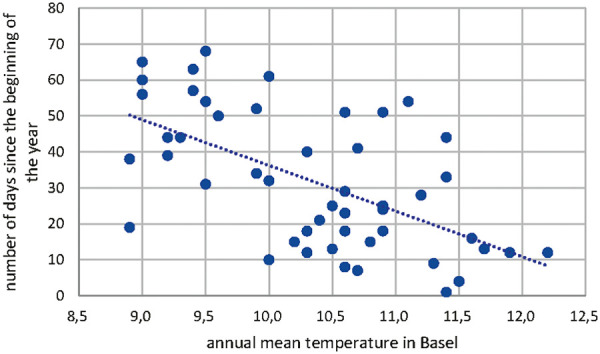
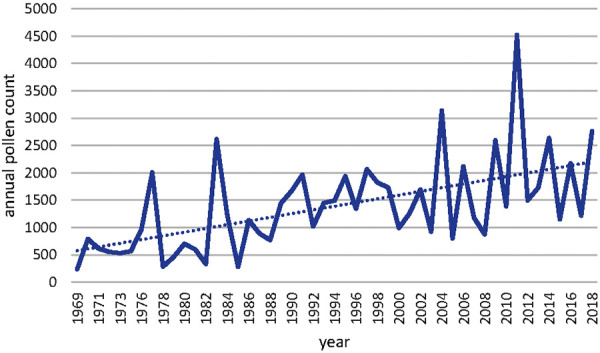
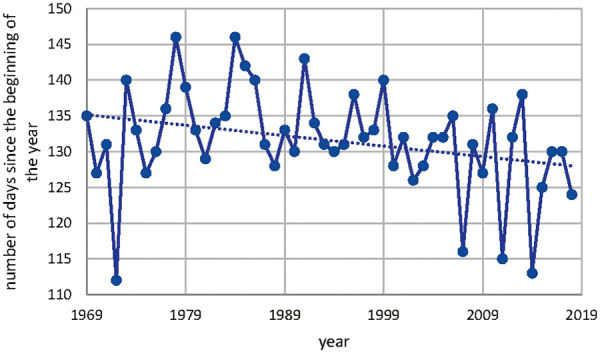
As indicated by the Intergovernmental Panel on Climate Change (IPCC), human activities are estimated to have caused ~ 1.0 °C of global warming above pre-industrial levels. The impact of this global warming is diverse and pertains also plant biology. The start of the pollen season as well as the observed quantities of pollen have been considered indicators of the impact of climate change. Switzerland has one of the longest pollen time series now - more than half a century. It has been tested whether the impact of climate change is robust by checking with this long time series of different pollen like hazel, birch, and grass as prominent representatives of triggers of hay fever. The results indicate that based on a time series of 50 years, the pollen seasons of hazel, birch, and grass started earlier as the temperature increased. Comparing the annual amount of pollen, a relevant increase is only observed for hazel. However, it must be considered that in the observed 50 years there was a land use change from grass land to built-up land due to the increase of population, and yet certain pollen counts increased considerably.
正如政府间气候变化专门委员会(IPCC)所指出的,据估计人类活动已导致全球气温比工业化前水平升高了约1.0摄氏度。这种全球变暖的影响是多方面的,也涉及植物生物学。花粉季节的开始以及观测到的花粉量一直被视为气候变化影响的指标。瑞士拥有目前最长的花粉时间序列之一——超过半个世纪。通过使用这个长达数十年的不同花粉(如榛树、桦树和草,它们是花粉热诱因的突出代表)时间序列进行检验,验证气候变化的影响是否具有稳定性。结果表明,基于50年的时间序列,随着气温升高,榛树、桦树和草的花粉季节开始得更早。比较每年的花粉量,仅观察到榛树花粉量有显著增加。然而,必须考虑到,在观测的50年里,由于人口增长,存在从草地到建设用地的土地利用变化,但某些花粉计数仍大幅增加。