Amaral Valladão Carlos Alberto, Freitas Monteiro Mabelle, Joly Julio Cesar
Department of Implantology and Periodontology, São Leopoldo Mandic Dentistry Research Center, R. Dr. José Rocha Junqueira, 13 - Pte. Preta, Campinas, SP, 13045-755, Brazil.
Department of Prosthodontics and Periodontics, Piracicaba Dental School, University of Campinas, Piracicaba, SP, Brazil.
Int J Implant Dent. 2020 Oct 17;6(1):72. doi: 10.1186/s40729-020-00266-y.
The use of guided bone regeneration (GBR) for vertical and horizontal bone gain is a predictable approach to correct the bone defects before implant installation; however, the use of different protocols is associated with different clinical results. It is suggested that platelet-rich fibrin (PRF) could improve the outcomes of regenerative procedures. Thus, this study aimed to describe the bone gain associated with GBR procedures combining membranes, bone grafts, and PRF for vertical and horizontal bone augmentation.
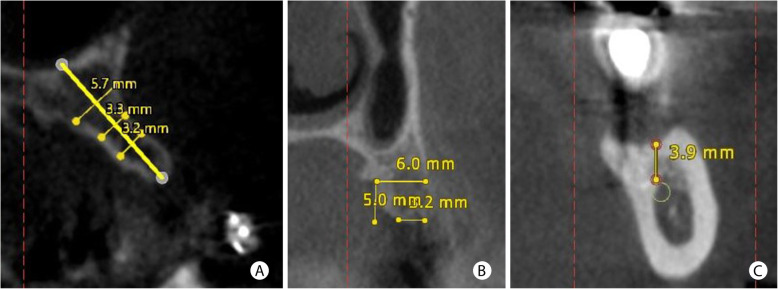
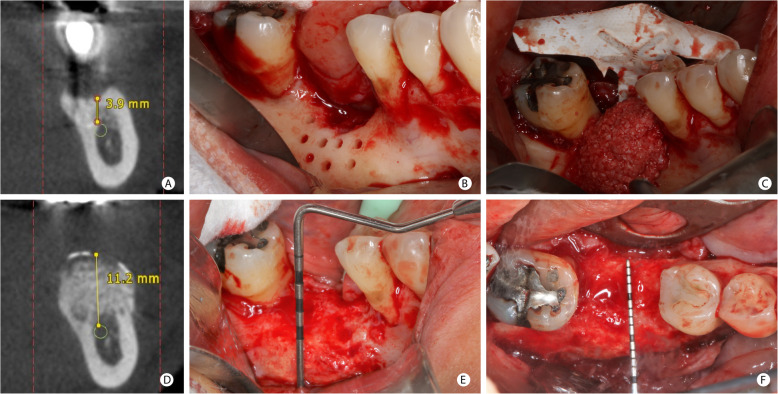
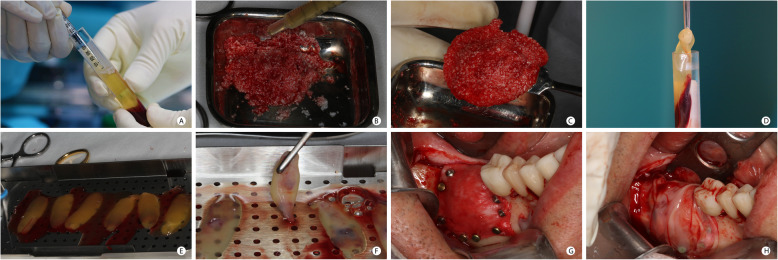
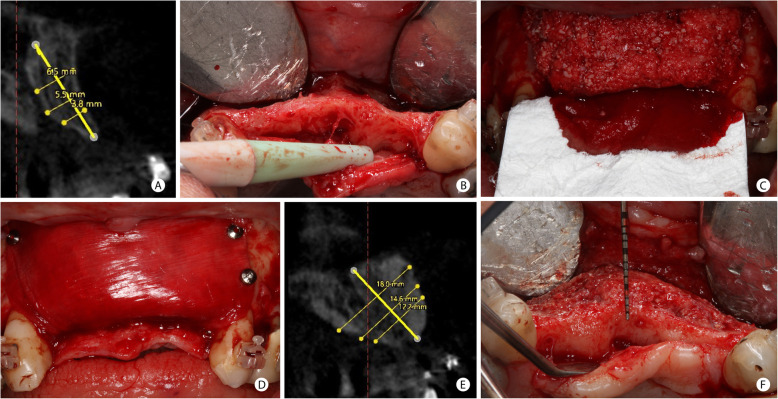
Eighteen patients who needed vertical or horizontal bone regeneration before installing dental implants were included in the study. The horizontal bone defects were treated with a GBR protocol that includes the use of a mixture of particulate autogenous and xenogenous grafts in the proportion of 1:1, injectable form of PRF (i-PRF) to agglutinate the graft, an absorbable collagen membrane covering the regenerated region, and leukocyte PRF (L-PRF) membrane covering the GBR membrane. The vertical bone defects were treated with the same grafted mixture protected by a titanium-reinforced non-resorbable high-density polytetrafluoroethylene (d-PTFE-Ti) membrane and covered by L-PRF. The bone gain was measured using a cone-beam computed tomography at baseline and after a period of 7.5 (± 1.0) months.
All patients underwent surgery to install implants after this regenerative protocol. The GBR produces an increase in bone thickness (p < 0.001) and height (p < 0.005) after treatment, with a bone gain of 5.9 ± 2.4 for horizontal defects and 5.6 ± 2.6 for vertical defects. In horizontal defects, the gain was higher in the maxilla than in mandible (p = 0.014) and in anterior than the posterior region (p = 0.033). No differences related to GBR location were observed in vertical defects (p > 0.05).
GBR associated with a mixture of particulate autogenous and xenogenous grafts and i-PRF is effective for vertical and horizontal bone augmentation in maxillary and mandibular regions, permitting sufficient bone gain to future implant placement.
REBEC, RBR-3CSG3J . Date of registration-19 July 2019, retrospectively registered. http://www.ensaiosclinicos.gov.br/rg/RBR-3csg3j/.
使用引导骨再生(GBR)技术进行垂直和水平骨增量是在种植体植入前纠正骨缺损的一种可预测方法;然而,使用不同的方案会产生不同的临床效果。有人提出富血小板纤维蛋白(PRF)可以改善再生手术的效果。因此,本研究旨在描述GBR手术联合膜、骨移植材料和PRF进行垂直和水平骨增量时的骨增量情况。
本研究纳入了18例在植入牙种植体前需要进行垂直或水平骨再生的患者。水平骨缺损采用GBR方案治疗,该方案包括使用颗粒状自体骨和异体骨按1:1比例混合的移植材料、可注射形式的PRF(i-PRF)以凝集移植材料、覆盖再生区域的可吸收胶原膜以及覆盖GBR膜的富白细胞PRF(L-PRF)膜。垂直骨缺损采用相同的移植材料混合物,并用钛增强的不可吸收高密度聚四氟乙烯(d-PTFE-Ti)膜保护,表面覆盖L-PRF。在基线时以及7.5(±1.0)个月后,使用锥形束计算机断层扫描测量骨增量。
所有患者在采用该再生方案后均接受了种植体植入手术。治疗后,GBR使骨厚度(p < 0.001)和骨高度(p < 0.005)增加,水平骨缺损的骨增量为5.9±2.4,垂直骨缺损的骨增量为5.6±2.6。在水平骨缺损中,上颌骨的骨增量高于下颌骨(p = 0.014),前部区域高于后部区域(p = 0.033)。在垂直骨缺损中,未观察到与GBR位置相关的差异(p > 0.05)。
GBR联合颗粒状自体骨和异体骨移植材料以及i-PRF对上颌和下颌区域的垂直和水平骨增量有效,可为未来的种植体植入提供足够的骨增量。
REBEC,RBR-3CSG3J。注册日期 - 2019年7月19日,回顾性注册。http://www.ensaiosclinicos.gov.br/rg/RBR-3csg3j/。