Max Planck-NYU Center for Language, Music and Emotion, New York, NY, USA.
Department of Psychology, New York University, New York, NY, USA.
Soc Cogn Affect Neurosci. 2020 Dec 17;15(11):1193-1202. doi: 10.1093/scan/nsaa142.
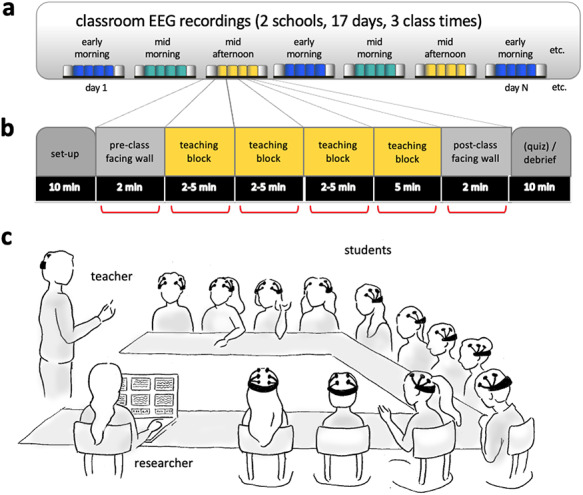
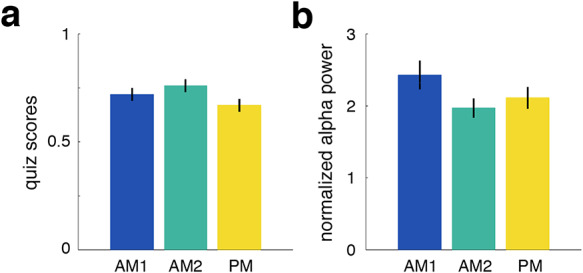
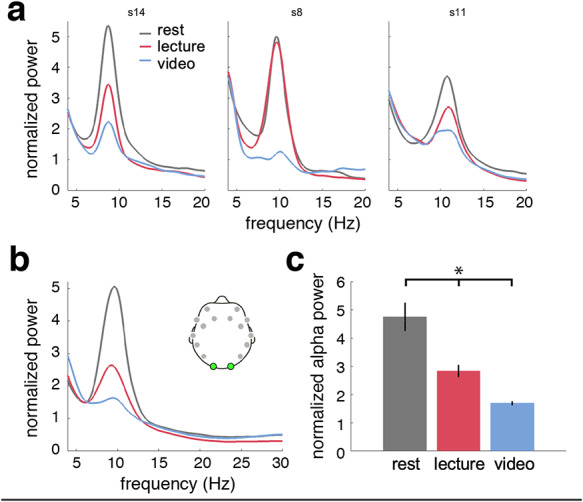
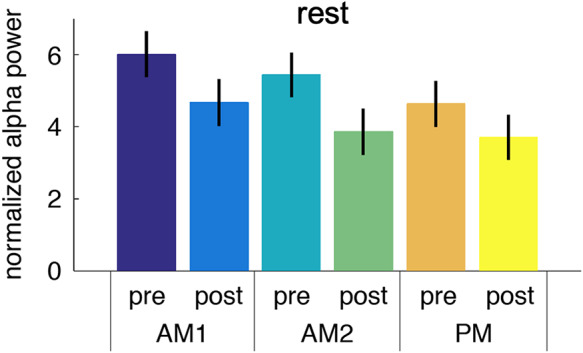
Researchers, parents and educators consistently observe a stark mismatch between biologically preferred and socially imposed sleep-wake hours in adolescents, fueling debate about high school start times. We contribute neural evidence to this debate with electroencephalogram data collected from high school students during their regular morning, mid-morning and afternoon classes. Overall, student alpha power was lower when class content was taught via videos than through lectures. Students' resting state alpha brain activity decreased as the day progressed, consistent with adolescents being least attentive early in the morning. During the lessons, students showed consistently worse performance and higher alpha power for early morning classes than for mid-morning classes, while afternoon quiz scores and alpha levels varied. Together, our findings demonstrate that both class activity and class time are reflected in adolescents' brain states in a real-world setting, and corroborate educational research suggesting that mid-morning may be the best time to learn.
研究人员、家长和教育工作者一致观察到青少年的生物偏好睡眠时间与社会强加的睡眠时间之间存在明显不匹配,这引发了关于高中上课时间的争论。我们通过从高中生在常规上午、上午中和下午课程期间收集的脑电图数据为这场争论提供了神经学证据。总的来说,当课程内容通过视频教授而不是通过讲座教授时,学生的阿尔法功率较低。随着一天的进行,学生的静息状态阿尔法脑活动减少,这与青少年在清晨注意力最不集中的情况一致。在课程期间,学生在早期课程中的表现和阿尔法功率始终比上午课程差,而下午测验成绩和阿尔法水平则有所不同。总的来说,我们的研究结果表明,在现实环境中,课堂活动和课程时间都反映在青少年的大脑状态中,这也印证了教育研究表明,上午中段可能是学习的最佳时间。