Carpi Sara, Polini Beatrice, Manera Clementina, Digiacomo Maria, Salsano Jasmine Esposito, Macchia Marco, Scoditti Egeria, Nieri Paola
Laboratory of Molecular Pharmacology, Department of Pharmacy, University of Pisa, Pisa, Italy.
Interdepartmental Research Center "Nutraceuticals and Food for Health," University of Pisa, Pisa, Italy.
Front Pharmacol. 2020 Sep 23;11:574317. doi: 10.3389/fphar.2020.574317. eCollection 2020.
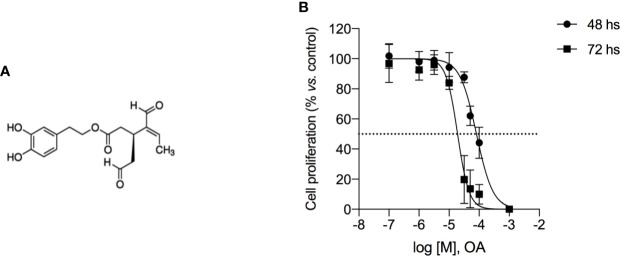
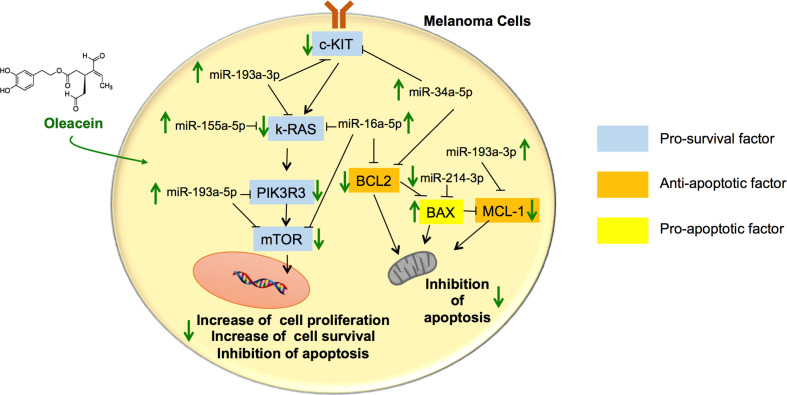
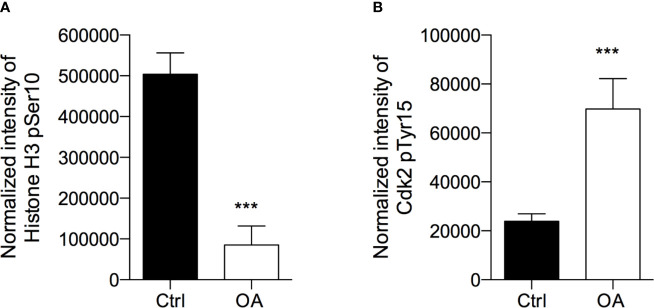
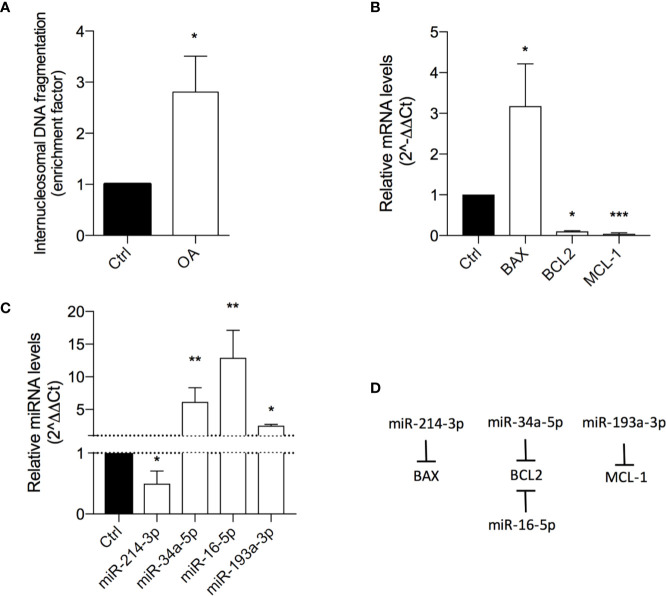
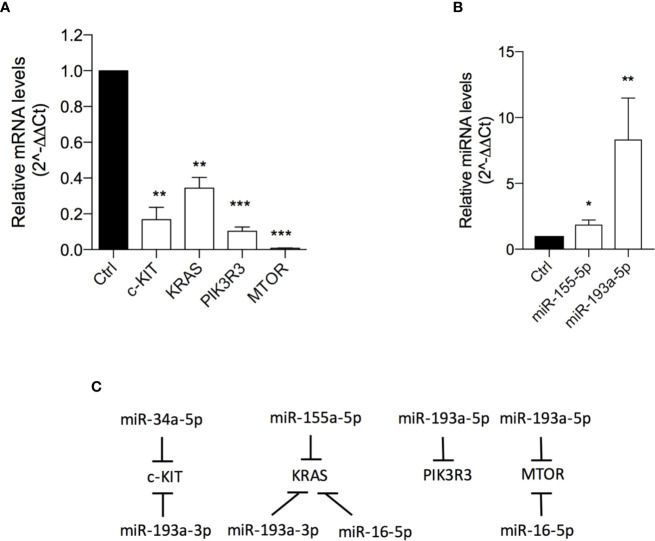
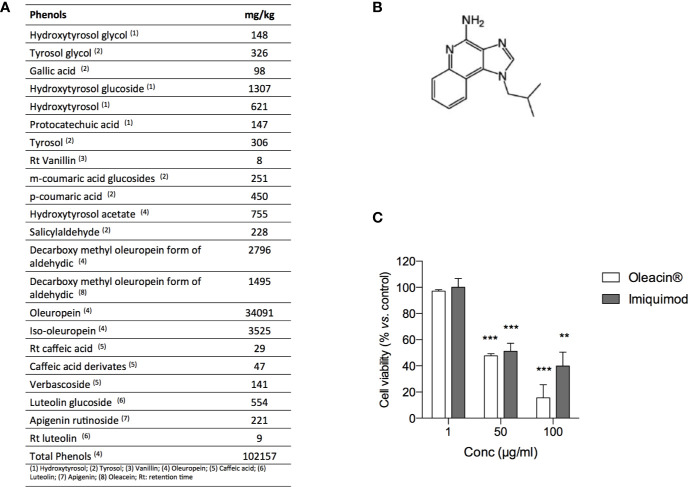
Extra-virgin olive oil (EVOO) polyphenols contribute to Mediterranean diet health-promoting properties. One of the most abundant secoiridoid present in EVOO, Oleacein (OA), demonstrated anticancer activity against several tumors. Nevertheless, its role against melanoma has not still investigated. This study aimed at determining the antimelanoma activity of OA and the relative mechanism of action. OA induced cell growth inhibition in 501Mel melanoma cells with an IC50 in the low micromolar range of concentrations. Moreover, an OA concentration approximating the IC50 induced G1/S phase arrest, DNA fragmentation, and downregulation of genes encoding antiapoptotic (BCL2 and MCL1) and proproliferative (c-KIT, K-RAS, PIK3R3, mTOR) proteins, while increased transcription levels of the proapoptotic protein BAX. Concordantly, OA increased the levels of miR-193a-3p (targeting MCL1, c-KIT and K-RAS), miR-193a-5p (targeting PIK3R3 and mTOR), miR-34a-5p (targeting BCL2 and c-KIT) and miR-16-5p (miR-16-5p targeting BCL2, K-RAS and mTOR), while decreased miR-214-3p (targeting BAX). These modulatory effects might contribute to the inhibition of 501Mel melanoma cell growth observed after treatment with an olive leaves-derived formulation rich in OA, with potential application against cutaneous melanoma. Altogether, these results demonstrate the ability of OA to contrast the proliferation of cutaneous melanoma cells through the transcriptional modulation of relevant genes and microRNAs, confirming the anticancer potential of EVOO and suggesting OA as a chemopreventive agent for cancer disease therapy.
特级初榨橄榄油(EVOO)中的多酚有助于地中海饮食的健康促进特性。EVOO中含量最丰富的裂环烯醚萜之一橄榄苦苷(OA),对多种肿瘤表现出抗癌活性。然而,其对黑色素瘤的作用尚未得到研究。本研究旨在确定OA的抗黑色素瘤活性及其相关作用机制。OA在501Mel黑色素瘤细胞中诱导细胞生长抑制,其IC50处于低微摩尔浓度范围。此外,接近IC50的OA浓度诱导G1/S期阻滞、DNA片段化,并下调编码抗凋亡蛋白(BCL2和MCL1)和促增殖蛋白(c-KIT、K-RAS、PIK3R3、mTOR)的基因,同时增加促凋亡蛋白BAX的转录水平。与此一致,OA增加了miR-193a-3p(靶向MCL1、c-KIT和K-RAS)、miR-193a-5p(靶向PIK3R3和mTOR)、miR-34a-5p(靶向BCL2和c-KIT)和miR-16-5p(miR-16-5p靶向BCL2、K-RAS和mTOR)的水平,同时降低miR-214-3p(靶向BAX)的水平。这些调节作用可能有助于在用富含OA的橄榄叶制剂处理后观察到的对501Mel黑色素瘤细胞生长的抑制,具有针对皮肤黑色素瘤的潜在应用价值。总之,这些结果证明了OA通过对相关基因和微小RNA的转录调节来抑制皮肤黑色素瘤细胞增殖的能力,证实了EVOO的抗癌潜力,并表明OA可作为癌症疾病治疗的化学预防剂。