Borges Alexandra, Freitas Victor de, Mateus Nuno, Fernandes Iva, Oliveira Joana
LAQV-REQUIMTE, Departamento de Química e Bioquímica, Faculdade de Ciências da Universidade do Porto, Rua do Campo Alegre, S/N, 4169-007 Porto, Portugal.
Antioxidants (Basel). 2020 Oct 15;9(10):998. doi: 10.3390/antiox9100998.
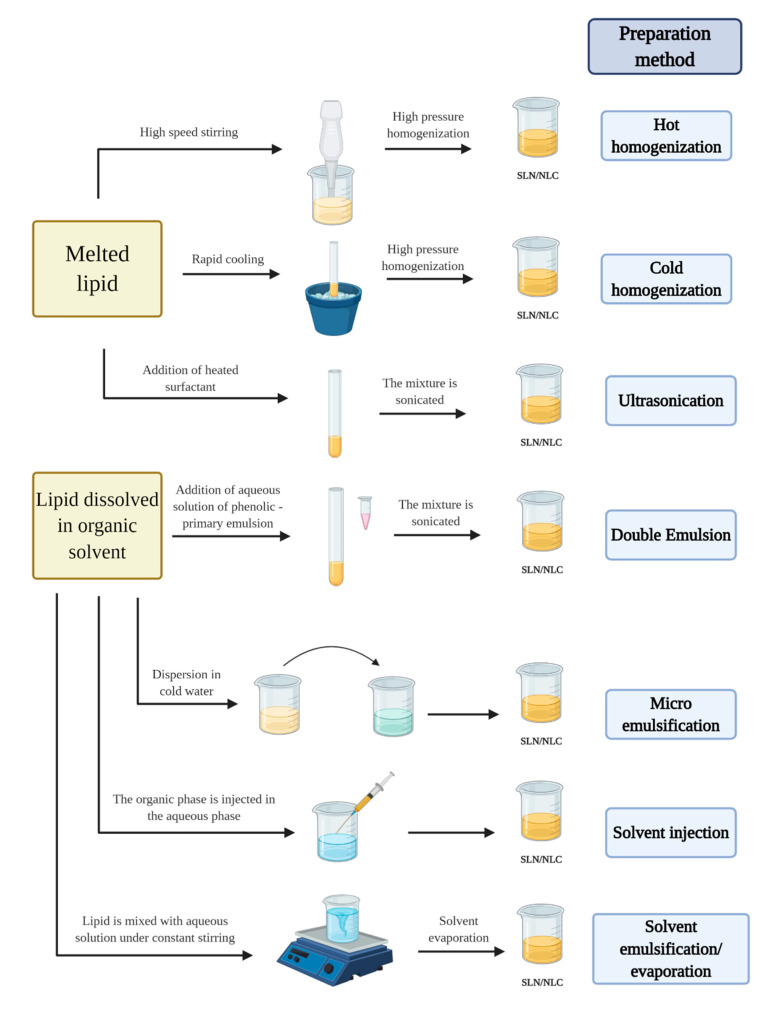
Phenolic compounds are one of the most widespread classes of compounds in nature, with several beneficial biological effects being associated with their anti-oxidant and anti-carcinogenic activities. Their application in the prevention or treatment of numerous chronic diseases have been studied, but a major drawback is still the low bioavailability of these compounds, as well as their instability towards pH, temperature, and light in some cases. Nanotechnology has emerged as an alternative to overcome these limitations, and the use of lipidic encapsulation systems is a promising technique to achieve an efficient drug delivery, protecting molecules from external factors and improving their bioavailability. In this review, solid lipid nanoparticles and nanostructured lipid carriers are highlighted as an important tool for the improvement of the bioavailability and stability of natural phenolic compounds, including their preparation methods and functionalization approaches and the discussion of several applications for putative use in cosmetic and pharmacologic products.
酚类化合物是自然界中分布最广泛的一类化合物,其抗氧化和抗癌活性具有多种有益的生物学效应。人们已经对它们在预防或治疗多种慢性疾病中的应用进行了研究,但一个主要缺点仍然是这些化合物的生物利用度低,以及在某些情况下它们对pH值、温度和光的不稳定性。纳米技术已成为克服这些限制的一种替代方法,使用脂质包封系统是实现高效药物递送、保护分子免受外部因素影响并提高其生物利用度的一种有前景的技术。在这篇综述中,固体脂质纳米粒和纳米结构脂质载体被强调为提高天然酚类化合物生物利用度和稳定性的重要工具,包括它们的制备方法和功能化方法,以及对在化妆品和药品中可能应用的几种用途的讨论。