Zhou Lian, Yao Maosheng, Zhang Xiang, Hu Bicheng, Li Xinyue, Chen Haoxuan, Zhang Lu, Liu Yun, Du Meng, Sun Bochao, Jiang Yunyu, Zhou Kai, Hong Jie, Yu Na, Ding Zhen, Xu Yan, Hu Min, Morawska Lidia, Grinshpun Sergey A, Biswas Pratim, Flagan Richard C, Zhu Baoli, Liu Wenqing, Zhang Yuanhang
Department of Environment and Health, Jiangsu Provincial Center for Disease Control and Prevention, Nanjing, 210009, China.
College of Environmental Sciences and Engineering, Peking University, Beijing, 100871, China.
J Aerosol Sci. 2021 Feb;152:105693. doi: 10.1016/j.jaerosci.2020.105693. Epub 2020 Oct 15.
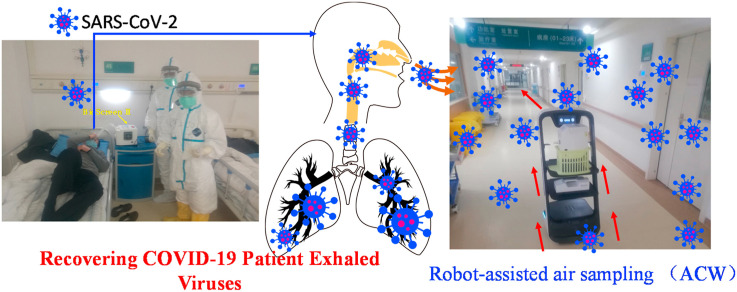
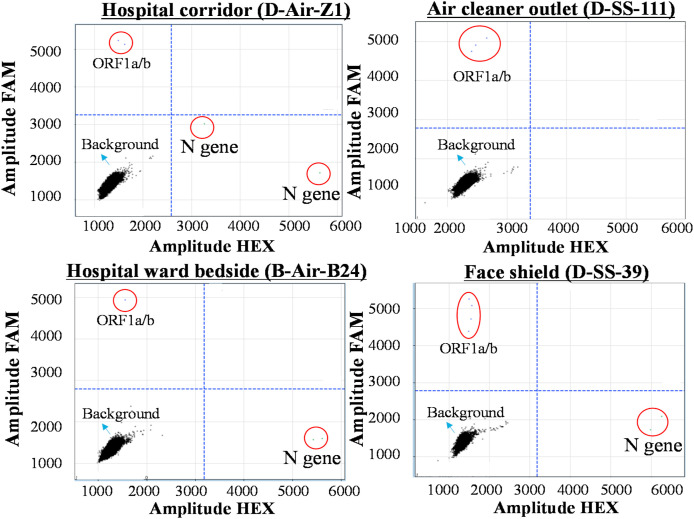
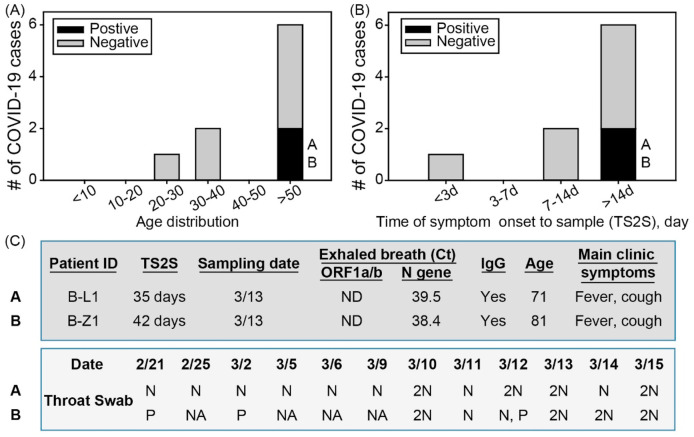
The COVID-19 pandemic has brought an unprecedented crisis to the global health sector. When discharging COVID-19 patients in accordance with throat or nasal swab protocols using RT-PCR, the potential risk of reintroducing the infection source to humans and the environment must be resolved. Here, 14 patients including 10 COVID-19 subjects were recruited; exhaled breath condensate (EBC), air samples and surface swabs were collected and analyzed for SARS-CoV-2 using reverse transcription-polymerase chain reaction (RT-PCR) in four hospitals with applied natural ventilation and disinfection practices in Wuhan. Here we discovered that 22.2% of COVID-19 patients (n = 9), who were ready for hospital discharge based on current guidelines, had SARS-CoV-2 in their exhaled breath (~10 RNA copies/m). Although fewer surface swabs (3.1%, n = 318) tested positive, medical equipment such as face shield frequently contacted/used by healthcare workers and the work shift floor were contaminated by SARS-CoV-2 (3-8 viruses/cm). Three of the air samples (n = 44) including those collected using a robot-assisted sampler were detected positive by a digital PCR with a concentration level of 9-219 viruses/m. RT-PCR diagnosis using throat swab specimens had a failure rate of more than 22% in safely discharging COVID-19 patients who were otherwise still exhaling the SARS-CoV-2 by a rate of estimated ~1400 RNA copies per minute into the air. Direct surface contact might not represent a major transmission route, and lower positive rate of air sample (6.8%) was likely due to natural ventilation (1.6-3.3 m/s) and regular disinfection practices. While there is a critical need for strengthening hospital discharge standards in preventing re-emergence of COVID-19 spread, use of breath sample as a supplement specimen could further guard the hospital discharge to ensure the safety of the public and minimize the pandemic re-emergence risk.
新冠疫情给全球卫生部门带来了前所未有的危机。在按照使用逆转录聚合酶链反应(RT-PCR)的咽拭子或鼻拭子方案让新冠患者出院时,必须解决将感染源重新引入人类和环境的潜在风险。在此,招募了14名患者,其中包括10名新冠患者;在武汉四家采用自然通风和消毒措施的医院,收集了呼出气冷凝物(EBC)、空气样本和表面拭子,并使用逆转录聚合酶链反应(RT-PCR)对其中的新型冠状病毒进行分析。我们发现,根据当前指南准备出院的新冠患者中,有22.2%(n = 9)的呼出气体中存在新型冠状病毒(约10个RNA拷贝/米)。虽然表面拭子检测呈阳性的较少(3.1%,n = 318),但医护人员经常接触/使用的面罩等医疗设备以及工作班次所在楼层被新型冠状病毒污染(3 - 8个病毒/平方厘米)。包括使用机器人辅助采样器采集的空气样本在内,有三个空气样本(n = 44)通过数字PCR检测呈阳性,浓度水平为9 - 219个病毒/立方米。使用咽拭子标本进行RT-PCR诊断时,在安全让新冠患者出院方面的失败率超过22%,而这些患者仍以每分钟约1400个RNA拷贝的速度向空气中呼出新型冠状病毒。直接的表面接触可能不是主要传播途径,空气样本较低的阳性率(6.8%)可能是由于自然通风(1.6 - 3.3米/秒)和定期消毒措施。虽然迫切需要加强医院出院标准以防止新冠疫情再次蔓延,但将呼气样本用作补充标本可进一步保障出院环节,确保公众安全并将疫情再次出现的风险降至最低。