Gómez-Cruz Irene, Cara Cristóbal, Romero Inmaculada, Castro Eulogio, Gullón Beatriz
Centre for Advanced Studies in Earth Sciences, Energy and Environment (CEACTEMA), Universidad de Jaén, Campus Las Lagunillas, 23071 Jaén, Spain.
Department of Chemical, Environmental and Materials Engineering, Universidad de Jaén, Campus Las Lagunillas, 23071 Jaén, Spain.
Antioxidants (Basel). 2020 Oct 17;9(10):1010. doi: 10.3390/antiox9101010.
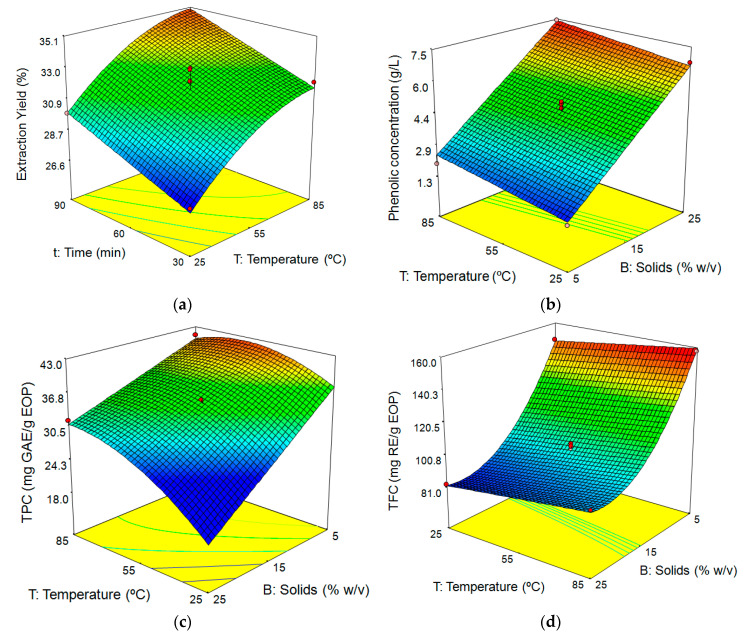
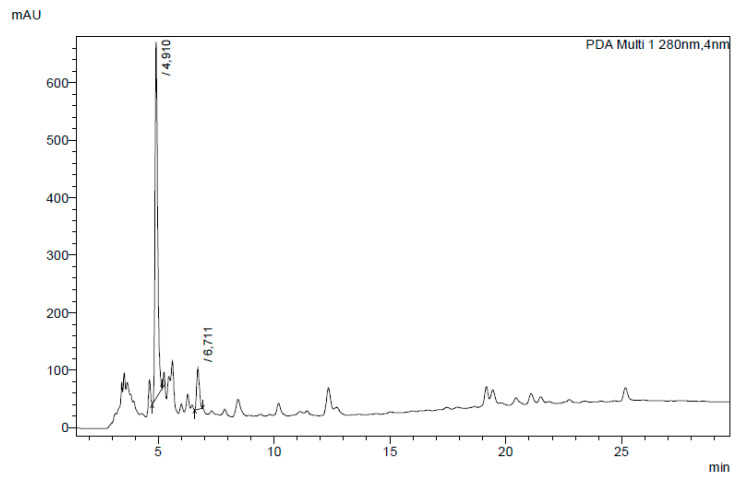
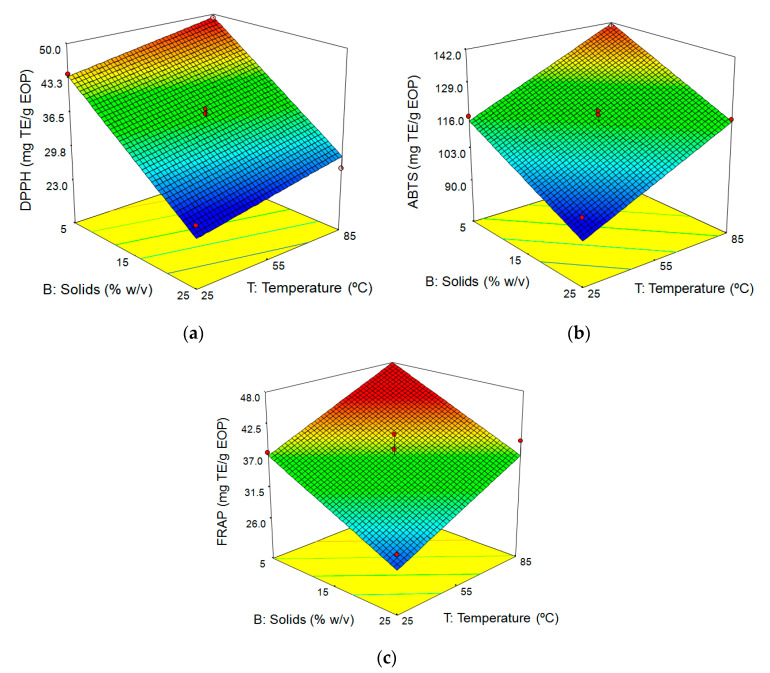
Exhausted olive pomace (EOP) is the waste generated from the drying and subsequent extraction of residual oil from the olive pomace. In this work, the effect of different aqueous solvents on the recovery of antioxidant compounds from this lignocellulosic biomass was assessed. Water extraction was selected as the best option for recovering bioactive compounds from EOP, and the influence of the main operational parameters involved in the extraction was evaluated by response surface methodology. Aqueous extraction of EOP under optimised conditions (10% solids, 85 ºC, and 90 min) yielded an extract with concentrations (per g EOP) of phenolic compounds and flavonoids of 44.5 mg gallic acid equivalent and 114.9 mg rutin equivalent, respectively. Hydroxytyrosol was identified as the major phenolic compound in EOP aqueous extracts. Moreover, these extracts showed high antioxidant activity, as well as moderate bactericidal action against some food-borne pathogens. In general, these results indicate the great potential of EOP as a source of bioactive compounds, with potential uses in several industrial applications.
废弃橄榄果渣(EOP)是橄榄果渣干燥及后续提取残余油后产生的废弃物。在本研究中,评估了不同水性溶剂对从这种木质纤维素生物质中回收抗氧化化合物的影响。水提取被选为从EOP中回收生物活性化合物的最佳选择,并通过响应面法评估了提取过程中主要操作参数的影响。在优化条件(10%固含量、85℃和90分钟)下对EOP进行水提取,得到的提取物中酚类化合物和黄酮类化合物的浓度(每克EOP)分别为44.5毫克没食子酸当量和114.9毫克芦丁当量。羟基酪醇被鉴定为EOP水提取物中的主要酚类化合物。此外,这些提取物表现出高抗氧化活性,以及对一些食源性病原体的适度杀菌作用。总体而言,这些结果表明EOP作为生物活性化合物来源具有巨大潜力,在多个工业应用中具有潜在用途。